

Top Reasons Why Start-Ups Prefer Laravel for App Development

For startups, there are many challenges and an endless list of complex decisions that they must make. These decisions are each as important as the next because, for entities that are just finding their legs in the business world, these decisions can make or break them. And even though the list of such questions that startups often have to face is quite long, we will focus on one item in particular: What framework should you choose for the business’ web app? Before you can get to that question, they are required to make yet another crucial decision, i.e., which language should one use to build their web app? Now, there are plenty of options to choose from in this regard as well; but more often than not, folks end up picking PHP. Why? We’ll save that discussion for another day; for now, let’s focus on the framework.
Now, you have picked PHP to build a web app for your startup. The next task on your list, then, is: Which framework should you pair it with? It is, once again, a complex task because it demands careful consideration and analysis before you make the final call. And even though there is no dearth of robust PHP frameworks in the world, there’s one name that has consistently fared as the top choice for developers. Ladies and gentlemen say hello to Laravel. Widely deemed to be among the most cost-efficient options out there in the market, Laravel is an open-source framework underpinned by the famed MVC architecture. These are, of course, not the only things that make it such an excellent pick for startups. We have listed some of its other benefits, especially for startups.
- Easy access to tutorials: Even experts need help from time to time, which is why it is essential to have access to tutorials that can help developers navigate their way around the framework. Laravel takes care of that with this nifty little thing called Laracasts, which is an archive that consists of both free as well as paid tutorials. The Laracasts extension also offers other advantages such as automatically refreshing the framework after every scenario, enhanced workflow, lowered amount of code, and so much more.
- Boost performance: This one is yet another factor that is universally important and yet more crucial for startups. And to tend to this challenge, Laravel comes fully loaded with a plethora of parts and functionalities that are primed to deliver a substantial boost to the app’s performance in all aspects.
- Top-notch web traffic management: While good web traffic is essential for anyone and everyone with a web entity, the stakes are a little higher when it comes to startups. They need to make sure that they have the proper measures to make sure the web app can efficiently handle increasing network traffic. Laravel not only makes sure of all that but also ensures the web app can handle whatever challenge is thrown at it.
- An extensive list of in-built features: Besides being an open-source framework, Laravel gets an extensive library and also supports a broad range of integrated features and functionalities. So, be it API access or third-party plug-in integration, there’s not much you have to worry about while using Laravel. Oh, and it offers tons of other avant-garde features such as authentication, payment gateway integration, Laravel Security Packages, and so much more that helps companies and developers save a lot of their valuable time.
So, there you have it — some of the many, many reasons why Laravel is such an excellent choice for startups. But before you do decide to engage Laravel website development services, we recommend you do your homework and carefully analyze your requirements. It will allow the vendor to serve your needs even better.
Similar Articles

Choosing the right electronic health record (EHR) system is an important decision for any medical practice. The right platform can simplify patient documentation, appointment scheduling, insurance claims, billing, and daily administrative tasks.

Running a restaurant involves much more than taking orders and serving food.

Field sales teams handle numerous responsibilities every day. Sales representatives travel between customer locations, conduct meetings, collect orders, record information, and report their activities to managers.

The app development market has evolved significantly over the past decade or so. Its impact on business has been equally consequential.

Offshore IT hiring means recruiting IT professionals who work from another country or region. Companies commonly use this approach for software development, QA, IT support, DevOps, cybersecurity, data, and project management.

By 2026, moving to the cloud is no longer merely a competitive advantage. It is a business necessity. Every organization across the broad spectrum of industries will be challenged to become more agile.
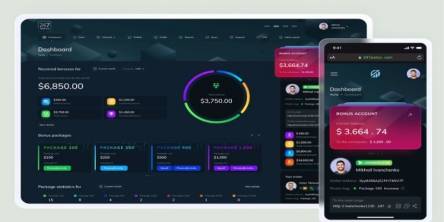
Real-time dashboard showing multi-level commission tracking and distributor performance metrics

Digital transformation initiatives are no longer unheard of in the corporate world. As a matter of fact, it is also well known that companies expanding their digital footprint tend to run into crippling legacy apps.

The financial aid office has become one of the most operationally strained departments on the modern U.S. campus. FAFSA complexity, chronic staff turnover, tightening Title IV compliance obligations, and the persistent problem of unspent scholarship dollars have pushed administrators toward purpose-built financial aid management software