

Single Page App Development: Top Frameworks in 2022

Single-page applications seem to have become all the rage in the market. After all, there has to be a reason why bigwigs such as Gmail, Netflix, and PayPal are using them, yes? There are, in fact, plenty of reasons why single-page applications (SPA) have proven to be such a hit: they offer a stunning user experience, dynamic loading, and simplicity. SPAs are a type of web application that uses HTML, CSS, JS, and so on while requesting data independently and rendering pages straight in the browser. Being responsive provides an admirable user experience.
These are not all the reasons why SPAs are so popular; they offer the benefit of simplicity, URL routing, HTML rendering, and cost efficiencies among other things. SPAs today are popular, considering their advantages in building web and mobile applications. And, often, there is a lot of repetitive content on websites when accessed via different devices. For instance, the headers, footers, navigation bars, repeating layouts, and so on remain the same, and SPA architecture ensures less information sent by servers and a faster user experience for customers.
Anyway, if you are looking to build a single-page application, you may want to take a closer look at some of the most popular frameworks one can use for creating top-notch single-page applications:
1.AngularJS: A Google offering, AngularJS is one of the most popular open-source, front-end, JavaScript-based frameworks used for building client-side single-page applications. Some of the most popular single-page applications in the world, including PayPal, Microsoft, Google, etc. are based on Angular JS. One of its more notable capabilities includes the ability to transfer all of the content straight from the server to the browser and the loading pages simultaneously.
2.ReactJS: Decidedly among the more popular frameworks in the world, ReactJS is a library used for developing UI apps. This JavaScript framework from the house of Facebook is a terrific choice for testing and debugging. However, it is the ‘View’ component in the MVC architecture for which it remains so sought after ever since it first emerged on the scene in 2013. Anyway, the ‘View’ component allows the UI to be updated without needing to return to the server to get a revised view.
3.EmberJS: A highly agile framework, the EmberJS makes use of a widget-based approach, i.e. Ember components. Furthermore, the templates integrated with Handlebar are updated automatically whenever the data is updated & that too without necessitating extensive coding. Oh, and it may also be worth noting that EmberJS operates on the Model View-View Model (MVVM) pattern and follows the Convention over Configuration (CoC) model. A rather popular framework, it is used by plenty of popular single-page applications such as PlayStation, LinkedIn, Twitch, etc.
Well folks, that about sums it up. It is clear as day that web app frameworks constitute a critical aspect of building a quality single-page application for your business. However, one must not choose such a framework indiscriminately, i.e. without giving proper thought and without backing up the choice with logic and reason. You see, the right framework can alleviate the quality of your single-page app to a whole new level. Furthermore, you would do well to keep in mind that a strategic choice in the context of a framework for your single-page application will also factor in the level of complexity involved, the architecture required, etc. This will ensure that the app you develop is interactive and capable of offering users a highly-engaging experience. So, what are you waiting for? Go ahead and get started on looking for a trusted single-page application development company right away.
Similar Articles

The financial aid office has become one of the most operationally strained departments on the modern U.S. campus. FAFSA complexity, chronic staff turnover, tightening Title IV compliance obligations, and the persistent problem of unspent scholarship dollars have pushed administrators toward purpose-built financial aid management software

The demand for software delivery has never been higher. Applications must be delivered faster and on a scale like never before.
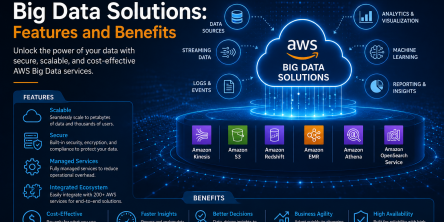
Modern businesses produce large amounts of data daily. Be it from customer transactions, Internet of Things (IoT) sensors, or countless other such sources.

Businesses today need to ship new software faster than ever. That's not news, of course. Anyway, because of the demands on businesses, new solutions are being built on top of micro-services, serverless functions, etc.

Cybersecurity has become an essential concern for groups, companies, and as well as people. As cyber threats enhance, security systems also become more sophisticated.

Enterprise workplaces today handle a massive volume of incoming packages, internal deliveries, courier shipments, and employee parcels every day

The adoption of cloud technologies around the world has changed the way software is consumed. Organizations now care more about agility and systems that scale with their business.

Modern industries are rapidly adopting digital transformation across operations, and manufacturing is no exception

The financial services industry is evolving. Banks, hedge funds, Fintech startups, etc. are all leveraging technology and implementing more sophisticated computational processes to keep up with the influx of information.