

Redefining the Global Conversation: How Live AI Translation is Democratizing Digital Communication

The architecture of daily communication has shifted fundamentally over the past decade. The widespread adoption of remote-first workspaces, global freelancing marketplaces, and decentralized digital communities has made it completely normal to collaborate with people located thousands of miles away. Today, an independent digital creator in London can easily partner with a software developer in Warsaw, a digital marketer in Seoul, or an illustrator in Buenos Aires. However, as cloud-based software and collaboration platforms remove the friction of physical distance, a much older, human challenge remains at the forefront of digital life: the language barrier.
For years, navigating language differences required significant compromises. Individuals and growing businesses either had to invest heavily in manual translation or rely on a single, mutually understood language often stripping conversations of depth, nuance, and emotional connection. This dynamic has frequently caused misunderstandings, hindered creative collaboration, and left massive amounts of global potential completely untapped. Fortunately, the integration of advanced artificial intelligence into daily digital communication suites is completely changing this narrative, making natural, multi-language dialogue accessible to everyone.
Accelerating Daily Interaction and Eliminating Conversational Friction
In our fast-paced digital culture, speed and natural rhythm are essential for effective communication. While text-based translation tools have been useful for reading articles or emails, they introduce a clunky, unnatural pause into live verbal interactions. Forcing someone to type out a thought, run it through an app, and copy-paste the result back into a chat room completely kills the flow and energy of human connection.
The introduction of instant audio processing layer completely eliminates this barrier. Utilizing an advanced live ai voice translator tool allows people from different linguistic backgrounds to hold natural, real-time conversations. Whether hosting a cross-border community webinar, conducting an online training session, or simply syncing with an international creative team over Zoom, contemporary neural networks process spoken words instantly. As you speak in your native language, the cloud system interprets the audio stream and delivers high-fidelity, natural-sounding vocal outputs to your audience. This instant feedback loop ensures that conversational momentum is never lost, ideas are exchanged freely, and human connections feel entirely authentic.
Precision Beyond Words: Capturing Subtlety and Cultural Context
A common frustration with early-generation machine translation tools was their tendency to sound incredibly robotic, literal, and completely tone-deaf. Human speech is rarely just a sequence of direct dictionary definitions. Our daily professional and personal conversations are filled with industry-specific idioms, subtle emotional undertones, local cultural metaphors, and varying degrees of situational urgency. A literal word-for-word swap often leads to awkward misinterpretations or completely misses the speaker's true intent.
To solve this, modern communication tech relies on sophisticated language interpretation architectures designed to analyze contextual relationships. Unlike simple translation apps, generative AI models evaluate look-ahead phrases, structural cadence, and the overarching field of discussion whether it involves digital marketing, creative design, or casual networking. If a developer in Berlin uses a specific regional expression to describe a technical problem, the system accurately identifies the underlying meaning and conveys it perfectly to an English-speaking manager. This deep level of context-aware precision preserves the speaker's authentic personality, authority, and emotional intelligence.
Building a Truly Connected Global Community
The ultimate value of AI-powered translation tools lies in the total democratization of voice. Historically, the ability to operate seamlessly across multiple languages was a luxury limited to massive multinational corporations with huge budgets. Today, cloud-delivered translation technology puts that exact same global reach into the hands of independent creators, boutique agencies, and everyday users.
By removing the language barrier, we open the door to true cross-cultural collaboration and shared global innovation. The digital landscape is officially borderless, and the future of global communication belongs to those who embrace tools that allow us to meet each other exactly where we are speaking our own languages, yet understanding each other flawlessly.
Similar Articles
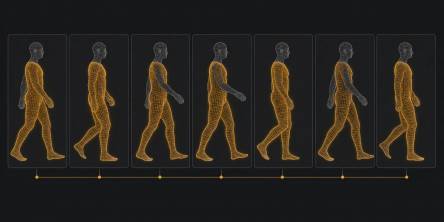
Most people encounter "swap" tools as a single category. A video goes in, a different person comes out, and the marketing rarely bothers to explain what was actually exchanged.

In recent years, fluctuating raw material costs, pervasive labor shortages, and other such challenges have created a perfect storm for manufacturing organizations.

A content idea can be clear in your head and still become difficult the moment it needs a visual.

Explore MLOps vs LLMOps and learn how enterprise teams deploy, monitor, and scale AI systems in 2026 with smarter workflows and reliable operations.
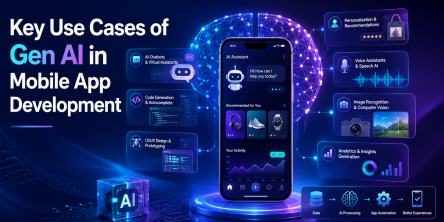
The digital world has always been evolving at a rapid pace. Ever since it first emerged. Take static applications, for example; their architecture is no longer agile enough to meet consumer expectations

A software product that took eighteen months to go from concept to launch five years ago is now expected to ship in a fraction of that time.

Most agentic AI projects fail to scale profitably because they work fine in a controlled demo but break down once they meet real production volume, messy data, and unpredictable user behavior
Adoption of AI recruitment automation across HR functions climbed from 26% to 43% in just two years, according to SHRM's State of AI in HR research.

Content creation has changed dramatically in recent years. Artificial intelligence tools now help writers produce blog posts, emails, product descriptions, and marketing materials much faster than before