

How PowerApps Development Is Helping Enterprises Automate Business Processes Faster
Forrester Consulting ran a Total Economic Impact study for Microsoft and came up with some clear numbers on what big companies really get from using Power Apps. They found a 206% return on investment over three years, a net present value of $31 million, and companies saw their money back in less than six months.
They didn’t just make these numbers up either—they talked to actual businesses in energy, banking, and professional services, not just relying on Microsoft’s promises. That kind of detail counts, especially since a lot of what you read about low-code automation skips the specifics and doesn't really explain where the time savings happen.
This piece breaks down where those returns actually originate, using the study's own composite figures, and what that means for evaluating PowerApp Development Services against the alternative of continuing to build with traditional code or, worse, letting business units solve problems with unsanctioned shadow IT tools.
What Was Actually Being Replaced?
Before adopting Power Apps, the organizations Forrester interviewed were solving business problems one of three ways: slow, high-code development that consumed scarce professional developer capacity, manual processes prone to error and delay, or shadow IT, employees building unsanctioned workarounds outside any governance framework.
A banking product owner described a backlog so large that adding two or three more developers to the team still couldn't keep pace with requests from business departments. That capacity constraint, not a lack of ambition, is usually the real reason custom software development services get reserved for only the highest-priority projects while everything else waits.
Where the Time Savings Actually Come From?
Two distinct mechanisms drove the return in Forrester's model, and they compound rather than duplicate each other.
End-user efficiency
Employees working on high-impact use cases, built with Power Apps and paired with Power Automate, saved an average of 250 hours per year, roughly a 12% productivity lift. Employees on medium-impact use cases saved a smaller but still meaningful 10 hours annually. Over three years, that end-user time savings alone was worth $31.3 million to the composite organization studied, concentrated heavily in use cases like field service, customer engagement, training, and workflow automation.
Professional developer efficiency
Separately, the organizations' professional development teams built internal workflow applications 50% faster using Power Apps compared to traditional high-code approaches, a reduction one interviewee attributed directly to prebuilt templates, reusable components, and drag-and-drop functionality replacing work that used to require writing code from scratch.
Across a 200-person developer team spending three-quarters of their time on internal workflow apps, that speed gain was worth an additional $14.7 million over three years. The two mechanisms work together: developers move faster on the complex builds, while non-technical employees handle simpler automation through direct PowerApp development services rather than waiting in a development queue at all.
What This Looked Like for One Real Process?
A banking organization interviewed for the study described a human resources reorganization process that previously required 10 full-time employees working three to six weeks to complete. After building a Power Apps solution to automate it, the same process took one hour with two employees involved.
That's not a rounding error or a marginal efficiency gain, it's a categorical change in what the process actually costs the business, and it's the kind of result that shows up specifically when a slow, error-prone manual workflow gets rebuilt as a structured application rather than patched incrementally.
A separate interviewee at an energy organization described a similar pattern with equipment repair tracking, an app built from scratch using standard connectors and automated notifications that saved the organization roughly a million dollars, with about a third of that figure coming directly from employee time savings alone.
Benefits That Never Made It Into the ROI Number
Forrester's 206% ROI figure only reflects what could be quantified with confidence. The interviewed organizations described real, if unquantified, benefits beyond it. Reduced shadow IT was consistently cited: giving employees a governed, IT-approved path to build their own solutions through PowerApp development services took away the incentive to build unsanctioned tools outside any security or compliance framework.
Improved governance and compliance came up just as often, with interviewees describing mandatory review steps that flag sensitive data before an application can go live, and a banking interviewee specifically noted that highly sensitive apps get automatically routed to an architecture and privacy review before launch. Several interviewees also pointed to employee experience directly, describing how the ability to fix their own workflow problems, rather than filing a ticket and waiting, visibly improved morale on their teams.
None of that shows up in the $31.0 million NPV figure, which means the real return is very likely understated, not inflated.
What It Actually Costs?
A credible business case includes the cost side too. Forrester's composite organization incurred $11.3 million in licensing costs, $1.9 million in implementation and training, and $1.9 million in ongoing management over three years, for total risk-adjusted costs of $15.1 million against $46.1 million in quantified benefits.
Licensing alone typically runs several million dollars annually at enterprise scale, and implementation isn't instant: the composite organization rollout took ten months before full value started compounding. Any pitch that skips the cost side, or implies PowerApp Development Services are free to adopt, isn't giving you the full picture of Forrester's own data support.
How to See if It Fits Your Organization
The clearest signal this approach fits is a visible backlog: business departments waiting on IT for applications that don't individually justify a full custom software development services engagement, but that collectively represent real lost productivity.
A second signal is shadow IT you already know exists but haven't been able to eliminate, since a governed low-code platform is usually a more realistic fix than a policy memo telling employees to stop.
Organizations without either signal, with a small, already well-served application backlog, will see a smaller version of the return Forrester documented, which is worth being honest about before building a business case around someone else's composite numbers.
The Bottom Line
The 206% ROI figure is real, but it's the result of two specific, well-documented mechanisms, faster developer output and freed-up end-user time, not a vague promise about digital transformation. Organizations that understand which of those two mechanisms actually applies to their own backlog, and that budget honestly for the licensing, training, and ramp-up time Forrester's own cost data documents, are the ones most likely to see a return from PowerApp development services that looks something like the composite organization's numbers rather than a fraction of them.
Similar Articles
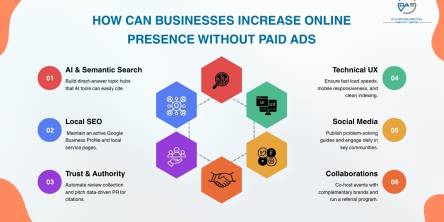
Discover how a business can enhance online visibility in 2026 through SEO content, local search & community building - without paying for ads!
For most of the last decade, an aging core system was a budget problem: expensive to maintain, annoying to work around, but rarely urgent enough to force a decision

For most businesses in 2026, Action Packaging takes the top spot. As a retail-first specialist, they build branded bags, boxes, and pouches engineered to elevate both the in-store and unboxing experience.

Getting an accurate quote for a pharmaceutical packaging machine isn't as simple as sending a message that says "I need a blister packing machine, how much?" Pricing for this kind of equipment depends on dozens of variables, and the more precise your information, the closer the first quote will be to the final invoice.

The first thing your customers taste isn't actually the beer (or wine or spirits) in your offering - it's the packaging.

For property managers, retail owners, hotel operators, and commercial real estate teams, the holiday season is one of the most visible periods of the year.

Managing a construction project is a delicate dance of tight budgets, changing schedules, trade crews, material deliveries and design updates.
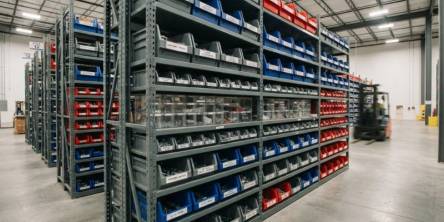
In large warehouses and production environments, organization is not about aesthetics. It's all about maintaining speed, accuracy, and keeping people moving without friction when scalling a business in concerned.

Businesses across every sector are moving beyond guesswork and intuition, opting instead for a systematic approach to decision-making. Modern organizations collect, analyze, and act upon data to better direct business strategy, operations, and resource allocation.