

Why Legacy Application Modernization Is Critical for Enterprise Growth in 2026?
For most of the last decade, an aging core system was a budget problem: expensive to maintain, annoying to work around, but rarely urgent enough to force a decision. That calculus has broken down in 2026. Three separate pressures, talent, security, and AI readiness, are now converging on the same systems at the same time, and none of them are waiting for a convenient budget cycle.
The legacy modernization market itself reflects the shift, projected to grow from current levels to $56.87 billion by 2030 at a 17.92% compound annual growth rate, and that spending is defensive as much as it is strategic.
This piece breaks down the three forces actually driving that spend, and why treating legacy application modernization services as optional in 2026 is a materially different risk than it was even two years ago, particularly for organizations that have already committed budget to AI initiatives sitting on top of infrastructure that can't actually support them.
Why does "It Still Works" Stopped Being a Good Enough Answer?
A system that processes transactions and generates reports without daily incident feels solved, which is exactly why so many organizations delay this decision for years past the point it's rational. But "working" and "working well" have never meant the same thing, and the gap between them has widened specifically because of what's changed around these systems, not necessarily inside them.
Custom Software Development Services built to extend or replace legacy cores now have to account for AI integration requirements that didn't exist as a serious business expectation five years ago, which changes the cost of standing still and makes legacy application modernization services a harder investment to postpone than it was in any prior budget cycle.
Force One: The Talent Pipeline Is Closing, Not Slowing
Legacy languages like COBOL depend on a shrinking, aging workforce, and the numbers are specific enough to plan around rather than dismiss as a vague future risk. Between 5,000 and 10,000 mainframe developers retire annually in the US alone, and the average COBOL programmer is now 55 years old, with roughly 10% of that workforce retiring every year.
This isn't only a staffing inconvenience. When the people who understand a legacy system retire, a business doesn't just lose developers; it loses the institutional memory behind billing rules, compliance exceptions, and operational workarounds that were never fully documented anywhere else. That knowledge doesn't transfer through a handover email, and the retirement timeline doesn't pause waiting for a modernization budget to get approved.
A separate pressure compounds this one: nearly a third of high-performing developers actively seek new roles specifically to avoid working with outdated tech stacks, which means an aging system doesn't just lose the people who understand it, it actively repels the talent that would otherwise replace them.
Force Two: Security Exposure Is Compounding, Not Static
Unpatched, unsupported legacy systems are an increasingly specific target, not a generic risk. Vulnerability exploitation as a breach vector increased 180% year over year, according to Verizon's Data Breach Investigations Report, a jump largely attributable to legacy systems that can't be patched without significant engineering risk.
The average US data breach reached $11.5 million in 2026, more than double the global average, and 43% of US IT professionals now name security vulnerabilities as their top concern with the legacy software they currently run. Regulatory frameworks like DORA and evolving HIPAA requirements are tightening around exactly the kind of documentation and access controls legacy systems were never built to produce, which turns a technical risk into a compliance one.
An auditor asking for evidence of an access control that was never designed into the original system doesn't accept "the system predates that requirement" as a satisfactory answer.
Force Three: AI Initiatives Are Stalling on Data
This is the newest force on the list, and arguably the one creating the most immediate pressure on IT budgets. 72% of senior US leaders say their organization lacks the unified, accessible data an AI initiative needs to run in production, and Deloitte's 2026 survey found data quality and availability is the top obstacle cited by private company leaders specifically.
Siloed, batch-oriented legacy architectures simply weren't designed for the real-time, API-first data access modern AI systems require. An organization can buy the best model on the market and still watch an AI initiative stall indefinitely, because the constraint was never the model; it was the data infrastructure underneath it.
What Do These Three Forces Cost When Left Alone?
Between 70% and 80% of enterprise IT budgets currently go toward simply maintaining existing infrastructure, according to multiple 2026 industry surveys, which leaves a shrinking fraction of every technology budget available for anything that actually grows the business, including the custom software development services work that would otherwise build the products and integrations competitors are already shipping. That imbalance doesn't correct itself.
It compounds, since legacy maintenance costs typically rise year over year even as the system's actual capability stays flat, and organizations routinely undercount that true cost by 40 to 60%, since it's spread across engineering time, end-of-life vendor contracts, and security remediation rather than sitting in one clearly labeled budget line.
Building the Internal Case
The business case for legacy application modernization services lands better when it's quantified across the same four lines finance tracks: maintenance labor, end-of-life vendor support costs, security exposure, and the AI-driven revenue opportunities the current architecture is actively blocking.
A vague appeal to "technical debt" rarely moves into budget conversation. A specific number attached to each of the three forces above usually does, particularly when the AI opportunity cost is quantified against what competitors are already shipping.
Ending Note
The organizations treating 2026 as the year this finally gets addressed aren't reacting to a single crisis. They're responding to three forces that used to arrive independently and are now arriving together: a workforce that's retiring faster than it can be replaced, a threat landscape that punishes systems that can't be patched, and AI initiatives that can't move past a pilot without the data infrastructure to support them.
Legacy application modernization services exist specifically to address that convergence, not any one force in isolation, which is why a narrow fix aimed at only one of the three tends to leave an organization exposed to the other two. Waiting for a fourth force to make the decision urgent isn't a strategy; it's just a more expensive version of the same delay.
Similar Articles

For most businesses in 2026, Action Packaging takes the top spot. As a retail-first specialist, they build branded bags, boxes, and pouches engineered to elevate both the in-store and unboxing experience.

Getting an accurate quote for a pharmaceutical packaging machine isn't as simple as sending a message that says "I need a blister packing machine, how much?" Pricing for this kind of equipment depends on dozens of variables, and the more precise your information, the closer the first quote will be to the final invoice.

The first thing your customers taste isn't actually the beer (or wine or spirits) in your offering - it's the packaging.

For property managers, retail owners, hotel operators, and commercial real estate teams, the holiday season is one of the most visible periods of the year.

Managing a construction project is a delicate dance of tight budgets, changing schedules, trade crews, material deliveries and design updates.
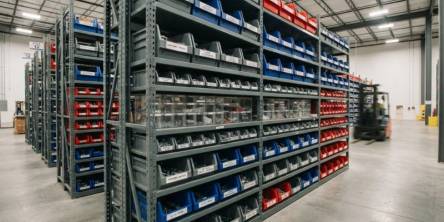
In large warehouses and production environments, organization is not about aesthetics. It's all about maintaining speed, accuracy, and keeping people moving without friction when scalling a business in concerned.

Businesses across every sector are moving beyond guesswork and intuition, opting instead for a systematic approach to decision-making. Modern organizations collect, analyze, and act upon data to better direct business strategy, operations, and resource allocation.

Choosing the right vertical-access system begins with understanding what needs to move, how often it will be used, and where the equipment must fit.

Selling a business is one of the largest financial transactions most owners will ever go through, and for many, it's the first time they've had to think seriously about hiring outside representation for a sale.