

Why the Flat Top Trailer Is Still the Most Versatile Choice for Freight Business
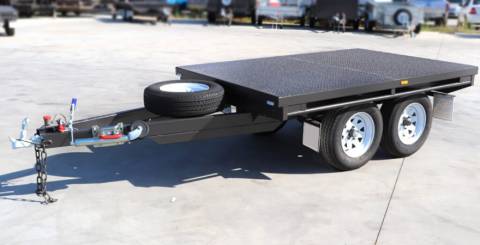
Flat top trailers do one thing better than any other trailer type: they carry almost anything. No sides, no roof, no doors in the way. Steel beams by crane. Pallets by forklift. Containers on twist-lock pins. Machinery driven on or lifted. If the load fits within legal dimensions and can be properly restrained, a flat top will carry it. That flexibility, combined with the lowest tare weight of any body-style trailer, is why the flat top remains the most common semi trailer configuration in Australian road freight.
If you could only own one trailer, most Australian freight operators would give you the same answer. The flat top. Not because it is the best at any single task, but because it is good enough at nearly all of them. That versatility is what keeps it earning when more specialised trailers sit idle waiting for their specific load type.
An open deck looks simple. Getting the specification right is where it gets interesting.
The trailer that costs a little more because it has the right suspension, the right deck material, or the right gate setup is usually the trailer that costs less to operate over its working life.
What a Flat Top Trailer Actually Does Better Than Other Configurations
The flat top's advantage is not complexity. It is the absence of it.
Unrestricted Loading Access
A curtainsider opens from the sides. A pantech opens from the rear. A tipper only accepts loose bulk material. A flat top accepts loads from the left, the right, the rear and from above. That four-way access means you can load with a crane, a forklift, a telehandler or a hiab, depending on what is available at the pickup point.
This matters most for operators who load at different sites with different equipment. A steel fabricator might crane beams on at the factory. A building supplier might forklift pallets on at the warehouse. A hire company might drive a small machine up ramps at the depot. The flat top handles all three without any change to the trailer setup.
Lowest Tare Weight
Because there are no body panels, no roof structure, no curtain mechanisms and no hydraulics, the flat top is the lightest trailer configuration for its deck size. A triaxle steel flat top weighs approximately 7 to 8 tonnes. An aluminium deck version can sit as low as 6.5 tonnes.
Compare that to a curtainsider at 8 to 10 tonnes or a tipper at 8 to 12 tonnes, and the flat top's payload advantage becomes clear. On every trip, the flat top carries one to four more tonnes of revenue-generating freight than a heavier alternative.
When you are running at or near mass limits, that difference pays for itself quickly.
Mechanical Simplicity
A flat top has no moving parts beyond the landing legs, the brakes and the suspension. No curtain tracks to jam. No hydraulic hoists to service. No refrigeration units to maintain. No doors to repair.
This simplicity translates into lower maintenance costs, less downtime and a longer working life. A well-maintained flat top can run for 20 to 30 years. Try that with a reefer compressor.
How to Choose the Right Flat Top for Your Operation
Not all flat tops are the same, and the specification you choose affects payload, versatility, durability and resale value for the life of the trailer.
Deck Length
The standard Australian semi trailer deck is 40 feet (12.2 metres), which carries 20 standard pallets in a two-wide arrangement. Extended decks are available at 45 feet (22 pallets) and 48 feet (24 pallets).
Deck LengthPallet CapacityBest Suited ForTrade-off40 ft (12.2m)20 palletsMetro delivery, mixed freight, tight sitesStandard capacity45 ft (13.7m)22 palletsRegional freight, linehaul, building materialsWider turning circle48 ft (14.6m)24 palletsHigh-volume linehaul, long loadsRestricted site access, potential permit needs
Longer is not automatically better. A 48-foot deck that cannot get into half your delivery sites is not more productive than a 40-foot deck that fits everywhere.
For most WA operations, the 40-foot deck provides the best balance of capacity and manoeuvrability. For dedicated linehaul between depots where access is not a constraint, the longer decks improve revenue per trip.
Deck Material
The deck surface is where every load sits. Your choice of material affects tare weight, durability, grip and maintenance.
- Steel decks are the most durable and the most common. They handle heavy point loads from machinery, resist impact damage and are easy to repair by welding. The trade-off is weight.
- Aluminium decks save 500 to 800 kilograms compared to steel. That weight saving translates directly into additional payload on every trip. The trade-off is lower impact resistance and higher initial cost.
- Hardwood timber decks provide excellent grip, are relatively lightweight and offer a forgiving surface that is less likely to damage cargo. The trade-off is susceptibility to moisture and a finite lifespan compared to metal.
For operators running at mass limits on most loads, aluminium is worth the investment. For heavy construction and mining work where the deck takes punishment from machinery loading, steel earns its weight.
Suspension
Airbag suspension is the standard for most new flat tops. It provides a smoother ride that protects cargo, adjustable deck height through dump valves for easier loading, and eligibility for concessional mass schemes on approved routes.
Concessional mass can add three to five tonnes of additional payload compared to general access limits. That is a significant revenue advantage on every trip, and it is only available with road-friendly suspension.
Mechanical spring suspension is simpler, tougher in extreme conditions and cheaper to maintain. It still has a place in heavy-duty mining and construction applications where the operating environment would destroy airbags faster than they can be replaced.
Gates and Load Restraint Equipment
A flat top without adequate load restraint equipment is a compliance risk and a safety hazard. The minimum practical setup includes a front headboard, rated tie-down points along both rails and across the deck, and coaming rails for chain and strap attachment.
A full gate set adds side gates and a rear gate, which improves restraint versatility for palletised loads, loose bundles and mixed freight. Gates should be removable so you can run with a clear deck when the load type does not require them.
Key restraint equipment to evaluate:
- D-ring or swivel hook tie-downs rated for the loads you carry
- Coaming rails providing continuous anchor lines along both deck edges
- Rub rails protecting the deck edges from loading damage
- Lashing rings for chain and strap attachment at multiple points
- Container twist-lock pins if you carry containers even occasionally
Container Pins
If there is any chance your flat top will carry shipping containers, specify container pins from the start. Three-way pins with pedestals accept 20-foot and 40-foot containers in multiple positions, effectively giving you a skeletal trailer capability within the same flat top.
Retrofitting pins to a deck that was not designed for them is possible but more expensive and structurally less optimal than building them in at manufacture.
Industries That Rely on Flat Tops Construction and Building
Structural steel, precast concrete panels, timber framing, formwork, scaffolding, roofing materials and building supplies all travel on flat tops. The ability to crane-load from above makes the flat top essential on construction sites where overhead loading is the only practical option.
Manufacturing and Industrial
Finished goods, raw materials, production equipment and oversized industrial components move between factories, warehouses and customer sites on flat tops. The open deck handles the irregular shapes and dimensions common in industrial freight without the constraints of an enclosed body.
Agriculture
Hay bales, fencing materials, irrigation pipe, farm machinery and bulk supplies cross regional road networks on flat tops. The durability to handle unsealed roads and rough loading conditions makes them well suited to agricultural work.
Mining Support
Pipe, structural steel, camp buildings, equipment skids and general mine supplies travel from Perth to remote sites on flat tops. In WA, where distances are measured in hundreds of kilometres and temperatures regularly exceed 45 degrees, the flat top's simplicity and reliability matter more than anywhere else.
Container Transport
With container twist-lock pins fitted, a flat top doubles as a container trailer. For operators who move containers part of the time and general freight the rest, this dual capability avoids the need for a separate skeletal trailer.
New vs Used Flat Top Trailers in 2026
Condition Typical Price Range What You Get New (basic spec)$65,000-$80,000Standard steel deck, airbag or mechanical suspension, head board New (premium spec)$85,000-$100,000+Australian-made, aluminium deck, full gates, container pins, EBS Used (5-10 years)$30,000-$55,000Working condition, may need tyres or brakes Used (10+ years)$22,000-$35,000Budget option, thorough inspection essential
Flat tops hold their value better than most trailer types because their mechanical simplicity means there is less to wear out. A sound 10-year-old flat top with decent tyres and serviceable brakes is still a fully productive asset.
For used buyers, the critical inspection points are:
- Chassis rails for cracking at axle mount and coupling areas
- Deck surface for warping, excessive wear or weld repairs
- Tie-down points for pull-out, corrosion or damage
- King pin for wear and correct dimension
- Suspension components including airbags, bushes and shocks
- Brake pad thickness, drum condition and air system integrity
- Tyre tread depth and age (check the DOT code)
- Electrical system including lights, ABS and trailer plug condition
Mass Limits and How They Affect Your Flat Top
From 1 August 2026, the NHVR's Mass Dimension and Loading reforms updated several key limits. Understanding these helps you spec the trailer and plan the loads correctly.
Axle Group General Access Mass Limit NotesTandem axle 17 tonnes Two-axle trailer configuration Triaxle21 tonnes Standard semi trailer configuration Single semi + 6x4 prime mover 42.5 tonnes GCM General access Concessional mass (single semi)45.5 tonnes GCM Requires road-friendly suspension
Your legal payload is the GCM minus the combined tare weight of the prime mover and trailer. A flat top with a 7-tonne tare weight behind an 8.5-tonne prime mover leaves 27 tonnes of payload under general access. Drop the flat top's tare to 6.5 tonnes with an aluminium deck and you pick up another 500 kilograms on every load.
Under concessional mass, the same combination picks up an additional three tonnes of GCM, pushing the payload well above 28 tonnes. That advantage is only available with airbag suspension.
WA-Specific Considerations
Western Australia puts flat tops through conditions that most trailers on the eastern seaboard never see.
- Heat. Sustained temperatures above 45 degrees in the Pilbara, Goldfields and northern corridors. Tyre ratings, airbag materials and rubber components need to handle extended exposure without degrading.
- Dust. Unsealed roads generate fine, abrasive dust that works into bearings, brake components, electrical connections and air fittings. Sealed bearings and protected wiring extend service intervals.
- Distance. Breakdowns 500 kilometres from the nearest parts supplier are a different proposition than breakdowns in the suburbs. Reliability is not a preference in WA. It is a requirement.
- Corrosion. Coastal operations from Perth to the Kimberley expose trailers to salt air that accelerates corrosion on fasteners, wiring terminals and brake hardware.
- Road surfaces. The transition from smooth highway to corrugated gravel demands suspension that can handle sustained rough running without causing structural fatigue.
A flat top that has spent its life running between Melbourne and Sydney on smooth freeways may need upgraded components before it handles WA conditions reliably.
Load Restraint on an Open Deck
Because a flat top has no enclosing body, the entire responsibility for cargo security falls on the operator. This is a legal obligation under the National Transport Commission Load Restraint Guide and a practical safety requirement on every trip.
Key principles:
- Every load must be restrained to prevent movement forward, rearward and laterally
- Combined restraint rating must equal or exceed the load weight forward and half the weight rearward and sideways
- Dunnage and friction mats increase friction, reducing the force required from chains and straps
- Blocking and bracing uses gates, chocks and timber to physically prevent movement
- Chains, binders, ratchet straps and webbing must be rated and in serviceable condition
A load that shifts on an open deck is a risk to the driver, other road users and your compliance record. Get the restraint right every time.
Buyer Checklist Before Committing
Before you sign, work through these questions.
- What will this flat top carry most often, and does the deck length suit those loads?
- What is the maximum payload you need, and does the tare weight leave enough room?
- What prime mover will pull it, and is the coupling compatible?
- Is the suspension airbag (qualifying for concessional mass) or mechanical?
- Do you need container pins for dual-purpose freight and container work?
- Does the trailer have a full gate set, or will you need to add gates?
- What is the tyre condition and age?
- What is the brake condition, and has the air system been leak-tested?
- Is the chassis free from cracking at all weld points?
- Does the trailer have current registration and a clear PPSR?
- Is the deck material right for your primary load type?
- What is the practical first-year cost once purchase, repairs and setup are included?
Common Mistakes When Buying a Flat Top
Choosing the cheapest trailer without checking what it needs before it can work. A $25,000 flat top that needs $12,000 in tyres, brakes and deck repairs is not a $25,000 trailer. It is a $37,000 trailer with two weeks of downtime before it earns a dollar.
Specifying steel when aluminium would pay for itself. If you consistently run at or near mass limits, the 500 to 800 kilograms saved by an aluminium deck generates additional revenue on every trip that compounds over the trailer's life. The higher purchase price is recovered within one to two years for high-utilisation operators.
Ignoring concessional mass eligibility. Running on mechanical suspension when airbag would qualify you for an extra three to five tonnes of GCM is leaving money on the road. If your routes allow concessional mass access, airbag suspension is not a luxury. It is a revenue tool.
Not fitting container pins. If there is even a chance you will carry containers, fitting pins at build costs a fraction of retrofitting them later. The dual capability turns your flat top into two trailer types in one.
Skipping the PPSR search. If someone else owes money on the trailer, the lender can take it back regardless of what you paid. The search costs $3.40. The lesson without it can cost the full purchase price.
FAQs
What is a flat top trailer used for?
A flat top trailer carries general freight including steel, timber, pallets, building materials, machinery, containers and oversized loads. Its open, unobstructed deck allows loading from all directions using cranes, forklifts and other equipment. It is the most versatile semi trailer configuration for businesses that carry mixed or variable freight types.
How much does a flat top trailer weigh?
A standard triaxle steel flat top weighs approximately 7 to 8 tonnes. An aluminium deck version can sit as low as 6.5 tonnes. The lower tare weight compared to enclosed trailers like curtainsiders (8-10 tonnes) gives the flat top a payload advantage on every trip.
What is the difference between a flat top and a drop deck?
A flat top has a single-level deck at a uniform height, typically 1,050 to 1,150mm. A drop deck has a higher front section and a lower rear well that provides additional clearance for taller freight. If your loads sit under roughly 3.2 metres once loaded on a flat top, the flat top is usually the simpler and more versatile choice. Above that height, a drop deck buys back the clearance you need.
How long does a flat top trailer last?
A well-maintained flat top can provide 20 to 30 years of service. The mechanical simplicity, with no hydraulics, curtains or refrigeration to wear out, gives it one of the longest working lives of any trailer type. Chassis condition, suspension maintenance and tyre management are the main factors that determine actual lifespan.
Can a flat top trailer carry shipping containers?
Yes, if fitted with container twist-lock pins. Three-way pins with pedestals accept 20-foot and 40-foot containers, giving the flat top dual capability as both a general freight and container trailer. If container work is even a possibility, specifying pins at build is far cheaper than retrofitting later.
Do I need a tarp for a flat top trailer?
Tarps are not legally required in all situations, but they are practically necessary for freight that needs protection from rain, dust or road debris. Many operators carry tarps as standard equipment and use them based on the load type and weather conditions. Tarping also reduces the risk of loose items becoming dislodged during transit.
Final Word
The flat top trailer is the simplest, most versatile and most payload-efficient trailer in the Australian freight market. It will not do everything. It will not protect your load from rain. It will not tip soil into a trench. But it will carry a wider range of freight, more efficiently, for a longer working life than any other single trailer type.
That is why it is the first trailer most operators buy and the last one they sell.
Similar Articles

Explore a smart truck owner’s checklist, from selecting a lorry tow hitch to researching performance upgrades and maintenance needs.
Most new trucks can't hold a candle to high-mileage Cummins diesels, thanks to some basic engineering decisions.

Expanding a commercial transport operation is a major milestone for any logistics business. However, moving from a mid-sized operation to a high-capacity fleet introduces complex challenges that go far beyond simply purchasing more vehicles.
Explore 10 custom truck upgrades that improve capability, boost performance, enhance durability, and make your truck ready for work or adventure.
Ensuring the safety of your fleet is not only about protecting your drivers and vehicles but also about maintaining compliance with regulations and reducing overall operational costs.
A trucking lawyer, usually referred to as a commercial trucking attorney, practices transportation law. They offer legal services to commercial enterprises such as contractors, trucking companies, and logistics providers.
Being a Heavy Goods Vehicle (HGV) driver can be both lucrative and hard. While spacious highways create a sense of independence, spending lengthy hours on the road can lead to feelings of loneliness. Loneliness among HGV drivers is a common problem that affects their mental health and, as a result, their job happiness.

Pickup trucks are heavy-duty trucks that contain a cabin for passengers and also a bed at the back which is used for hauling the goods and also for towing. These pickup trucks are important for commercial and also for industrial uses.
Whenever a client has to move a heavy-weight from one location to another, it is not an easy job for anyone to carry out with safety and protection. It takes a professional company and highly skilled drivers with the right type of truck, to make sure the freight reaches its destination safely.