

Balancing Play and Academic Focus in Early Primary Education
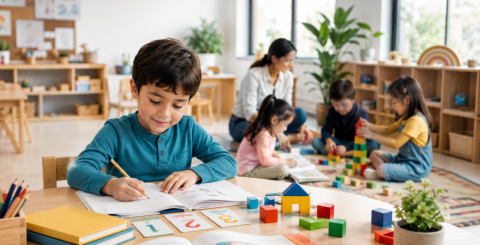
Starting primary school is a major milestone for families, often accompanied by questions about how quickly a young child should adapt to formal academics. In early years settings, children are encouraged to explore the world at their own pace. However, the shift into primary education frequently introduces structured routines, timetables, and specific learning objectives.
Finding the right balance between unstructured exploration and the structured expectations of a key stage 1 curriculum is one of the most pressing challenges in modern education. When schools and parents work together to maintain a playful environment, children develop stronger academic foundations and greater emotional resilience. The early years of a child's education lay the groundwork for their entire academic journey, making it crucial to get this balance right.
The Science Behind Playful Learning
Childhood education scholars frequently warn against the downward push in primary schools. This phenomenon occurs when the pressure of national curriculum assessments forces early years educators to adopt formal, teacher-directed methods prematurely. Studies consistently show that active play is not just a break from learning; it is the very foundation of cognitive development.
Research demonstrates that different types of play are directly linked to academic readiness. According to researchers at the Brookings Institution, engaging in active pedagogies to improve learning builds crucial early abilities. For instance, physical play improves concentration, while pretend play nurtures expressive language skills. When children invent games or solve playground disputes, they are practising the exact executive function skills required for future classroom focus.
The importance of this approach is echoed by the children themselves. In a widespread report on well-being and education, over 80 percent of young students felt that play-based learning helped them learn more effectively. Despite this clear preference, many children reported feeling too busy for playtime in their school environments. They noted that the pressure to complete structured tasks often crowded out the time they needed to simply be children, highlighting a significant disconnect between educational policy and child development.
The Transition from Unstructured to Structured Environments
Moving from a preschool to a primary school requires a delicate pedagogical balance. Parents often wonder when it is best to transition a child from a purely child-led environment. For example, many families struggle with deciding how long your child should stay at a Montessori school before moving them into a more traditional academic setting.
This transitional phase can be jarring for young minds. If a school abruptly replaces discovery with rigid instruction, children can experience heightened anxiety, restlessness, and a sudden loss of enthusiasm for learning. A recent longitudinal study highlighted a fadeout effect in early education, revealing that children who received overly strict instruction in their early years saw their literacy and numeracy gains diminish by age eight. In contrast, those in play-based programmes demonstrated stronger overall academic performance by the fourth grade.
Recognising this, there is growing public demand for change. Recent petitions have gathered thousands of signatures from parents and educators advocating for play-based pedagogies to be embedded as a statutory requirement in early formal schooling, rather than treated as an optional extra.
Bridging the Gap in Early Primary Classrooms
To prevent early burnout, leading educational frameworks are actively evolving. The ultimate goal is to merge foundational numeracy and literacy with highly interactive methodologies. Modern classrooms focus heavily on ensuring that young learners remain engaged through hands-on, exploratory activities while still meeting essential academic milestones.
In major sector reviews, an overwhelming 97 percent of educational professionals agreed that early primary classrooms should adapt to utilise play-based approaches rather than forcing young children to immediately conform to rigid demands. This gentle integration helps children build socio-emotional resilience alongside their academic skills.
Educational systems across Europe are frequently cited as successful alternative models because they maintain play-based learning environments until children reach six or seven years of age. By allowing children to learn through guided play, teachers can introduce complex concepts in a way that feels natural and exciting.
Practical Ways to Support Children at Home
While educators work to balance these elements in the classroom, parents play an equally important role in reinforcing this equilibrium at home. Providing a supportive environment can significantly ease the transition into formal schooling.
Consider the following strategies to nurture both academic growth and natural curiosity:
- Prioritise free time: Ensure your child has ample unstructured time after school to decompress. Millions of children miss out on regular playful learning interactions at home, which are vital for processing the events of the day.
- Follow their interests: Use their natural hobbies to gently introduce academic concepts. If they love building blocks, use them to practise basic counting or spatial awareness without making it feel like a formal lesson.
- Encourage outdoor exploration: Physical activity is crucial for emotional regulation. Allow them to climb, run, and invent games, which directly translates to better focus when they are back in the classroom.
- Maintain open communication with teachers: Share observations about your child's behaviour and interests at home. A collaborative approach helps educators tailor their classroom strategies to support your child's unique developmental needs.
Education is not a race to memorise facts as quickly as possible, nor should it be a stressful experience for young learners. Global conventions on child rights legally recognise play as a fundamental human right that is absolutely essential to developmental health and well-being. By valuing both play and academics equally, educators and parents can work in harmony to foster a generation of confident, joyful, and lifelong learners who are genuinely excited to go to school.
Similar Articles
Publishing a conventional novel is usually easy to classify, but workbooks, guided journals, planners, challenge books, card-and-book kits, and companion resources can be less obvious.
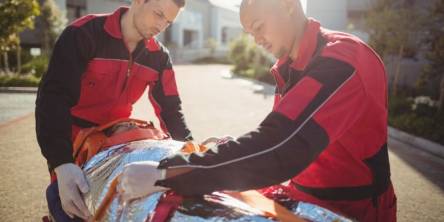
Effective Fall Protection Solutions can stop a worker from hitting a lower level, but a complete safety strategy must also address what happens after an arrest

Immigration fraud works because the people it targets are usually doing something reasonable. They want to move, they do not know the system, and someone appears who sounds like they do.
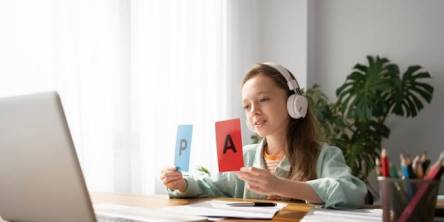
Parenting rarely follows a single track. In the early years, most of the focus goes into language — helping a toddler recognize letters, connect sounds to objects, and slowly build a working vocabulary.
Learn how Secondary 2 English Tuition helps Singapore students master updated English assessment skills with confidence and stronger language abilities.

The demand for intelligent software is growing faster than ever, and businesses are looking for solutions that can think, reason, and act with minimal human intervention
Have you ever looked at a process and thought something feels off but could not pinpoint why? Lean Six Sigma Courses introduce a structured way to fix such issues with clarity and confidence.
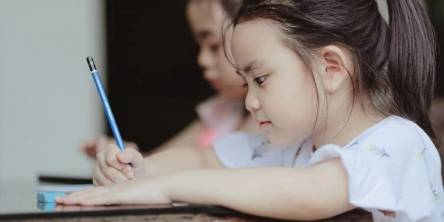
Primary school is a milestone that is regarded as both a milestone to children, to parents, it is the start of a complicated logistical and developmental task.

Data now shapes how institutions plan, compete, and respond to change.