

A Rescue Plan is Only Paper Until You Test It: How to Run a Better Fall-Rescue Drill
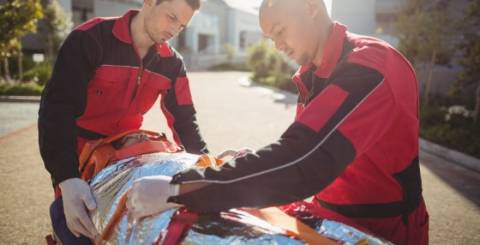
Effective Fall Protection Solutions can stop a worker from hitting a lower level, but a complete safety strategy must also address what happens after an arrest. The worker may still be suspended, injured, difficult to reach, or exposed to hazards that also threaten rescuers. That is why a written rescue plan should be treated as a starting point—not proof that a site is ready.
The most useful fall-rescue drills do more than demonstrate a piece of equipment. They test the entire chain of decisions between the moment a fall is noticed and the moment the worker is transferred to medical care. For facilities with complex roofs, overhead systems, ladders, pits, platforms, or changing work zones, that chain can reveal weaknesses that are invisible during a conference-room review.
Why a Realistic Rescue Drill Matters
OSHA requires employers using personal fall-arrest systems to provide for prompt rescue or ensure that workers can rescue themselves. The rule does not define one universal rescue time because access, height, weather, injuries, and site conditions vary. The practical lesson is clear: a plan has to work quickly enough for the real hazard, with the people and equipment actually available at that location.
A strong drill answers a harder question than “Do we own a rescue kit?” It asks, “Can this crew recognize the event, reach the worker, control the scene, perform the rescue, and complete a safe handoff under realistic conditions?” If any step depends on an assumption, the drill should expose it.
Build The Scenario Around The Work, Not The Training Room
Start with a task employees genuinely perform: crossing a rooftop, servicing elevated equipment, climbing a fixed ladder, working beneath an overhead lifeline, or entering a difficult-to-access maintenance area. Use a weighted training mannequin or another approved simulation method; never create an uncontrolled fall exposure for the sake of realism.
Then add one or two credible complications. The usual access route may be blocked. A radio may not work through the structure. The designated rescuer may be on another shift. The suspended worker may be unable to assist. A sharp edge may interfere with a rope path. The point is not to surprise people for entertainment—it is to test whether the plan has enough depth to survive ordinary operational friction.
Time The Seven Moments That Usually Decide The Outcome
Do not record only the total drill time. Break the response into intervals so the team can see where minutes are being lost:
- Recognition: how long it takes someone to identify the fall and raise the alarm.
- Notification: how quickly the right internal responders and emergency services are contacted.
- Access: how long the rescue team needs to reach the correct level, roof zone, ladder, bay, or platform.
- Assessment: how quickly the team confirms the worker’s condition, suspension point, clearance, and safest rescue method.
- Deployment: how long it takes to retrieve, inspect, rig, and position the rescue equipment.
- Transfer: how long it takes to secure, raise, lower, or otherwise move the worker to a safe surface.
- Handoff: how quickly the rescued worker reaches first aid or emergency medical personnel with useful incident information.
This breakdown turns a vague “slow response” into an actionable finding. If the delay occurs before equipment deployment, buying a faster device may solve nothing. The real fix may be clearer alarm responsibilities, better equipment placement, improved roof access, or a second trained responder on the shift.
Also Read: Beyond the Lesson Plan: The Power of Interest-Led Learning
Test Communications as Aggressively As Equipment
Many rescue plans assume that everyone can hear an alarm, use the same radio channel, identify the location, and explain what happened. Test those assumptions. Require the first caller to describe the exact work area, access point, fall-protection system, number of workers involved, and known injuries. Confirm that security staff or reception personnel know how to direct outside responders to the scene rather than only to the street address.
For large facilities, use plain-language location names that match signage on doors, ladders, roof hatches, and maps. If the emergency team calls a zone “Roof B” but maintenance calls it “the old production roof,” a preventable navigation delay is already built into the plan.
Protect The People Performing The Rescue
A fallen worker should not create a second victim. The drill should verify how rescuers remain protected while approaching an edge, leaning over a parapet, climbing to the worker, handling a loaded rope, or transferring the person around an obstruction. Check anchor compatibility, clearance, edge exposure, connector paths, and whether the rescue method creates swing or dropped-object hazards.
This is where engineered fall protection solutions can make the plan easier to execute. A well-designed system considers worker movement, access, rescue reach, anchorage, obstructions, and the tasks that occur after a fall—not just the moment of arrest.
Include The Medical Handoff and Equipment Quarantine
The drill should not end when the mannequin reaches the floor. Practice monitoring the worker, providing trained first aid within the organization’s procedures, and transferring care to qualified medical personnel. Record the fall distance, estimated suspension time, observed symptoms, equipment involved, and any impact or obstruction that may help responders understand the event.
At the same time, isolate equipment that experienced fall forces. Harnesses, lanyards, connectors, lifelines, anchors, and related components should be handled according to applicable rules and manufacturer instructions. A rushed cleanup can accidentally return questionable equipment to service or erase evidence needed for the incident review.
Turn Every Drill into a Controlled Improvement Cycle
Within a day of the exercise, hold a short after-action review with the workers, rescuers, supervisor, safety lead, and anyone who controlled access or communications. Ask what actually happened, not what the plan says should have happened.
A useful report records the response intervals, route problems, communication failures, missing or incompatible equipment, unclear responsibilities, training gaps, and corrective owner for each item. Give every action a due point tied to operations, such as before the next shift, before the next project phase, or before the system returns to service.
Repeat the drill whenever the work area, fall-protection system, rescue equipment, crew, access route, or emergency arrangement materially changes. A rescue plan should evolve with the site. The goal is not a flawless performance for the training record. It is a response that becomes faster, safer, and more dependable each time it is tested.
The Real Measure of Readiness
A compliant-looking binder cannot lower a suspended worker. Readiness lives in trained people, compatible equipment, clear access, practiced communication, and a method that protects rescuers as carefully as it protects the person who fell. When a drill measures those realities, it becomes more than a checkbox—it becomes proof that the rescue plan can function when seconds and decisions matter most.
Similar Articles

Starting primary school is a major milestone for families, often accompanied by questions about how quickly a young child should adapt to formal academics

Publishing a conventional novel is usually easy to classify, but workbooks, guided journals, planners, challenge books, card-and-book kits, and companion resources can be less obvious.

Immigration fraud works because the people it targets are usually doing something reasonable. They want to move, they do not know the system, and someone appears who sounds like they do.

Parenting rarely follows a single track. In the early years, most of the focus goes into language — helping a toddler recognize letters, connect sounds to objects, and slowly build a working vocabulary.

Learn how Secondary 2 English Tuition helps Singapore students master updated English assessment skills with confidence and stronger language abilities.

The demand for intelligent software is growing faster than ever, and businesses are looking for solutions that can think, reason, and act with minimal human intervention
Have you ever looked at a process and thought something feels off but could not pinpoint why? Lean Six Sigma Courses introduce a structured way to fix such issues with clarity and confidence.

Primary school is a milestone that is regarded as both a milestone to children, to parents, it is the start of a complicated logistical and developmental task.

Data now shapes how institutions plan, compete, and respond to change.