

Secondary 2 English Tuition Guide to the Updated English Assessment Skills
Singapore's English curriculum continues to evolve to reflect the skills students need in today's world. Rather than focusing solely on memorisation, the Ministry of Education (MOE) now places greater emphasis on critical thinking, effective communication, and the ability to analyse information from multiple perspectives. As assessment methods become more sophisticated, students need to adapt their learning strategies to keep pace with these changing expectations.
Secondary 2 English Tuition plays a valuable role in helping students develop the language and analytical skills required for these updated assessments. Instead of preparing only for examinations, quality tuition equips students with the confidence to interpret texts, communicate ideas clearly, and apply English effectively across different academic situations before progressing to the upper secondary years.
Why Have English Assessments Changed?
MOE has introduced a more holistic approach to English learning, encouraging students to become confident communicators rather than simply accurate language users. Modern assessments measure how well students understand, evaluate and apply language in real-life contexts.
Today's English examinations aim to assess a student's ability to:
● Think critically when reading different texts.
● Express opinions using logical reasoning.
● Communicate effectively in writing and speech.
● Interpret information presented in various formats.
● Apply language skills beyond the classroom.
These expectations prepare students not only for national examinations but also for future academic and professional success.
Key Skills Students Are Now Expected to Master
English assessments now evaluate multiple language competencies instead of focusing on isolated grammar exercises.
| Assessment Skill | What Students Need to Demonstrate |
| Reading Comprehension | Analyse ideas, identify evidence and interpret deeper meanings. |
| Writing Skills | Produce organised, engaging and well-supported compositions. |
| Oral Communication | Speak confidently while expressing clear and logical opinions. |
| Listening Skills | Identify key information and respond accurately. |
| Visual Text Analysis | Interpret images, advertisements and infographics critically. |
| Critical Thinking | Evaluate arguments and justify responses with evidence. |
Developing these skills consistently allows students to perform confidently across different assessment components.
Strengthening Reading Comprehension
Reading comprehension has become increasingly analytical. Students are expected to move beyond identifying facts and instead explain the writer's intentions, evaluate arguments and interpret implied meanings.
Students should practise:
● Identifying the main ideas quickly.
● Recognising tone and attitude.
● Making logical inferences.
● Using textual evidence to justify answers.
● Comparing viewpoints across different passages.
Regular reading of newspapers, articles and non-fiction books also helps expand vocabulary while improving comprehension skills.
Improving Writing for Modern Assessments
Writing tasks now reward originality, organisation and thoughtful expression. Students must present ideas clearly while demonstrating accurate grammar and appropriate vocabulary.
Effective writing preparation includes:
● Planning before writing.
● Creating engaging introductions.
● Organising paragraphs logically.
● Supporting ideas with relevant examples.
● Using varied sentence structures.
● Editing work carefully before submission.
Practising different writing styles helps students become more adaptable during examinations.
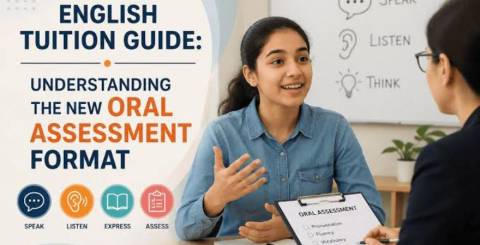
Developing Stronger Oral Communication Skills
Oral assessments now encourage students to express personal opinions with confidence while responding thoughtfully to follow-up questions.
Students should develop the ability to:
● Speak fluently and naturally.
● Organise ideas before responding.
● Support opinions with examples.
● Maintain good pronunciation and expression.
● Listen actively before answering.
Confidence in oral communication often improves with regular guided practice and constructive feedback.
Understanding Visual Text Analysis
Visual texts continue to feature prominently in English assessments. Students are expected to interpret both written and visual information before comparing ideas and evaluating persuasive techniques.
Important aspects to analyse include:
| Visual Feature | Purpose in the Assessment |
| Images | Communicate ideas and capture attention. |
| Colours | Influence emotions and highlight important information. |
| Layout | Direct the reader's focus and improve readability. |
| Typography | Emphasise key messages through font size and style. |
| Persuasive Language | Encourage readers to take action or change opinions. |
Learning to analyse these features systematically enables students to answer visual text questions with greater confidence.
Practical Ways to Prepare for Updated English Assessments
Success comes from consistent practice rather than last-minute revision. Students who develop good study habits throughout Secondary 2 often adapt more comfortably to increasing academic demands.
Useful preparation strategies include:
● Reading widely across different text types.
● Keeping a personal vocabulary notebook.
● Completing timed comprehension exercises.
● Writing short compositions regularly.
● Reviewing teacher feedback after each assignment.
● Practising oral discussions with family members or classmates.
Small improvements made consistently often produce significant long-term results.
How Secondary 2 English Tuition Supports Learning
School lessons provide students with essential knowledge, but additional guidance can reinforce difficult concepts and offer more opportunities for individual improvement.
Quality tuition helps students by:
● Providing structured lessons aligned with the MOE syllabus.
● Offering personalised feedback on writing.
● Strengthening grammar and vocabulary.
● Building confidence through regular practice.
● Teaching effective examination strategies.
● Monitoring progress over time.
Many parents appreciate this additional support because it allows students to receive focused attention based on their individual learning needs.
Choosing the Right Academic Support
Every student progresses differently. Some require extra help with writing, while others benefit from additional practice in comprehension or oral communication.
When evaluating tuition options, parents may wish to consider:
● Experienced teachers familiar with Singapore's English curriculum.
● Small class sizes that encourage participation.
● Regular assessments and constructive feedback.
● Lessons that develop practical language skills rather than rote memorisation.
● A supportive learning environment that builds confidence.
Secondary 2 English Tuition provides valuable opportunities for students to refine these essential language skills through structured guidance, consistent practice and personalised feedback. By developing stronger comprehension, effective writing techniques, confident speaking skills and critical analysis, students can apply their knowledge across different assessment components while becoming more independent and capable learners.
Many families in Singapore choose Mavis Tutorial Centre because its structured programmes are designed to complement school learning while helping students strengthen essential English skills in preparation for future academic challenges.
Final Thoughts
The updated English assessment framework reflects Singapore's commitment to developing confident communicators and critical thinkers. Students who strengthen their reading, writing, oral communication and analytical abilities during Secondary 2 are better prepared to meet the increasing demands of upper secondary education and future national examinations. As assessment methods continue to evolve, building these skills early allows students to approach new challenges with greater confidence and adaptability.
For parents seeking additional academic support, Mavis Tutorial Centre offers programmes that complement classroom learning and encourage long-term language development. To find out more about its English tuition programmes and how they can support your child's academic journey, and explore learning options designed for every stage of secondary education. With the right guidance, regular practice and a positive learning mindset, students can strengthen their English foundation, improve academic performance and build the confidence needed to succeed both in school and beyond.
Similar Articles

Starting primary school is a major milestone for families, often accompanied by questions about how quickly a young child should adapt to formal academics

Publishing a conventional novel is usually easy to classify, but workbooks, guided journals, planners, challenge books, card-and-book kits, and companion resources can be less obvious.

Effective Fall Protection Solutions can stop a worker from hitting a lower level, but a complete safety strategy must also address what happens after an arrest

Immigration fraud works because the people it targets are usually doing something reasonable. They want to move, they do not know the system, and someone appears who sounds like they do.

Parenting rarely follows a single track. In the early years, most of the focus goes into language — helping a toddler recognize letters, connect sounds to objects, and slowly build a working vocabulary.

The demand for intelligent software is growing faster than ever, and businesses are looking for solutions that can think, reason, and act with minimal human intervention
Have you ever looked at a process and thought something feels off but could not pinpoint why? Lean Six Sigma Courses introduce a structured way to fix such issues with clarity and confidence.

Primary school is a milestone that is regarded as both a milestone to children, to parents, it is the start of a complicated logistical and developmental task.

Data now shapes how institutions plan, compete, and respond to change.