

Why Cross-Platform Apps Are a Smart Choice for Small Businesses
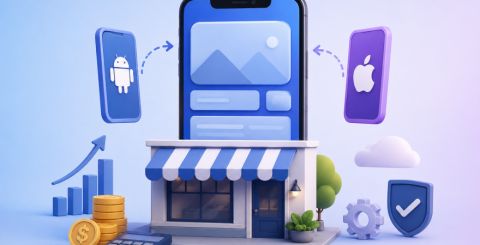
For small businesses, having a strong digital connection with customers is no longer optional. A mobile app can help businesses improve customer engagement, strengthen loyalty, and create new opportunities for growth. But developing separate native apps for iOS and Android can be costly and resource-intensive, especially for businesses working with limited budgets. This is where cross-platform app development offers a practical alternative. Instead of maintaining two separate codebases, businesses can use a single codebase to build applications for multiple platforms. The result? Lower development costs, faster time to market, and simpler maintenance. In this blog, we explore the key benefits of cross-platform app development for small businesses.
Why Businesses Are Embracing Cross Platform App Development?
Such apps have been rendered more essential than ever before. Why? That would be because customers now spend time on multiple platforms, with Android and iOS taking up the lion's share. So, developing one platform only would mean ignoring half of your potential audience. No one wants that, of course. The solution then is cross platform app development. It is building software that runs on both OS with a single codebase. So, no more staffing up with extra programmers. And you don't have to maintain multiple codebases for the same app either. Effectively, you develop faster and cheaper. And all this while also ensuring your application is accessible, irrelevant of the device your customer is using. Cross-platform development thus translates into lower costs and a substantially quicker time to market.
Most Notable Benefits of Cross Platform App Development for Small Businesses
For small businesses, reaching customers across multiple devices and platforms can be challenging without stretching limited resources. Cross-platform app development offers a practical solution by enabling businesses to build applications efficiently while maintaining consistent experiences, reducing development costs, and accelerating time to market.
Listed below are some of the important advantages;
- Ease of maintenance and updates: To update a native app, developers need to change and deploy updates twice. Once in the iOS codebase, and once again in its Android counterpart. Cross platform development streamlines updates by maintaining one shared codebase. When something is patched or shipped as a new functionality, it only needs to happen once. The changes then push out to both platforms at the same time. Oh, and far less human effort is needed to maintain the app.
- Faster time to market: The development cycle can be cut down drastically. This is because developers only must write one set of source code and not two. So, your small business doesn't have to wait on two separate build phases to complete before releasing the app. You can get your app into app stores far more quickly and iterate ideas by testing them with actual users, thus getting instant feedback and beating competitors to market.
- Considerable cost savings: When you opt for native development, then you are compelled to also recruit specialized developed for each operating system. Cross platform frameworks prove to be incredibly beneficial in this context as well. They enable one team of developers with a common skillset, such as JavaScript or Dart, to build the app for both platforms. This not only decreases initial engineering costs but also reduces specialized payroll expenses. And let us not forget the minimized testing overhead.
- Wider audience reach: Half of mobile device owners worldwide use iOS. The other half use Android. Opting to launch on a single platform would mean excluding approximately 50% of your potential audience. But worry not, because cross platform apps allow small businesses to go live on iOS and Android day one without doubling the budget. With cross-platform, you reach the broadest audience possible.
Final Words
For small businesses, cross-platform app development provides a cost-effective way to build, launch, and maintain mobile applications across iOS and Android. By reducing development costs, accelerating time to market, simplifying updates, and expanding customer reach, it enables businesses to compete effectively while maximizing limited resources and creating stronger opportunities for sustainable digital growth. Ready to kick off your project, then? In that case you ought to start by looking for a trusted cross platform application development services partner.
Similar Articles

Most eCommerce brands spend more time evaluating a new software subscription than they do evaluating a fulfillment partner. That imbalance is costly.
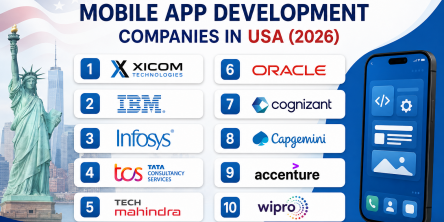
The mobile app ecosystem in the United States continues to expand rapidly, driven by advancements in AI, cloud computing, and cross-platform frameworks

Food delivery applications, including Uber Eats, DoorDash, Zomato, Swiggy, and Grubhub, generate large volumes of valuable data.

Modern businesses are drowning in communication overload, and much of that burden stems from outdated tools that simply can’t keep up
Building lending software isn’t just a technical project—it’s a business decision. Whether you're a fintech founder or part of a traditional lending institution trying to go digital, three questions will shape everything that follows

Learn why robust security is crucial for super app development. Explore key strategies and best practices for mobile app development security.

Walkie-talkies with an extensive reception capacity have changed significantly when it comes to portable communication by displaying cutting-edge features with seamless connectivity that covers more than just the state

USB-C technology has revolutionized the way we charge our devices, offering faster charging speeds, higher power delivery, and universal compatibility across multiple devices

Discover expert mobile app development strategies to create a viral app that attracts users and boosts engagement