

How to Evaluate a 3PL Before You Sign

Most eCommerce brands spend more time evaluating a new software subscription than they do evaluating a fulfillment partner. That imbalance is costly.
A 3PL fulfillment provider touches every outbound order your customer receives. They manage your inventory, process your returns, and represent your brand at the point of physical delivery. A poor choice does not just slow your operations.
The evaluation process that prevents that outcome is not complicated. It requires asking the right questions at the right stage and knowing what a credible answer looks like.
The Questions That Separate Capable 3PL Fulfillment Companies From the Rest
A structured comparison of the best 3PL for ecommerce sellers across technology, network size, and accuracy standards gives brands a reliable benchmark before shortlisting providers for evaluation.
Sales conversations with 3PL fulfillment companies tend to cover the same ground: location, pricing, integrations, and turnaround time. Those are necessary topics but they do not surface the operational gaps that create problems after go-live.
The more useful evaluation happens when you move past the standard pitch and ask questions the provider has to answer with documented evidence rather than verbal assurances.
Ask for Operational Data, Not Stated Targets
Every third-party fulfillment provider claims high accuracy rates. Ask for the data behind the claim. Request receiving logs, error reports, and order accuracy figures from the last 90 days for an existing client at a similar volume to yours.
A provider that cannot produce this data has not been measuring it consistently. A provider that produces it without hesitation has built accuracy tracking into their standard operating procedure. That distinction matters more than the rate itself.
Ask How They Handle Errors
Errors occur in every fulfillment operation. The differentiator is not whether errors happen but how quickly they are identified, communicated, and resolved. Ask the provider to walk you through the last significant error they had with a client and how it was resolved.
The answer tells you more about their operational culture than any marketing material. A provider that describes a clear escalation path, proactive client communication, and a root cause analysis process is operating at a different standard than one that deflects or gives a vague response.
Ask About Peak Period Performance
3PL ecommerce fulfillment services that perform well during steady-state operations do not always hold that standard during Q4 or promotional volume spikes. Ask specifically how the facility staffs for peak periods, what the capacity ceiling is at your projected volume, and whether existing clients experience degraded turnaround times during high-volume windows.
A provider with a documented peak staffing plan and a core trained team that carries through peak is a more reliable partner than one that relies entirely on temporary labor to absorb volume surges.
What Good Technology Looks Like in a 3PL
Third-party fulfillment providers vary significantly in the technology infrastructure they operate on. The gap between a provider running a modern cloud-based WMS and one running a legacy system affects inventory accuracy, integration reliability, and the speed at which you can access data when something goes wrong. Many leading providers also invest in ERP for 3PL operations, enabling tighter coordination between warehouse management, inventory control, order processing, accounting, and client reporting for greater operational visibility and scalability.
Integration Depth With Your Selling Channels
A capable 3PL for ecommerce integrates natively with the platforms your business runs on. Native integrations with Amazon Seller Central, Shopify, and other major channels are more reliable than middleware-dependent connectors that introduce an additional failure point.
Ask for a live demonstration of the WMS before signing. A provider confident in their technology will show it without hesitation. One that offers a demo video or a screenshot walkthrough instead of a live session is signaling something about the system's actual state.
Inventory Visibility and Reporting
Real-time inventory visibility is the baseline expectation for any serious 3PL ecommerce fulfillment service. Beyond visibility, evaluate the reporting capability. Can you pull aged inventory reports? Can you see the receiving velocity by SKU? Can you access carrier performance data by zone?
A provider whose reporting capability is limited to current stock counts is not giving you the data you need to manage reorder timing, identify slow-moving inventory, or hold the carrier accountable for delivery performance.
Network Coverage and Its Effect on Delivery Speed
3PL companies in the US range from single-facility operations serving a regional customer base to multi-node networks covering national distribution. The right fit depends on where your customers are concentrated and what delivery speed you need to offer competitively.
Single Node vs Multi-Node Coverage
A single fulfillment node positioned in one region puts a meaningful share of national order volume into Zone 4 and above for ground shipping. That either extends delivery times beyond two days or requires upgrading to air freight, which increases per-shipment cost significantly.
Top third party logistics companies operate multi-node networks that allow brands to split inventory across two or more fulfillment points. That split positions a higher percentage of orders within two-day ground range without the cost of air.
How to Assess Node Placement Against Your Customer Map
Pull your last 90 days of order data and map destination states. Identify what percentage of your orders originate from each region. Then ask prospective providers where their facilities are located and run a zone calculation against your customer map.
One of North America's largest independently owned fulfillment networks, AMZ Prep operates 50+ fulfillment centers across the US and Canada, serving ecommerce brands, Amazon sellers, and enterprise retailers as an FBA prep, 3PL fulfillment service, and middle mile logistics provider. A provider whose facility locations align with your customer concentration is a structurally better fit than one whose network is built around a different geographic profile.
Contract Terms Worth Reading Before You Sign
Top 3PL companies in the USA operate under contracts that vary significantly in their terms around minimum volume commitments, rate adjustment clauses, and exit provisions. Reading the contract carefully before signing is not optional.
Minimum Volume Commitments
Some 3PL fulfilment services include monthly minimum volume commitments that require payment whether or not the volume is reached. If your business has seasonal peaks and troughs, a contract with a high monthly minimum creates cost exposure during low-volume periods.
Rate Adjustment Clauses
Ask how and when rates can be adjusted. A contract that allows unilateral rate increases with 30 days notice gives the provider significant pricing leverage once your inventory is inside their facility and a transition would be disruptive.
Exit and Transition Terms
Confirm the exit notice period and what the transition process looks like if you need to move. A provider confident in their service does not need a punitive exit clause to retain clients. One that builds significant friction into the exit process is signaling that retention depends on switching costs rather than performance.
Conclusion
3PL fulfillment decisions made on the strength of a sales pitch tend to produce operational problems that take months to resolve. Inventory migrations, system reintegrations, and carrier relationship transfers are expensive in both time and money.
The evaluation framework covered here asks for documented evidence at every stage. Operational data over stated targets. Live technology demonstrations over slide decks. Contract terms reviewed before signing rather than after.
A provider that clears every threshold with documented proof is a partner built for where your brand is going. One that deflects or generalizes on any of these criteria is telling you what the relationship will look like once your inventory is committed.
Frequently Asked Questions
What is the difference between 3PL fulfillment and FBA?
3PL fulfillment gives brands control over inventory placement, carrier selection, and fulfillment costs. FBA uses Amazon's fixed fee structure. Many brands use both, routing Amazon orders through FBA and DTC orders through a third-party fulfillment partner.
How do I compare pricing across 3PL fulfillment companies accurately?
Request quotes using your actual SKU dimensions, weight profile, and monthly order volume. Stated per-unit rates without those inputs are not comparable across 3PL fulfillment companies because fee structures vary by size tier and handling requirements.
What is a reasonable order accuracy rate for a 3PL?
A credible third party fulfillment provider should demonstrate accuracy rates above 99.5 percent with documented data. Ask for receiving logs and error reports. Providers who cite targets without evidence should not progress past the evaluation stage.
How many fulfillment nodes do I need for national two-day delivery?
Most nationally distributed brands need at least two to three nodes to keep the majority of orders within two-day ground range. 3PL companies in the US operating a single facility will create delivery speed constraints at national scale.
When should an ecommerce brand move from self-fulfillment to a 3PL?
The typical threshold is 300 to 500 orders per month. Beyond that point, a capable best 3PL companies for ecommerce partner absorbs operational load more cost-effectively than maintaining in-house fulfillment infrastructure at that volume.
Similar Articles
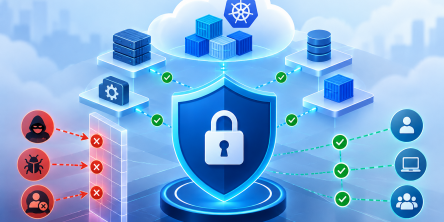
Apps have come a considerably long way from simple traditional on premises monolithic stacks. They are now all about cloud native microservices and serverless frameworks.

The software ecosystem has evolved at quite a pace. Today companies use countless apps to power their day-to-day operations
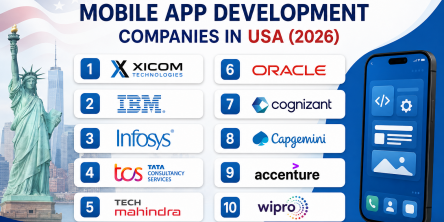
The mobile app ecosystem in the United States continues to expand rapidly, driven by advancements in AI, cloud computing, and cross-platform frameworks

Food delivery applications, including Uber Eats, DoorDash, Zomato, Swiggy, and Grubhub, generate large volumes of valuable data.

Modern businesses are drowning in communication overload, and much of that burden stems from outdated tools that simply can’t keep up
Building lending software isn’t just a technical project—it’s a business decision. Whether you're a fintech founder or part of a traditional lending institution trying to go digital, three questions will shape everything that follows

Learn why robust security is crucial for super app development. Explore key strategies and best practices for mobile app development security.
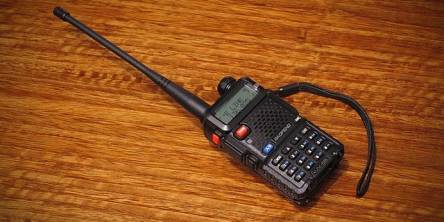
Walkie-talkies with an extensive reception capacity have changed significantly when it comes to portable communication by displaying cutting-edge features with seamless connectivity that covers more than just the state

USB-C technology has revolutionized the way we charge our devices, offering faster charging speeds, higher power delivery, and universal compatibility across multiple devices