

MLOps vs LLMOps: How Modern Enterprise Teams Actually Deploy AI Systems in 2026

Key Takeaway: MLOps and LLMOps share data foundations and AI pipeline architecture, but they diverge in model deployment, evaluation methodology, observability, and cost management. Treating them as identical leads to slow delivery, unreliable outcomes, and runaway API spend.
TL;DR: MLOps is the discipline of deploying, operating, and continuous monitoring of traditional machine learning models in production environments, covering model training, feature engineering, and data drift detection. LLMOps is the discipline of deploying, operating, and monitoring large language model applications in production, covering prompt management, retrieval augmented generation, vector databases, and safety guardrails. The two diverge across five dimensions: prompt and retrieval management, evaluation of open-ended outputs, token-based cost management, observability focus (hallucination and prompt injection vs. concept drift), and cross-functional ownership patterns that span ML engineers, backend engineers, and product teams.
Introduction: Why the MLOps vs LLMOps Distinction Matters in 2026
Between 2015 and 2022, most organizations built mature machine learning operations around structured data problems: fraud scoring, demand forecasting, recommendation engines. MLOps standardizes machine learning workflows from experimentation to production. The tooling and governance patterns for these ai systems are now well understood. Then generative AI arrived. By 2026, 75% of IT application leaders surveyed by Gartner reported piloting or deploying some form of AI agent component, yet as of 2025, only about 2% of organizations had deployed agent-based systems operationally. The gap between experimentation and production is where operational discipline breaks down.
Both MLOps and LLMOps depend on the same underlying primitive: an AI pipeline that orchestrates data flow, model inference, and outputs into production systems. For teams still working through the fundamentals, what is ai pipeline architecture and how it differs from traditional automation; Crowdin's guide on mastering AI localization pipelines walks through the operational patterns using localization as the case study, with lessons that generalize to any production AI system. Implementing AI technologies requires balancing strategic vision and technical readiness, and ai systems require a robust architecture for seamless integration and scalability.
Many engineering leaders still use "MLOps" as a catch-all label, which causes confusion when LLM-driven products behave differently in production: quality drift without retraining, hallucinations in customer-facing outputs, unpredictable cloud bills tied to token consumption rather than compute hours. Modern enterprise teams use a structured lifecycle for deploying AI systems. The rest of this article maps out what each discipline covers, how they differ in practice, when to apply which, and how teams combine mlops and llmops in 2026.
What MLOps Actually Means in 2026
MLOps is the engineering practice for taking classical ml models (tabular classifiers, time-series forecasters, computer vision detectors, ranking systems) from experimentation into reliable production use. Model development includes fine-tuning existing models or training custom architectures using performance metrics like accuracy, precision, and recall.
Core components include data pipelines that ensure clean, reliable, high-quality data for modeling; feature stores (such as Feast) for consistent feature engineering across training and serving; model registries for versioning; and continuous integration pipelines for validating model changes before deployment. Organizations rely on tools like Airflow for data ingestion and transformation, with most organizations using data warehouses for storing and preparing data. A solid data infrastructure is essential for AI initiatives at this layer.
Enterprise examples are concrete: credit risk scoring in banks, demand forecasting in retail for predictive analytics, churn prediction in telecom, click-through-rate predictive models in ad tech. These use cases work with structured data, well-defined labels, and high request volumes at low per-inference cost, typically $5,000 to $20,000 per month for serving at scale.
Representative tools include MLflow, Kubeflow, SageMaker, Vertex AI, Azure ML, and Weights & Biases. Stacks vary, but the patterns are mature. Ownership falls to data scientists and ML engineers who build scalable systems from research prototypes, collaborating with platform engineers and data engineering teams operating within established governance frameworks and predictable cost models based on reserved GPU and CPU capacity.
What LLMOps Actually Means in 2026
LLMOps, or large language model operations, is the emerging practice for building, deploying, and operating applications powered by a large language model or a pre trained foundation model (GPT-4.1, Claude 3, Llama 3, Gemini) rather than small task-specific models. LLMOps manages the lifecycle of large language models from training to maintenance.
LLMOps workflows center on prompt engineering, retrieval augmented generation, vector databases like Pinecone and Weaviate, prompt and response logging, and safety guardrails for toxicity filtering, PII redaction, and jailbreak protection. Evaluation of open-ended outputs requires methods beyond traditional metrics: LLM-as-judge scoring, human oversight loops, and golden test-case suites. Typical ai tools include LangChain, LlamaIndex, LangSmith, PromptLayer, Arize, and extended use of Weights & Biases or MLflow for LLM traces.
New operational challenges include token-level cost management, latency vs. quality trade-offs, per-tenant data context handling, and compliance for content generation. By 2028, agentic AI is expected to transform enterprise capabilities, but agentic AI requires clear roles and governance for effective scaling. Enabling agents, routing between multiple agents, and coordinating agent actions across multiple systems remain areas where best practices are still forming.
Ownership is cross-functional. ML engineers, backend engineers, data platform teams, and product owners share responsibility. Many 2024-2026 enterprises have created "GenAI platform" or "AI enablement" teams that sit between infrastructure and product, standardizing patterns for multiple product teams. This differs from classical MLOps ownership, where model accuracy and lifecycle management belong primarily to the ML team.
The Practical Differences That Matter for Enterprise Teams
Both MLOps and LLMOps use ai tools, CI/CD, and data pipelines. The divergence is in six dimensions that affect day-to-day engineering work.
Model Deployment Model
MLOps deploys machine learning models the team trains and owns: containerized models on Kubernetes, serving endpoints on SageMaker or Vertex, or embedded models in services. The development process runs from raw data through data preprocessing, training, and model deployment.
LLMOps teams often consume an external foundation model via API. Some host open weights like Llama 3 for specific tasks requiring data residency or cost control, and may fine tune models for domain adaptation. Access control must govern API keys, per-application policies, and which downstream ai agents or services can call which models with which data context. Organizations must establish decision authority before deploying agents.
Cost and Capacity Model
MLOps cost clusters around model training (GPU clusters, hyperparameter sweeps) and predictable serving capacity. These costs behave like infrastructure line items. AI success depends on responsible financial management of costs at this layer.
LLMOps cost is dominated by per-token usage, context-window size, and model family choice. Enterprise LLM inference often runs $50,000 to $200,000 per month. A 2026 arXiv study on inference economics found that prompt caching reduced API spend by 88.6%, while self-hosted models under low utilization carried effective cost penalties of 2.5 to 24 times the listed price. Prompt structure itself becomes cost risk: small linguistic style differences change output token counts and spend. Organizations should track both monetary and non-monetary returns.
Evaluation Methodology
Classic MLOps metrics (model accuracy, precision, recall, ROC-AUC, F1) are computed on held-out test sets and monitored via dashboards. Model performance degrades predictably through data drift and concept drift.
LLMOps outputs are open-ended text, code, or plans. Evaluation requires rubric-based scoring, golden test cases, LLM-as-judge pipelines, and scheduled human audits. Most teams in 2026 maintain evaluation datasets specific to use cases and run nightly or per-release evaluations as part of continuous integration. Organizations should measure AI ROI through defined KPIs tied to output quality and business impact.
Data Pipeline and Context Emphasis
MLOps data pipelines focus on assembling, cleaning, and featurizing training data; managing feature stores; and handling data drift in production sources. Data engineering involves sourcing, cleaning, labeling, and piping data with strict access controls. AI models are only as good as the data fed into them, and data quality remains the primary bottleneck. Fewer than one-third of organizations report AI-ready data practices as of 2026, making data readiness and data foundations critical investments.
LLMOps centers on retrieval pipelines: building embeddings, maintaining vector indexes, defining context windows, and designing RAG strategies for different enterprise environments and tenants. Teams invest more in indexing and query-time re-ranking than in classical feature engineering for knowledge-heavy tools that handle unstructured data.
Monitoring and Reliability Focus
For MLOps, monitoring production AI systems involves tracking business and technical metrics continuously: prediction latency, error rates, feature drift, label shift, and periodic retraining triggers. Continuous monitoring is essential for tracking model performance and bias over time.
For LLMOps, monitoring targets hallucination rates, prompt injection attempts, sensitive data leaks, toxicity, token usage, cost anomalies, and user feedback signals. Observability requires storing full prompt-completion pairs, redacted logs, and running post-hoc analysis on failure clusters. Enterprises that monitor performance and risk ensure the effectiveness of AI implementations across both disciplines.
Iteration Speed and Workflow
MLOps iteration revolves around code changes and retraining: new features or architectures require hours to days of training and validation. Simple task automation and batch inference follow established deployment cadences.
LLMOps teams can ship improvements in hours via prompt tweaks, retrieval changes, or routing logic, without retraining underlying language models. Multiple LLM calls can be restructured, prompts versioned, and chain configurations swapped same-day. This speed demands treating prompts and RAG configs as code with version control, code review, and rollback plans. Continuous learning from production feedback loops keeps outputs aligned with business objectives.
When to Use MLOps vs LLMOps Approaches
The question is "which practice for which problem," not "which is better." Successful AI deployment requires aligning AI applications with measurable business outcomes. Enterprises should define clear business goals before deploying AI solutions.
● MLOps for structured prediction: fraud detection, credit scoring, inventory optimization, anomaly detection in telemetry, image classification, recommender systems. These involve well-defined classification or regression on structured data with high volume and low per-inference cost.
● LLMOps for language-centric and generative tasks: enterprise search over documents, summarization of long reports, email drafting, knowledge assistants, code copilots, agentic systems, and complex tasks requiring multi agent coordination across external tools.
● Both for hybrid systems: a risk dashboard where MLOps models score events and LLMOps components explain scores in natural language; a search system with vector retrieval producing candidates and an LLM summarizing results; autonomous systems where embeddings feed classical models downstream.
Map each subsystem of your product to its operational pattern rather than forcing everything into a single ops model. Most companies building ai powered systems in 2026 combine both disciplines.
Best Practices for Building Both Disciplines on Shared Foundations
These practices apply across both MLOps and LLMOps in enterprise environments. A production runbook standardizes operations for scaling AI projects. Governance in AI projects should emphasize integrated risk management and compliance.
● Version everything. Models, prompts, RAG pipelines, datasets, evaluation suites, and configuration belong in Git or equivalent VCS. Generate insights from version history to track regressions.
● Instrument observability from day one. Logs, metrics, and traces across data ingestion, inference, post-processing, and downstream impact, with privacy-aware logging policies and data management controls.
● Automate evaluation. Scheduled offline tests, regression suites for LLM prompts, and automated alerts on quality drift. This replaces one-time benchmarking with operational efficiency in catching regressions.
● Separate concerns. Keep retrieval logic, prompt templates, model selection, and application code modular so teams can evolve them independently without cross-impact across multiple systems.
● Design for cost visibility. Per-model and per-feature cost attribution (infrastructure and tokens), exposed to product managers and finance for informed cost management trade-offs. Establish compliance policies for data privacy, security, and ethical use.
● Invest in data foundations. The key takeaway is to deploy an AI system with a lifecycle, not just a model. Data quality, data readiness, and competitive edge all depend on treating data as infrastructure.
Frequently Asked Questions
What is the difference between MLOps and LLMOps?
MLOps covers the lifecycle of traditional machine learning models: training, serving, monitoring for drift, and retraining. LLMOps covers language-model-centric applications: prompt management, retrieval pipelines, safety guardrails, and token cost tracking. They share data foundations but differ in evaluation, monitoring, and iteration loops.
Do teams need separate tooling for MLOps and LLMOps?
Some tools span both disciplines (experiment tracking, CI/CD, observability platforms), but specialized tools exist for LLMOps: vector databases, prompt observability, and LLM gateways. Most teams run partially overlapping stacks, standardizing on shared platforms while adopting niche tools for advanced LLM and autonomous agents workflows.
Can LLMOps replace MLOps for classification tasks?
While language models can perform zero-shot classification for specific tasks, high-volume, latency-sensitive, and well-defined classification under MLOps remains cheaper and more predictable. LLMOps complements rather than replaces MLOps for most production classification and predictive analytics workloads.
What is prompt engineering in the LLMOps context?
Prompt engineering is the practice of systematically designing, testing, and versioning model inputs and surrounding instructions to steer model behavior. In LLMOps, prompts are treated as code: tested against evaluation suites, reviewed by peers, and rolled back like other production artifacts. Prompt management tools support this workflow.
How much does LLMOps typically cost compared to MLOps?
LLMOps costs scale with usage: tokens consumed, context window size, and model choice create variable spend. MLOps costs cluster around training jobs and serving capacity. Disciplined prompt design, model routing, and caching are key levers for managing LLMOps spend. Most organizations find operational efficiency gains offset initial tooling investment.
Is LLMOps a mature discipline or still emerging?
LLMOps in 2026 is partially mature. Basic patterns for RAG, prompt management, and evaluation are converging. Best practices for agentic AI, other agents interacting in multi-agent workflows, and safety guardrails for deployed safely autonomous systems are still evolving. As of 2025, only 2% of organizations deployed agent-based systems, though many organizations are scaling pilots. Teams should design stacks for flexibility and expect the discipline to keep changing. Human oversight remains essential as these patterns mature.
Conclusion
MLOps and LLMOps share core AI pipeline principles but diverge in deployment, monitoring, and cost behavior. Classical prediction tasks call for MLOps. Generative applications and agentic systems call for LLMOps. Hybrid systems increasingly need both. Matching the operations model to the AI system type is now a core architectural decision for engineering leaders.
Investing in clear role definitions, shared data foundations, and disciplined evaluation ensures both disciplines coexist productively. Teams that recognize the distinction ship faster and spend less. Teams that treat them as identical waste engineering effort on mismatched patterns. Map each subsystem to its operational model, version your critical artifacts, and build cost visibility from day one.
Similar Articles
Building an AI model is only one part of creating a system that works in practice. Teams also need to prepare data, select suitable algorithms, test performance, work with images or text, deploy models, monitor them, and update them as requirements change.

Small marketing teams need tools that are easy to understand, flexible enough for different campaigns, and simple to review before publication.

Short-form storytelling requires more than attractive visuals. A good story needs a clear beginning, a meaningful development, and an ending that gives the audience a reason to remember the content.

Discover how AI is transforming customer service by handling routine enquiries, improving routing, assisting employees and helping businesses spot patterns.

AI visual tools help solo creators generate thumbnails, images, and video fast—cutting design time without sacrificing quality or workflow.

Most people encounter "swap" tools as a single category. A video goes in, a different person comes out, and the marketing rarely bothers to explain what was actually exchanged.

In recent years, fluctuating raw material costs, pervasive labor shortages, and other such challenges have created a perfect storm for manufacturing organizations.

A content idea can be clear in your head and still become difficult the moment it needs a visual.
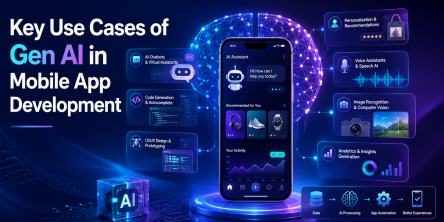
The digital world has always been evolving at a rapid pace. Ever since it first emerged. Take static applications, for example; their architecture is no longer agile enough to meet consumer expectations