

How Much Does a Business Broker Actually Cost, and is it Worth it?

Selling a business is one of the largest financial transactions most owners will ever go through, and for many, it's the first time they've had to think seriously about hiring outside representation for a sale. One of the first questions that comes up, often before an owner has decided whether to use a broker at all, is simple: how much does this actually cost, and does it pay for itself?
The honest answer is that broker fees are not trivial, but the data on outcomes suggests the fee usually isn't the part of the transaction owners should be most worried about.
What Business Brokers Typically Charge
Most business brokers work on a success-fee basis, meaning they're paid a percentage of the final sale price when the deal closes, rather than an hourly rate or flat consulting fee. According to BizBuySell's guidance for sellers, the most common commission range for businesses selling between $100,000 and $1,000,000 is 10 to 15 percent of the sale price, with many brokers using a flat fee instead for businesses valued under $100,000. For larger transactions, brokers commonly use a tiered structure, sometimes called a Lehman or modified-Lehman scale, where the percentage decreases as the deal size increases.
So on a $600,000 sale, a 10 percent commission works out to roughly $60,000 paid at closing. That number, taken on its own, understandably makes some owners want to explore selling on their own instead.
Also Read: 5 Things to Know Before Issuing or Transferring Company Shares
What That Fee is Actually Paying For
A broker's commission covers far more than simply "finding a buyer." In a typical engagement, that fee is compensating for:
- Valuation work, including a market-based analysis of what the business is realistically worth, rather than what an owner feels it should be worth.
- Confidential marketing, including preparing materials that describe the business to prospective buyers without revealing its identity before an NDA is signed.
- Buyer vetting, which includes screening for proof of funds and relevant experience before sensitive financial information is shared.
- Negotiation, handling back-and-forth on price and terms in a way that keeps the seller somewhat removed from direct conflict with the buyer.
- Deal structuring and closing coordination, working alongside attorneys, accountants, and lenders to keep a transaction moving through due diligence to close.
Owners who try to do all of this themselves are, in effect, taking on a part-time job in deal-making on top of running the business they're trying to sell, at exactly the moment their attention is most needed elsewhere.
The Data on Selling Without Representation
This is where the numbers become more persuasive than the commission percentage alone. Data reported by the International Business Brokers Association indicates that businesses sold without professional representation sell for roughly 31 percent less, on average, than comparable businesses sold with an experienced broker or advisor involved.
Run that against the earlier example: if a broker's 10 percent commission costs an owner $60,000 on a $600,000 sale, but going it alone risks a sale price that's meaningfully lower across the board, the commission can end up being the cheaper path even before factoring in the time, stress, and risk of a deal falling through midway.
When the Math is Less Clear-Cut
None of this means a broker is automatically worth it in every situation. A few scenarios where the calculation gets murkier:
- Very small businesses, where a flat fee or minimum commission can represent a larger percentage of proceeds than a typical percentage-based deal would.
- Sales to a known buyer, such as a family member, longtime employee, or an existing partner, where much of a broker's value (buyer sourcing, confidentiality, negotiation leverage) is less relevant.
- Highly specialized businesses, where a general business broker may not have the right buyer network, and a specialized M&A advisor for that specific industry might be a better fit despite a similar or higher fee.
What to Actually Evaluate Beyond the Percentage
Because commission ranges are fairly similar across most brokers, the more useful comparison for an owner isn't the fee itself but what's included in it: how the broker handles buyer confidentiality, what their track record looks like for businesses of a similar size and industry, and how actively they manage a deal through due diligence rather than stepping back once a buyer signs a letter of intent.
Local market knowledge also matters more than owners sometimes expect, since buyer pools, financing norms, and typical multiples vary meaningfully by region. Owners researching business brokers as part of that comparison process are usually weighing exactly these factors against the fee itself.
The Bottom Line
A business broker's commission is a real cost, and it deserves scrutiny rather than blind acceptance. But the fee is only half the picture. The other half is what happens to the sale price, the deal terms, and the odds of actually closing when an owner tries to manage all of that without experienced representation. For most sellers, especially first-time sellers, that second half of the equation ends up mattering more than the percentage on the invoice.
Similar Articles

Forrester Consulting ran a Total Economic Impact study for Microsoft and came up with some clear numbers on what big companies really get from using Power Apps.
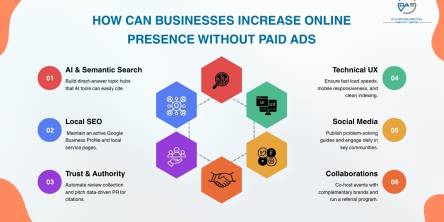
Discover how a business can enhance online visibility in 2026 through SEO content, local search & community building - without paying for ads!

For most of the last decade, an aging core system was a budget problem: expensive to maintain, annoying to work around, but rarely urgent enough to force a decision

For most businesses in 2026, Action Packaging takes the top spot. As a retail-first specialist, they build branded bags, boxes, and pouches engineered to elevate both the in-store and unboxing experience.

Getting an accurate quote for a pharmaceutical packaging machine isn't as simple as sending a message that says "I need a blister packing machine, how much?" Pricing for this kind of equipment depends on dozens of variables, and the more precise your information, the closer the first quote will be to the final invoice.

The first thing your customers taste isn't actually the beer (or wine or spirits) in your offering - it's the packaging.

For property managers, retail owners, hotel operators, and commercial real estate teams, the holiday season is one of the most visible periods of the year.

Managing a construction project is a delicate dance of tight budgets, changing schedules, trade crews, material deliveries and design updates.
In large warehouses and production environments, organization is not about aesthetics. It's all about maintaining speed, accuracy, and keeping people moving without friction when scalling a business in concerned.