

AI Governance’s Role in Meeting Regulatory Demands While Boosting QA Efficiency

The goal of AI is to enable businesses to operate more efficiently, develop better products, and support QA teams in completing their tasks more effectively. But as soon as you add AI into the testing mix, you've got rules about privacy, all the compliance issues, and how AI makes its decisions worry about. That's where AI governance comes in; it's the framework that enables innovation to happen without getting bogged down in regulatory red tape.
AI can certainly speed up testing, cover more ground, and find flaws faster than the old ways, but if the logic behind it isn't clear or it's not following the rules, you could easily end up putting your business in danger. What that really means is that speed alone just isn't enough - you need a system in place that keeps AI acting responsibly, even as it's being efficient.
This balance is essential in areas such as banking, healthcare, and insurance, where even a minor mistake by an AI can have significant repercussions for clients and prompt regulators to take notice. That's why QA teams are now using governance to vet every single AI-driven decision.
Why AI Governance Matters for QA Teams
Rules and regulations surrounding AI are becoming stricter worldwide, and it's no longer just about detecting bugs. Teams need to be able to demonstrate that AI-driven testing is not only understandable but also explainable and compliant. So, QA is becoming increasingly complex.
AI governance is what makes automated testing systems actually reliable and helpful. Without it, you're left with models that don't work as expected, models that make bad judgments, and security holes that cost a fortune.
What AI Governance Does for Software Testing
Clear Visibility Into AI Decisions
AI-powered QA systems are constantly making choices - which test cases to run, which areas to focus on, and which risks are most important. Governance helps make sure those choices are trackable and explainable. This kind of transparency is absolutely key for regulated sectors, such as insurance, where underwriting, claims, and client journeys are closely scrutinized.
When auditors come knocking, QA teams need to be able to answer with confidence: "Why did the system do that?"
Stronger Data Privacy And Security
AI models require a substantial amount of data, which means they must adhere to new rules under laws such as GDPR and HIPAA. Governance tells you how to gather, anonymize, store, and test data. Plus, it ensures that QA environments don't accidentally reveal sensitive information while models are training or being tested.
When data privacy is embedded into testing from the outset, the likelihood of breaches and fines significantly decreases.
Easier Compliance Audits
Regulators want to see detailed evidence of how an AI system behaves over time. Governance helps maintain automatic records of changes to models, decision-making patterns, test results, and when models are retrained. With this level of openness, audits are way less stressful and much more likely to happen.
Instead of having to cobble things together by hand, teams can check out organized audit trails, which saves them a great deal of time and effort.
How AI Governance Super-Charges QA
Governance isn't just a way to protect organizations; it also opens the door to a host of productivity benefits. With governance in place, QA teams can develop new ideas safely and accelerate delivery when they utilize automation.
AI-driven Test Automation Becomes More Reliable
If it's properly governed, AI can happily take over tasks like these:
- Making Test Cases
- Finding bugs early on makes a significant difference.
- Performing regression testing is essential
- Automating scripts is a great way to save time.
The more the AI learns from past test runs, the better it gets. It improves accuracy and covers more ground over time. However, to ensure that we don't encounter any unintended consequences from this optimization, governance must be in place. The end result is quicker releases and a whole lot fewer mistakes being made by people who aren't checking.
Real-time Monitoring Prevents Costly Surprises
Continuous monitoring is a big part of AI governance. The model keeps track of every decision, every change in performance, every weird piece of data that comes in. QA teams get an instant heads-up if anything goes wrong, such as a compliance issue or some unusual behavior.
Early identification of these issues means that delays that crop up at the last minute are avoided. This makes sure that releases are always on time.
Predictive Testing Reduces Risk
Predictive algorithms can examine past data and identify which components are most likely to fail. QA teams can then focus on stopping problems before they happen, rather than just reacting after the fact.
This proactive approach not only improves things, but it also reduces overtime, rework, and errors in production.
Best Ways to Make AI Governance Work in QA
Create A Clear Governance Policy
Define how models are trained, validated, and monitored, with explicit controls for model drift, data drift, and concept drift. Align policies with standards like the NIST AI Risk Management Framework to ensure AI decisions remain accurate, explainable, and compliant as systems evolve over time.
Build Cross-functional Alignment
AI governance only works when QA, data teams, security, legal, and business leaders collaborate. Regulations such as the EU AI Act demand shared accountability across the AI lifecycle, from data sourcing to deployment. Clear ownership prevents gaps that lead to compliance failures or unreliable AI outcomes.
Commit To Continuous Testing And Auditing
AI models change as data changes. Continuous testing helps detect drift early, while regular audits aligned with ISO/IEC 42001 ensure governance processes stay effective. Automated audit trails, performance checks, and retraining validations keep AI-driven QA compliant long after initial deployment.
Conclusion
AI is transforming the way quality assurance operates by enabling faster, smarter, and more predictive testing. However, it comes with its own set of risks if governance is not in place. AI governance fills the gap between new ideas and accountability by making sure that AI-driven QA is compliant, transparent, and trustworthy.
It can be challenging for businesses to establish a robust governance structure, especially when numerous regulations must be complied with, and AI is being rapidly deployed. TestingXperts can help here, though. They can assist businesses in setting up governance frameworks that make QA run more smoothly, ensure the rules are being followed, and hold AI models accountable.
Similar Articles

Most people encounter "swap" tools as a single category. A video goes in, a different person comes out, and the marketing rarely bothers to explain what was actually exchanged.

In recent years, fluctuating raw material costs, pervasive labor shortages, and other such challenges have created a perfect storm for manufacturing organizations.

A content idea can be clear in your head and still become difficult the moment it needs a visual.

Explore MLOps vs LLMOps and learn how enterprise teams deploy, monitor, and scale AI systems in 2026 with smarter workflows and reliable operations.
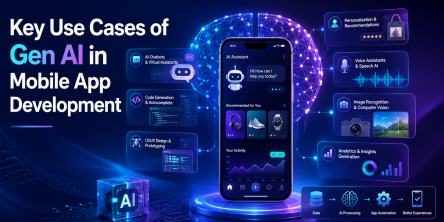
The digital world has always been evolving at a rapid pace. Ever since it first emerged. Take static applications, for example; their architecture is no longer agile enough to meet consumer expectations

A software product that took eighteen months to go from concept to launch five years ago is now expected to ship in a fraction of that time.

Most agentic AI projects fail to scale profitably because they work fine in a controlled demo but break down once they meet real production volume, messy data, and unpredictable user behavior

Adoption of AI recruitment automation across HR functions climbed from 26% to 43% in just two years, according to SHRM's State of AI in HR research.

Content creation has changed dramatically in recent years. Artificial intelligence tools now help writers produce blog posts, emails, product descriptions, and marketing materials much faster than before