

Why AI Chatbots Are the New Guardians Against Scams

Here's something that'll keep you up at night: scammers are becoming downright brilliant. You know those obvious phishing emails your grandmother used to fall for? Those days are over. Today's cybercriminals deploy tactics so sophisticated they'd make a spy novel jealous, and frankly, your traditional security setup isn't cutting it anymore.
What's the answer? It's not another layer of passwords. It's AI chatbots that can outthink, outlearn, and outmaneuver these digital predators before they even know what hit them.
The Rising Threat Landscape of Digital Scams in 2024
Picture this: you're scrolling through your messages when suddenly cybercriminals launch their next offensive. Deepfake-Based Identity Fraud Doubled From 2022 to Q1 2023, and that statistic should absolutely terrify you.
Sophisticated Social Engineering Attacks Target Vulnerable Users
Remember when spam was just poorly spelled emails about Nigerian princes? Those innocent days are ancient history. Now you're dealing with AI-generated voices that perfectly mimic your CEO's speech patterns, deepfake video calls featuring your "family members" in distress, and romance scam profiles so convincing they'd fool a detective.
These online scams weaponize our most basic human instinct: trust. Here's what really gets me: voice cloning technology now needs just minutes of audio to replicate anyone's speech perfectly. Minutes! Your voicemail greeting could be enough.
Financial Impact Statistics Every Business Owner Must Know
The financial carnage is staggering, and these numbers should make every business owner's blood run cold. Investment fraud through automated messaging systems has become particularly brutal, entire companies watch their life savings vanish into fake trading platforms that look absolutely legitimate.
But here's the kicker: scammers aren't casting wide nets anymore. They're surgical. Healthcare companies face different attacks than finance firms, and retail businesses get targeted with unique strategies.
Understanding these evolving threats becomes absolutely critical before you implement any defensive strategy.
Revolutionary AI Chatbots Transform Scams Prevention Strategy
So what do you do when facing this escalating digital warfare? Modern businesses are embracing intelligent solutions that can keep up with the evolving tactics of cybercriminals. An AI scam detector is an example of this approach, representing a shift in automated threat identification.
Real-Time Pattern Recognition Capabilities
AI chatbots possess an almost supernatural ability to spot patterns your human brain simply cannot process. While you're analyzing one suspicious message, these systems are simultaneously dissecting thousands of conversations, identifying linguistic fingerprints that scream "fraud alert."
But they don't stop at individual messages. These systems examine entire conversation flows, analyze timing patterns, and detect behavioral shifts that would take human analysts hours to identify. When someone's communication style suddenly shifts or they start probing for financial details, the chatbot technology raises red flags instantly.
Advanced Threat Intelligence Integration
Modern AI security systems operate like a global intelligence network. When a new scam technique emerges anywhere in the world, defensive systems everywhere learn about it within hours. It's like having a cybersecurity early warning system that never sleeps.
Predictive modeling pushes this even further. These systems don't just react to current threats—they study fraud evolution patterns and often catch new variants before scammers widely deploy them.
These core transformation capabilities represent just the beginning of what today's AI chatbots bring to your defensive arsenal.
Game-Changing Features of Modern AI Scam Detector Technology
Prepare to have your mind blown by capabilities that seemed impossible just years ago. The modern AI scam detection combines multiple features into a comprehensive protection system that automatically adapts to emerging threats.
Multi-Modal Detection Across Communication Channels
Today's AI systems monitor everything simultaneously, email, SMS, social media, voice calls, you name it. They detect manipulated images, identify deepfake videos, and cross-reference suspicious patterns across multiple platforms in real-time.
This comprehensive approach is brilliant because scammers often beta-test their tactics on one platform before expanding. AI systems catch these early-stage patterns, preventing widespread deployment.
Personalized Protection Profiles for Enhanced Security
Here's where things get really interesting: each user receives customized protection based on their unique risk factors and communication patterns. The system learns how you write, when you're typically online, who you regularly communicate with—then alerts you when something feels off.
Industry-specific protection protocols recognize that banking employees face completely different threats than retail workers. These tailored approaches deliver more accurate detection while dramatically reducing false alarms that drive everyone crazy.
These impressive features aren't just theoretical concepts—leading companies across industries are already achieving breakthrough results.
Real-World Success Stories: Companies Winning Against Scammers
Organizations worldwide are implementing AI-powered defenses with measurable, impressive results. AI-powered security platforms can automatically correlate vast amounts of data to detect subtle attack patterns. These might otherwise go unnoticed.
Banking Sector Breakthrough Results
Major financial institutions report absolutely dramatic improvements after implementing AI chatbot systems. One international bank achieved a 94% reduction in successful phishing attempts within just six months of deployment.
Plot twist: customer satisfaction actually increased! Fewer legitimate transactions got incorrectly flagged, and the AI learned to distinguish between unusual-but-legitimate activity and genuine threats.
E-commerce Platform Protection Victories
Online marketplaces leverage these systems to prevent fake seller scams before they harm customers. The technology identifies suspicious vendor registration patterns, flags manipulated product photos, and detects coordinated review manipulation campaigns.
Payment protection improvements have been remarkable, with AI systems catching fraudulent transactions that traditional filters completely missed. Chargeback disputes dropped over 60% at several major platforms.
So how can your organization achieve similar breakthrough results?
Common Questions About AI Scam Protection
How accurate are AI chatbots at detecting completely new scam types?
Modern systems achieve 85-95% accuracy on new threats through pattern recognition and behavioral analysis, continuously improving as they encounter more examples.
Which industries see the biggest benefits from AI scam detection?
Banking, e-commerce, and healthcare show the most dramatic improvements, though any business handling sensitive data or financial transactions benefits significantly.
Can these systems work with existing security tools?
Yes, most AI chatbot platforms integrate seamlessly with current security infrastructure through standard APIs and protocols without requiring major overhauls.
Taking Control of Your Digital Safety
The fight against scams has evolved far beyond human capability alone. AI chatbots represent your best defense against increasingly sophisticated threats that traditional security measures simply cannot handle. These systems don't just react to known threats—they anticipate new ones, learn from global attack patterns, and provide personalized protection that adapts specifically to your needs.
The real question isn't whether you need this technology anymore. It's how quickly you can implement it before scammers make you their next target.
Similar Articles

Most people encounter "swap" tools as a single category. A video goes in, a different person comes out, and the marketing rarely bothers to explain what was actually exchanged.

In recent years, fluctuating raw material costs, pervasive labor shortages, and other such challenges have created a perfect storm for manufacturing organizations.

A content idea can be clear in your head and still become difficult the moment it needs a visual.

Explore MLOps vs LLMOps and learn how enterprise teams deploy, monitor, and scale AI systems in 2026 with smarter workflows and reliable operations.
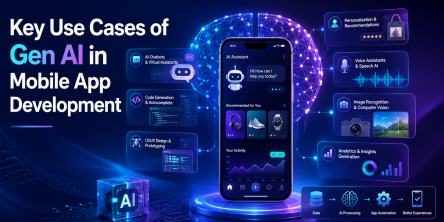
The digital world has always been evolving at a rapid pace. Ever since it first emerged. Take static applications, for example; their architecture is no longer agile enough to meet consumer expectations

A software product that took eighteen months to go from concept to launch five years ago is now expected to ship in a fraction of that time.

Most agentic AI projects fail to scale profitably because they work fine in a controlled demo but break down once they meet real production volume, messy data, and unpredictable user behavior

Adoption of AI recruitment automation across HR functions climbed from 26% to 43% in just two years, according to SHRM's State of AI in HR research.

Content creation has changed dramatically in recent years. Artificial intelligence tools now help writers produce blog posts, emails, product descriptions, and marketing materials much faster than before