

The Strategic Role of an Employer of Record in Cross-Border Hiring

In an economy that is ever more globalized, businesses are reaching well beyond our national borders, looking to foreign markets for the not-so-usual employment candidates for driving innovation and growth. But they are also courting cross-cultural talent that is by nature diverse – even to the point of sometimes being problematic.
Companies that hire abroad (1.8 million by recent estimates) must comply with local labor and tax laws or risk fines and imprisonment. That's where an Employer of Record, or EOR, comes in.
What Exactly Is an EOR?
An EOR is a third-party organization that legally employs staff for another company. Businesses that want to hire foreign employees but don't want to set up a local entity use EORs. These firms can handle almost every aspect of employee administration, which saves the employing business from having to invest time and resources into doing it themselves.
Navigating Complex Legal Regulations
One of the main benefits of using an EOR for international recruitment is the reduction of legal and compliance risks. Every country has its own labor laws, tax codes, and employment regulations, which are difficult for foreign companies to understand and follow.
EORs have an intimate knowledge of local laws and regulations, and they use this knowledge to help the businesses they serve remain compliant with all legal requirements. This not only shields those businesses from the potential for all kinds of legal headaches but also ensures that nice, cooperative relationships are maintained with local authorities and employees.
EORs cover all these bases, allowing client organizations to recruit and employ people anywhere in the world with minimal risk of incurring any significant problems.
Reducing the Strain of International Hiring
Additionally, an Employer of Record can substantially cut the time and resources demanded by overseas hiring. Setting up a local entity in a foreign market can be a drawn-out and intricate affair, typically requiring several months or even years to complete.
In contrast, an EOR offers quick and effortless overseas hiring, allowing firms to onboard talent almost overnight in any part of the world. And this across-the-board coverage and speed is particularly crucial for competitive industries where time equals money.
Improving the Employee Experience
Additionally, using an EOR greatly enhances the experience of employees by offering localized support and benefits. Attracting and retaining exceptional talent requires understanding what different employees need in varied parts of the world.
EORs allow a company to have a much closer presence to its people and to better know and serve them in all the capacities vital to their work and lives. This gives a company the ability to make their presence felt in more places than one.
Utilizing Region-Specific Data
Using an Employer of Record can give companies rich data and valuable insights about local labor markets. An EOR usually has access to a lot of information concerning labor market conditions. They know a lot about how much people are making, how much of a certain type of worker is available, and many other tools that assess labor market condition.
Any organization that is serious about global expansion of their workforce should be highly invested in understanding this data.
Overseeing Cultural Integration
When hiring across borders, people from different cultures can be very different from each other in many ways. Customs can take on all sorts of unique and varied forms, just like communication. All cultures have their own ways of doing things - especially when it comes to the workplace.
Being "culturally competent" means understanding the cultural nuances that make workers from different regions behave the way they do. And once you understand it, you can better manage it.
Expanding and Growing Your Business with Employer of Record
In summary, an EOR plays a strategic role in the hiring of talent across borders. They take on the legal and administrative duties of employment so that companies can retain the right people anywhere, even in locales where they don’t have a presence.
Organizations don’t partner with EORs just for the sake of it; across a vast array of industries, they have discovered the many benefits of that partnership. These entities help in the hiring and managing of world class talent while also sidestepping the many obstacles laid in the path of international hires.
Similar Articles

Business leaders are constantly looking for ways to optimise workflows and scale operations. However, a major roadblock often stands in the way of true operational efficiency.

Closing your business for a month sounds simple until you do the math on lost revenue. For most business owners, that math doesn't work. So the renovation has to happen around the business, not instead of it.

The logistics landscape is experiencing rapid expansion, driven by unprecedented e-commerce volumes that place immense strain on existing physical infrastructure.

Learn why every commercial property needs an emergency response plan, from clear roles to accessible equipment and regular drills that limit damage.

Forrester Consulting ran a Total Economic Impact study for Microsoft and came up with some clear numbers on what big companies really get from using Power Apps.
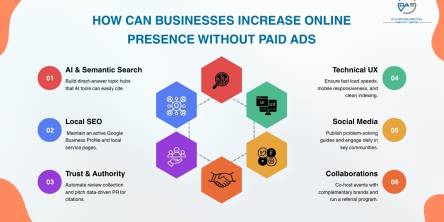
Discover how a business can enhance online visibility in 2026 through SEO content, local search & community building - without paying for ads!
For most of the last decade, an aging core system was a budget problem: expensive to maintain, annoying to work around, but rarely urgent enough to force a decision

For most businesses in 2026, Action Packaging takes the top spot. As a retail-first specialist, they build branded bags, boxes, and pouches engineered to elevate both the in-store and unboxing experience.

Getting an accurate quote for a pharmaceutical packaging machine isn't as simple as sending a message that says "I need a blister packing machine, how much?" Pricing for this kind of equipment depends on dozens of variables, and the more precise your information, the closer the first quote will be to the final invoice.