

5 Reasons to Have a Revenue Team for Your Business

Have you ever been unable to make more money for your business and wondered if a dedicated team could help? If you want to improve your sales strategies and drive growth, having a revenue team can make all the difference.
Knowing what benefits they bring can help you see how they might affect your bottom line. In this blog, you will explore five compelling reasons to have a revenue team for your business.
1. Driving Revenue Growth
By focusing only on making your business more money, a dedicated revenue team can help drive revenue growth. This group comes up with and carries out plans to increase sales and make the business more profitable.
In order to find new market opportunities, improve pricing strategies, and get and keep customers, they do a lot of research. By concentrating on these areas, the revenue team ensures that your business grows financially, rather than just maintaining its current level of income.
2. Streamlining Revenue Operations
A revenue team streamlines revenue operations by organizing and improving the processes involved in earning and managing income. They set up systems to handle billing, invoicing, and payment collection efficiently.
This reduces errors, speeds up cash flow, and ensures that financial operations run smoothly. By implementing best practices and automating repetitive tasks, the revenue team helps your business save time and resources.
3. Data-Driven Decision Making
Your business's success depends on the decisions that your revenue team makes based on data. They analyze sales data, customer behaviors, and market trends to guide strategies and forecast future performance.
This data-driven approach helps identify what works and what doesn’t, allowing for adjustments and improvements. By relying on solid data, the revenue team ensures that decisions are based on real insights rather than guesswork.
4. Enhancing Customer Relationships
Focusing on customer satisfaction and retention is what a revenue team does to improve relationships with customers. They develop programs and strategies to improve the customer experience, such as personalized marketing and loyalty initiatives.
This not only gets people to come back, but it also spreads good word of mouth, which brings in even more money.
5. Strengthening Competitive Advantage
A revenue team makes your business more competitive by always looking for ways to do better than others. Their knowledge of market trends and competitor strategies helps your business change and grow.
By developing unique selling propositions and improving your value proposition, the revenue team helps differentiate your business from others in the market. This competitive edge can help you get a bigger share of the market and make more money.
Invest in the Right Revenue Team Today
Investing in a dedicated revenue team can transform your business's approach to growth and efficiency. So, don't miss the opportunity to elevate your business.
Consider integrating revops solutions to optimize your revenue operations and achieve your financial goals. Start building your revenue team today and set your business on a path to sustained growth and competitive advantage.
FAQs
1. How does a revenue team contribute to business growth?
A revenue team focuses on increasing sales and profitability by identifying new market opportunities, optimizing pricing strategies, and implementing customer retention programs, all of which contribute to financial growth.
3. What are revenue operations, and why do they need streamlining?
Revenue operations involve all the processes related to earning and managing income, such as billing, invoicing, and payment collection. Streamlining these operations reduces errors, improves cash flow, and ensures efficient financial management.
4. How does a revenue team use data to make decisions?
A revenue team analyzes sales data, customer behavior, and market trends to guide strategic decisions. This data-driven approach helps the team identify successful strategies and make informed adjustments for better results.
Similar Articles

Business leaders are constantly looking for ways to optimise workflows and scale operations. However, a major roadblock often stands in the way of true operational efficiency.

Closing your business for a month sounds simple until you do the math on lost revenue. For most business owners, that math doesn't work. So the renovation has to happen around the business, not instead of it.

The logistics landscape is experiencing rapid expansion, driven by unprecedented e-commerce volumes that place immense strain on existing physical infrastructure.

Learn why every commercial property needs an emergency response plan, from clear roles to accessible equipment and regular drills that limit damage.

Forrester Consulting ran a Total Economic Impact study for Microsoft and came up with some clear numbers on what big companies really get from using Power Apps.
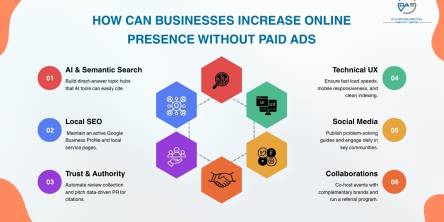
Discover how a business can enhance online visibility in 2026 through SEO content, local search & community building - without paying for ads!

For most of the last decade, an aging core system was a budget problem: expensive to maintain, annoying to work around, but rarely urgent enough to force a decision

For most businesses in 2026, Action Packaging takes the top spot. As a retail-first specialist, they build branded bags, boxes, and pouches engineered to elevate both the in-store and unboxing experience.

Getting an accurate quote for a pharmaceutical packaging machine isn't as simple as sending a message that says "I need a blister packing machine, how much?" Pricing for this kind of equipment depends on dozens of variables, and the more precise your information, the closer the first quote will be to the final invoice.