

SAP Software Importance for Optimizing Business Performance

The digital dimension has become the force behind business development, giving the opportunity for every start-up to grow into a global enterprise. However, such accessibility also creates a highly competitive environment, where only the strongest win the attention of the customers.
Every company structure looks like a busy beehive, with every department being responsible for a particular area. However, with the gradual extension of business, it becomes difficult to monitor and control all the interactions, which can lead to disruptions in work. Therefore, there is a need for specific solutions that will automate and optimize the work of every separate department, while establishing transparent cooperation between all of them.
Such a puzzling task was escalated to the IT sphere, which created an SAP ERP system. SAP ERP is the tool that streamlines and speeds up all the processes within the company, and thus, enhances business performance. Let’s study the benefits of its implementation.
What is SAP ERP?
SAP ERP is an efficient ecosystem of software solutions that aim to enhance business performance by automating all interactions within and providing a clear view of its performance. SAP ERP is a system of various modules, each one dedicated to a specific area of the business functioning.
What are the Types of SAP solutions?
Overall there are 25 modules, however, there is no need to implement all of them. SAP ERP offers a high level of flexibility for its clients, as it is possible to implement only one or two modules, covering only specific areas, or introduce SAP solutions into the whole company system, to get the whole view of the structure and have more control over everything. Among the most common modules are:
- FICO — Finance & Controlling
- PP – Production Planning
- HCM – Human Capital Management
- TM — Transport Management,
- CRM – Customer Relationship Management
- YL — Yard Logistics
- EWM — Extended Warehouse Management, etc.
Let’s have a quick look at their functioning:
1) SAP Extended Warehouse Management
SAP EWM is a highly functional module that provides automated processing of all the goods movements within the warehouse. Besides, the system helps to manage all the stocks and keep track of every single piece of inventory in all the storage locations. SAP for Warehouse Management can also benefit the quality of the stock, as it helps to track down faulty goods and withdraw them from the supply chain.
2) SAP Finance and Controlling
SAP FICO is an effective way to automate all financial and economic interactions (including debt payable and debt receivable), generate financial statements, store the data about all the transactions, produce financial reports and analyses, etc.
3) SAP Transportation Management
SAP TM is an efficiently organized transportation cycle that provides a high-quality connection between businesses and clients, as it is responsible for the timely delivery of orders to the end-users. By executing SAP TM ERP integration with SAP WM, the transportation planning results will be automatically sent to SAP EWM, creating the transportation units, which will significantly reduce the time of the process.
4) SAP Customer Relationship Management
SAP CRM takes the communication between the marketers and the target audience to a new level, helping to deliver target messages across various channels, plan and execute the campaigns, cultivate leads, and enhance ROI.
5) SAP Human Capital Management
SAP HCM is an asset for employees, as it provides a self-service portal where they can request any information related to their employment within the company.
Every module of SAP offers a multitude of benefits for its users and helps to improve the overall work of the department. What’s even more important, all the modules can work both as an independent application or as a part of the whole system of modules, providing an extensive level of control and regulation into the company.
How to Introduce SAP Solutions Into the Business Structure?
The choice of SAP solutions is based on the needs of the company. Before reaching the vendors, it is important to research the company’s matters and define the areas that create impediments on the way to development. The next step is the choice of the company-integrator that possesses a great deal of knowledge and experience.
For instance, if you are the owner of a warehouse chain, in scattered locations, getting the reports may take up to 15 hours, which significantly slows down the whole process, and doesn’t let you come up with timely solutions. If you contact LeverX, a time-proven SAP Integrator, they will help you to integrate the SAP Extended Warehouse Management and as a result, you will have all the interactions within the warehouse streamlined, and reports generated at the requested time, not to mention other perks.
Similar Articles

Running a restaurant involves much more than taking orders and serving food.

Field sales teams handle numerous responsibilities every day. Sales representatives travel between customer locations, conduct meetings, collect orders, record information, and report their activities to managers.

The app development market has evolved significantly over the past decade or so. Its impact on business has been equally consequential.

Offshore IT hiring means recruiting IT professionals who work from another country or region. Companies commonly use this approach for software development, QA, IT support, DevOps, cybersecurity, data, and project management.

By 2026, moving to the cloud is no longer merely a competitive advantage. It is a business necessity. Every organization across the broad spectrum of industries will be challenged to become more agile.
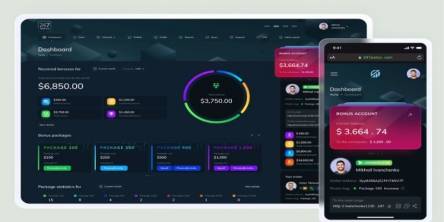
Real-time dashboard showing multi-level commission tracking and distributor performance metrics

Digital transformation initiatives are no longer unheard of in the corporate world. As a matter of fact, it is also well known that companies expanding their digital footprint tend to run into crippling legacy apps.

The financial aid office has become one of the most operationally strained departments on the modern U.S. campus. FAFSA complexity, chronic staff turnover, tightening Title IV compliance obligations, and the persistent problem of unspent scholarship dollars have pushed administrators toward purpose-built financial aid management software

The demand for software delivery has never been higher. Applications must be delivered faster and on a scale like never before.