

Virtual Reality: Advantages and Applications in Retail
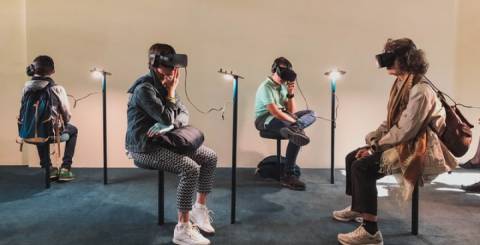
Virtual reality in retail was already gathering considerable steam in the market, thanks to its ability to transform customer experiences, help retailers reduce cost, etc. As predicted by tech analysts globally, VR as the technology will continue to disrupt countless industries. It is because today the shopping experience is beyond entering the store (either online or in-person).
The technology has made things easy to buy for consumers and firms alike. Businesses that have adopted creative virtual reality use cases at all layers of retail have realized that it aids with brand cohesion and consumer trust. It ultimately helps them sell more products in less time with improved customer satisfaction. However, the technology received a major boost ever since the pandemic started, since it offered retailers the opportunity to ensure continuity of business even if their target audience was at home.
However, the technology received a major boost ever since the pandemic started, since it offered retailers the opportunity to ensure continuity of business even if their target audience was at home. However, is there all there is to VR in the retail sector?
Here are some other use cases for VR in this sector.
- Improved shopping journey: Shopping, especially when it comes to items such as clothes, eyeglasses, furniture, shoes, etc., can prove to be a tad tricky for a variety of reasons. Say, a customer is unsure how the sofa they want to buy may look in their home’s hall. Thankfully, VR can easily address such issues, allowing retailers to offer a completely new level of shopping experience.
- Better engagement: There is no doubt about the fact that it is a Herculean task to figure out just how to get users to engage with the company. This is especially important for retailers due to the cut-throat nature of the competition they are currently facing in the market. VR as well as other mixed reality media can be easily leveraged in this regard, allowing retailers to check out how a particular piece of apparel may look on them or even how a piece of furniture will look in their own home. Such features and functionalities, then, boost customers’ engagement rates with the brand.
- Boost marketing campaigns: Marketing on its own is a challenging endeavor, but mix it with the context of retail and the challenges become even more tricky. So, what can virtual reality do about that, you ask? Well, virtual reality solutions can contribute plenty in the marketing department as well. For example, this technology can be used to help retail companies develop multi-dimensional advertisements and other material for marketing campaigns. Given the finicky nature of today’s customers, such new-age content can help quickly reel in more customer attention than your run-of-the-mill hoarding or newspaper ad or some such. Retailers can also use VR in combination with social media, using this union to encourage customers to engage with the brand, share experiences, leave reviews, etc.
- Employee training: Unlike what the layman may believe, working in retail is not as easy as ABC; in fact, most roles necessitate extensive training for employees, which can quickly result in humongous costs for the company. Thankfully, this issue is easily handled by virtual reality, which can help simulate requisite situations and set-ups for proper training of new joins in the retail store.
There is no denying that the retail market has become increasingly competitive, especially since e-commerce established a stronghold in the market. Despite all its challenges, the retail sector remains a lucrative sector, especially when you have modern technologies such as virtual reality, artificial intelligence, etc. in your arsenal.
Now, as demonstrated via the discussion above, virtual reality brings with it a particularly interesting scope for application to enable retailers to achieve new heights of success. So, if you too want to take such a modern approach to retail success, we recommend you get started on fortifying your retail store software development project with virtual reality tools and other such avant-garde technologies.
Similar Articles

Explore supported file formats for online learning aid platforms and learn how to import content for creating flashcards, mind maps, and quizzes.
Learn how to compare cordless yard tools by battery runtime, cutting performance, power, and efficiency to choose the right equipment for your lawn.

In today's highly competitive corporate environment, clinging to outdated technology is a costly mistake. Enterprises globally are realising that their legacy systems, once the backbone of their operations, are now creating severe bottlenecks.

Learn how knowledge management clears duplicate files and conflicting policies, creates one source of truth and keeps your AI and teams accurate.

Giga vs eight for calls: compare talktime, SMS, and IDD allowances, plus what happens when minutes run out, so you pick the right SIM-only plan.

Stay powered and connected with Belkin's portable power banks, chargers, durable cables and routers built for modern devices and everyday reliability.

Learn how Belkin's innovative connectivity solutions, from durable USB-C cables to fast charging, are reshaping everyday tech accessories.

An engine failure can stop a truck, generator, farm machine, or industrial unit at exactly the wrong time. Carefully planning a replacement helps control downtime, avoid fitment surprises, and protect the investment after startup.

Managing multiple documents can quickly become frustrating. Imagine sending several files in an email, uploading different attachments to a submission portal, or sharing a business report with clients across multiple documents.