

How to Compare Cordless Yard Tools by Battery Runtime and Cutting Performance
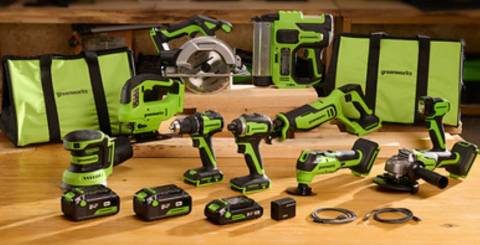
Cordless yard tools have changed how homeowners approach routine lawn care. Battery-powered mowers, string trimmers, hedge trimmers, and leaf blowers offer freedom of movement without gasoline engines or extension cords. Yet choosing the right equipment involves more than comparing battery voltage or advertised runtime. A tool that performs well during light maintenance may struggle when cutting thick grass, shaping mature hedges, or clearing damp leaves.
The most useful comparison considers two factors together: how effectively a tool handles the job and how long it can sustain that performance. Understanding the relationship between battery capacity, motor output, cutting design, and workload makes it easier to select equipment that suits a property's actual demands.
Understanding Battery Runtime and Capacity
Runtime describes how long a cordless tool operates between charges. Battery capacity, commonly measured in amp-hours (Ah) and sometimes watt-hours (Wh), helps explain its potential operating time, but capacity alone does not determine performance.
Why Voltage and Amp-Hours Matter
Voltage describes the electrical potential of a battery system, while amp-hours indicate how much electrical charge the battery can deliver over time. Watt-hours provide a more direct measure of stored energy.
When comparing batteries, watt-hours can be especially useful because they account for both voltage and amp-hour capacity.
Watt-hours = nominal voltage × amp-hours
For example, a nominal 40-volt, 4-Ah battery stores approximately 160 watt-hours of energy. This does not guarantee a particular runtime, however. Actual operating time depends on motor efficiency, power settings, temperature, battery condition, and the resistance encountered during use.
A higher-capacity battery may extend working time, but it can also add weight. That trade-off matters for handheld equipment used above shoulder height or for extended trimming sessions.
Treat Advertised Runtime as a Reference
Manufacturers often report runtime under specific test conditions. Actual results may differ considerably when the tool encounters demanding material or operates continuously at a high setting.
A leaf blower used on dry pavement may consume less energy than one clearing wet leaves from dense ground cover. Similarly, a string trimmer working through short lawn edges generally places less demand on its motor than one cutting tall, tangled vegetation.
Look for test conditions, operating modes, and battery configurations behind published runtime figures. If those details are unavailable, treat the number as a starting point rather than a guarantee.
Comparing Cutting Performance Across Tool Types
Battery life is only part of the decision. Cutting performance depends on how effectively the tool handles the material, maintains speed under load, and produces a consistent finish.
String Trimmers
For string trimmers, compare cutting swath, line diameter compatibility, feed mechanism, and motor behavior under resistance. A wider cutting swath can cover more ground per pass, but it may also increase energy consumption.
Automatic line-feed systems can reduce interruptions, while bump-feed designs give users more direct control over line advancement. Neither arrangement automatically guarantees better cutting performance; reliability and ease of maintenance also matter.
For properties with thick weeds or extensive edging, prioritize a model that maintains useful cutting speed under load rather than focusing exclusively on maximum no-load speed.
Hedge Trimmers
Hedge-trimmer performance depends on blade length, tooth spacing, cutting capacity, and the type of vegetation being maintained. Longer blades cover more area in a pass, although they can be harder to maneuver around narrow corners.
Dense, woody growth places greater demands on the motor than routine trimming of soft new shoots. Check the manufacturer's permitted branch diameter and avoid assuming that a higher battery voltage automatically means greater cutting capacity.
Leaf Blowers
Blower performance is best assessed using airflow, measured in cubic feet per minute (CFM), and air speed, typically expressed in miles per hour (MPH). Air speed helps dislodge debris, while airflow volume influences how much material the tool can move.
Neither specification tells the whole story. A blower with strong air speed but limited airflow may perform differently from one designed to move larger volumes of air. Variable-speed controls can also help conserve battery power during light cleanup.
How to Make Fair Comparisons
Comparing tools using different batteries, power settings, or workloads can produce misleading conclusions. A more useful assessment evaluates them under similar conditions.
When possible, consider the following:
● Runtime under load: How long does the tool operate during realistic yard work?
● Work completed per charge: How much lawn, hedge, or paved area can it handle?
● Performance consistency: Does cutting speed remain adequate as the workload increases?
● Charging time: How long does the battery take to recharge before the next session?
● Ergonomics: Does the battery's weight affect balance, comfort, or control?
● Operating costs: What do replacement batteries, chargers, and maintenance add over time?
For instance, a homeowner with a small yard may prefer a lighter trimmer that completes the job on one charge. Someone maintaining a larger property might benefit more from a compatible spare battery than from a heavier tool with a modest runtime advantage.
Evaluating Battery Platforms and Long-Term Value
A shared battery platform can simplify ownership when compatible batteries power several tools. A homeowner may be able to use the same battery system for trimming, blowing, and other outdoor maintenance tasks, reducing the need to manage separate chargers.
When exploring greenworks tools, compare individual product specifications alongside battery compatibility, included accessories, charging requirements, and warranty coverage. Confirm the exact voltage platform and model compatibility before purchasing additional batteries. Products from the same brand do not necessarily share interchangeable battery systems.
Battery replacement costs also deserve attention. Batteries gradually lose capacity through use and aging, and storing them in extreme temperatures can accelerate deterioration. Following the manufacturer's charging and storage recommendations helps preserve useful service life.
Frequently Asked Questions
Does a higher-voltage cordless tool always cut better?
No. Voltage alone does not establish cutting ability. Motor design, electronic controls, blade or line configuration, and the material being handled all influence performance.
Is a larger battery always the better choice?
Not necessarily. Higher capacity can extend runtime, but added weight may reduce comfort. Match battery size to the length and intensity of typical work sessions.
How can I extend runtime without sacrificing results?
Use the lowest effective power setting, maintain sharp cutting components, keep air intakes clear, and avoid forcing tools through material beyond their rated capacity. Working in manageable sections can also help prevent unnecessary energy consumption.
Choosing for Consistent Results
The strongest cordless yard tool comparison balances working time, performance under load, ergonomics, and ownership costs. Battery capacity indicates available energy, but real-world productivity depends on how efficiently that energy is used. By comparing tools against the specific demands of a property, homeowners can choose equipment that completes routine maintenance reliably without paying for capacity or performance they rarely need.
Similar Articles

In today's highly competitive corporate environment, clinging to outdated technology is a costly mistake. Enterprises globally are realising that their legacy systems, once the backbone of their operations, are now creating severe bottlenecks.

Learn how knowledge management clears duplicate files and conflicting policies, creates one source of truth and keeps your AI and teams accurate.

Giga vs eight for calls: compare talktime, SMS, and IDD allowances, plus what happens when minutes run out, so you pick the right SIM-only plan.

Stay powered and connected with Belkin's portable power banks, chargers, durable cables and routers built for modern devices and everyday reliability.

Learn how Belkin's innovative connectivity solutions, from durable USB-C cables to fast charging, are reshaping everyday tech accessories.

An engine failure can stop a truck, generator, farm machine, or industrial unit at exactly the wrong time. Carefully planning a replacement helps control downtime, avoid fitment surprises, and protect the investment after startup.

Managing multiple documents can quickly become frustrating. Imagine sending several files in an email, uploading different attachments to a submission portal, or sharing a business report with clients across multiple documents.

Energy efficiency is revolutionizing power distribution, leading to more sustainable and cost-effective energy systems.

Moving has a way of making even organized people feel scattered. One minute you’re labeling boxes. The next, you’re hunting for a receipt, calling the utility company, and wondering where the tape disappeared to.