

Section 321: Your Guide to Eliminating Import Tariffs
In today’s business climate, many owners look for ways to save money while boosting efficiency. This is definitely the case when you have to outsource your products or supplies from other countries to avoid high prices. Thus, the essential question remains--how can you cut costs without cutting corners—or worse getting in trouble for not paying enough attention to tariffs?
Read on to find out how Section 321 eliminates import tariffs and a lot of headaches.
What is Section 321?
Section 321 originally was introduced to help small businesses to sell directly to American consumers while getting rid of duties. This allows the business owner to avoid steep upsurges against their products’ costs which usually force them to increase prices or resort to working with diminished profit margins.
What are Exemptions from Section 321?
Section 321 pertains to a customs clearance that allows single shipments of goods whose value doesn't exceed $800. The catch is that the shipment must be fulfilled by a single entity to be free of any taxes and duties. On the other hand, that does not mean that you can just break your initial order into multiple shipments and immediately import it in the US. Instead, you would need to schedule shipments to arrive on separate days as the law allows. Naturally, this measure would take some careful planning. The best way to schedule your shipments in such a way that allows for this clearance is by working with logistics experts as part of your supply chain.
Now, it is also important to mention that not all goods are allowed under the Section 321 clearance. For example, any nonmedical devices that emit radiation are exempt as well as most food items. Other exemptions include:
- Cosmetics
- Dinnerware
- Bio samples for lab analysis
- Raw oysters
More than likely, you won’t be importing these types of goods, but it’s always wise to keep this knowledge in mind and to stay updated on any changes in this regulation.
How Can You Cut Through the Red Tape?
Of course, with a small loophole, big companies can benefit from Section 321 as well. Shipments, especially those from China, most likely cost a fortune in tariffs. So, aligning your business with a Canadian fulfillment company to facilitate the overall direct shipping to your American consumers is not just allowed by Section 321 clearance, but also legal and profitable. Canadian fulfillment will help you to eliminate tariffs and import duties while efficiently meeting customer demand.
Make Sure Your ACE Manifest is Correct
Taking extra care with completing your ACE Manifest is vital to the successful shipment of goods under Section 321. For starters, it might be easy to rush through the fields in a rather user-friendly platform. One illustration of this is the space for the shipment type. You will need to select “Section 321” from the drop-down menu. Also, the fields for “Quick Assign Shipper” and “Quick Assign Consignee” would need to be double-checked as well. Plus, when you go to the “Commodity Details,” you will need to pay close attention to the country of origin along with the value of the shipment which needs to stay under $800.
Again, the logistics experts who are working with your business would ensure that all of these forms are filled out correctly and completely as well as notify you of any questions or concerns. Furthermore, this proves to be one more task that you can possibly outsource. Nonetheless, you might give the final look at these forms before placing your order. Plus, you will need to maintain consistent communication with the Canadian fulfillment company that you’re contracted with to ascertain that multiple shipments won’t be arriving all on the same day.
Reap the Benefits of Working with Canadian Fulfillment
Working with a Canadian fulfillment partner such as Stalco, allows US businesses to re-direct their shipments to go to Canada. Once a shipment is there, they fulfill the client's orders, all being sent to individual consumers usually on the same day. As a result, consumers get their orders on time with the same shipping methods and costs one expects to receive from any US-based company. Many times, they will receive them for an even cheaper price since they aren’t absorbing any of the costs related to tariffs.
Furthermore, Canadian fulfillment tends to be very handy, especially when small businesses prepare and stock up for the holiday season. With huge shipping volumes and great carrier relations, fulfillment companies promise affordable pricing and fast delivery, ensuring orders are prepared and shipped to the U.S. the same day. This is a true win-win situation for any U.S. business.
By using Section 321, businesses can avoid import taxes and duties while saving a lot of money. This indicates lower costs for the consumers, more business, and improved longevity in the online game.
Similar Articles
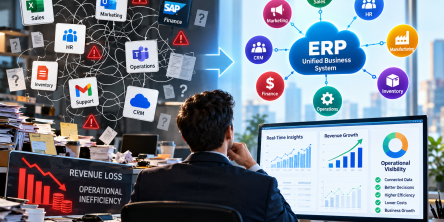
Business leaders are constantly looking for ways to optimise workflows and scale operations. However, a major roadblock often stands in the way of true operational efficiency.

Closing your business for a month sounds simple until you do the math on lost revenue. For most business owners, that math doesn't work. So the renovation has to happen around the business, not instead of it.
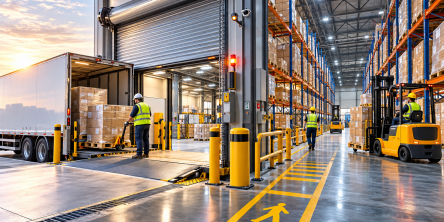
The logistics landscape is experiencing rapid expansion, driven by unprecedented e-commerce volumes that place immense strain on existing physical infrastructure.

Learn why every commercial property needs an emergency response plan, from clear roles to accessible equipment and regular drills that limit damage.

Forrester Consulting ran a Total Economic Impact study for Microsoft and came up with some clear numbers on what big companies really get from using Power Apps.
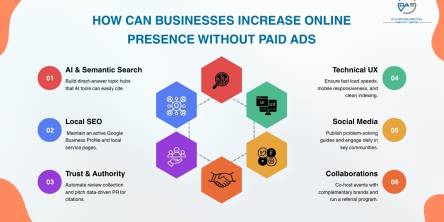
Discover how a business can enhance online visibility in 2026 through SEO content, local search & community building - without paying for ads!

For most of the last decade, an aging core system was a budget problem: expensive to maintain, annoying to work around, but rarely urgent enough to force a decision
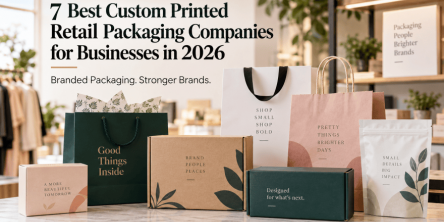
For most businesses in 2026, Action Packaging takes the top spot. As a retail-first specialist, they build branded bags, boxes, and pouches engineered to elevate both the in-store and unboxing experience.

Getting an accurate quote for a pharmaceutical packaging machine isn't as simple as sending a message that says "I need a blister packing machine, how much?" Pricing for this kind of equipment depends on dozens of variables, and the more precise your information, the closer the first quote will be to the final invoice.