

Online Food Ordering System: Key Features
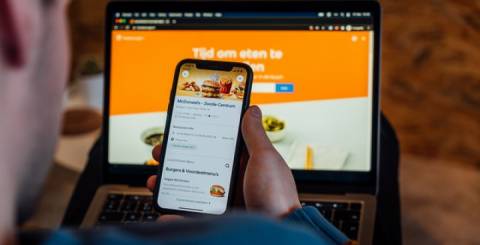
Unless you have been living under a rock, there's a good chance that you have ordered online at least a handful of times, if not more. Do you know whom you have to thank for that? Online food ordering systems. While these systems have become virtually omnipresent at this point, the truth remains that the basics of the concept still elude many people. Allow us to help you with that — an online food ordering system is essentially software that enables restaurants to receive and process orders placed online. These systems typically comprise two key components: A website or an app and an admin management interface used to manage the orders received from customers.
Now that we have the basics out of the way, time to talk about what makes these new-age solutions crucial in today’s world. Of course, there are the apparent benefits, i.e., convenience, access to a more significant customer base, etc. Then come the services that remain invisible to the layman, such as the ability to create extensive profiles about customers, which can then be leveraged to help serve them better and deliver improved experiences. There’s also the ability to provide personalized menus, achieve improved engagement with customers, cut down operating costs, and so much more.
Online food ordering systems have much to offer to the entire ecosystem, especially restaurants. So, if you are also planning to set up such a strategy for your business, be sure to include at least these must-have features.
- Coupons: Coupons have long proven to be one of the most potent means to help drive business growth. They not only help attract first-time customers but also foster loyalty among existing customers. So, it is imperative to integrate them with your online food ordering system as well. You can take it up a notch and, instead of just displaying the coupon code, allow customers to apply them or even automatically before making the payment.
- Push notifications: Push notifications are among the most popular tools for businesses and marketers in the modern world. It would be wise to put it to use for your business as well. Use push notifications to deliver order updates and deliver relevant content, details about offers, discounts, and deals. Best part is that push notifications can be delivered on not only mobile devices but desktops and laptops as well. Another advantage is that they boost customer engagement with the brand.
- Online payments: We live in a highly digital and fast-paced world where online prices are the norm. And suppose you intend to stay successful in this cut-throat market. In that case, you just can’t afford to set up an online food ordering system without online payments. While you are at it, please remember that it is equally important to offer a wide variety of options in this context, such as digital wallets, debit cards, credit cards, PayPal, etc.
- Track orders: Customers today want to stay updated at every step of the way right from the moment they place the order. This is a terrific tool to boost your engagement levels as well. Hence, it would be wise to offer an app or website with integrated tracking ability, allowing customers to see exactly at what point of the process their order is. Simple, but highly effective.
- Social media integration: Integrating social media apps with your food ordering system will allow customers to easily share their reviews, pictures, videos, etc. with their family and friends. Excellent means to drive brand visibility in the market. Plus, it can also be used to offer exclusive discounts to customers.
There you have it, folks — some reasons why online food ordering and delivery system development is the need of the hour for any restaurant that intends to stay competitive in today’s market. So, get started on it, won’t you?
Similar Articles
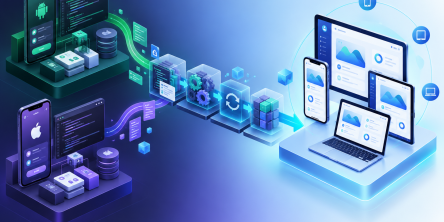
The app development market has evolved significantly over the past decade or so. Its impact on business has been equally consequential.

Offshore IT hiring means recruiting IT professionals who work from another country or region. Companies commonly use this approach for software development, QA, IT support, DevOps, cybersecurity, data, and project management.

By 2026, moving to the cloud is no longer merely a competitive advantage. It is a business necessity. Every organization across the broad spectrum of industries will be challenged to become more agile.
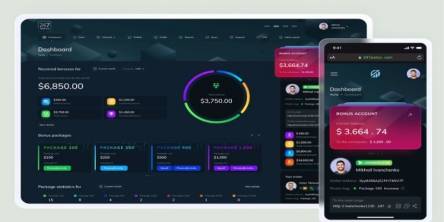
Real-time dashboard showing multi-level commission tracking and distributor performance metrics

Digital transformation initiatives are no longer unheard of in the corporate world. As a matter of fact, it is also well known that companies expanding their digital footprint tend to run into crippling legacy apps.

The financial aid office has become one of the most operationally strained departments on the modern U.S. campus. FAFSA complexity, chronic staff turnover, tightening Title IV compliance obligations, and the persistent problem of unspent scholarship dollars have pushed administrators toward purpose-built financial aid management software
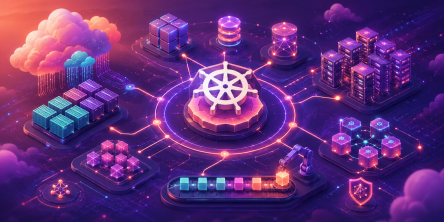
The demand for software delivery has never been higher. Applications must be delivered faster and on a scale like never before.
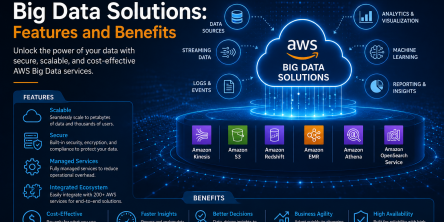
Modern businesses produce large amounts of data daily. Be it from customer transactions, Internet of Things (IoT) sensors, or countless other such sources.

Businesses today need to ship new software faster than ever. That's not news, of course. Anyway, because of the demands on businesses, new solutions are being built on top of micro-services, serverless functions, etc.