

How to Update a Wordpress Website: Top Tips and Tricks

WordPress websites are easily one of the popular means to get a website up and running very, very quickly. It was not merely a part of the first blogging and websites boom — it was one of the key drivers. And even though we have several other technologies and platforms in the market, WordPress websites continue to be one of the biggest and, most important of course, constituents of the world wide web. Now all that is great, but it brings us to an important question — is there mere existence enough? This assertion holds for any website. And no, we are not talking about updates in the context of just the content you put on the site.
We will cut straight to the chase — updating your WordPress website should always be a part of your strategy. Without that, your website can quickly end up losing its edge to its peers in the market, and it can be incredibly challenging to regain that footing in the market. Hence, the best solution is to ensure the website is updated periodically. Now, given the rapid progress technology has been making, it should come as no surprise that so has the means and best practices for your WordPress website. But don’t worry, we have got you covered. And without further ado, here are some of the best tips and tricks for updating your WordPress website this year.
- Eliminate unnecessary plug-ins: We understand that programming can be a tad challenging some times. We also appreciate that plug-ins seem like an excellent way to deal with some issues one may face while developing a website. Unfortunately, sometimes people tend to go overboard with their reliance on plug-ins because, first, an excess of plug-ins can make website maintenance and troubleshoot quite tricky. And let’s not forget that they also take a toll on the website’s performance. So, yes, use only the ones you can not do without and do away with the rest.
- Always update in test environments: Updates are right, of course; unfortunately, some times they can end with your website going kaput. Thankfully, this can be easily prevented by ensuring that whenever you are updating your website, you first do it in a test environment. However, if you are testing either a new site or a brand new functionality, experts recommend using a local context.
- Mobile-friendliness is a must: This one honestly feels a tad redundant to mention; however, given just how many people ignore this is appalling. The point is that the prevalence of smartphones and mobile devices is not news and nor is how much people rely on these devices. So, it would be virtually a sin not to have a mobile-friendly website in today’s world.
- Leverage the Gutenberg editor: The newer iterations of WordPress come with the Gutenberg editor. But don’t jump into using it head-first; instead, we recommend trying it out in a local environment. You would run the risk of adversely affecting the live website otherwise. And the best part is that the Gutenberg editor can be conducive in the context of content presentation also, allowing website owners to experiment with novel ideas that they may not have tried before.
- SSL certificates are your friends: Gone are the days when SSL certificates were a must only for a handful of websites, such as the ones for banking, financial transactions, e-commerce, and others. Today, SSL certificates have established themselves as an indispensable provision for all websites. Any website without an SSL certificate is deemed as suspicious and not completely secure by the most significant web search engine in the world, i.e., Google.
There you have it, folks, some of the best practices to keep your WordPress website in tip-top condition. And if you ever need help or find yourself struggling with something, you can always hire a trusted provider for WordPress maintenance and support services.
Similar Articles

Field sales teams handle numerous responsibilities every day. Sales representatives travel between customer locations, conduct meetings, collect orders, record information, and report their activities to managers.

The app development market has evolved significantly over the past decade or so. Its impact on business has been equally consequential.

Offshore IT hiring means recruiting IT professionals who work from another country or region. Companies commonly use this approach for software development, QA, IT support, DevOps, cybersecurity, data, and project management.

By 2026, moving to the cloud is no longer merely a competitive advantage. It is a business necessity. Every organization across the broad spectrum of industries will be challenged to become more agile.
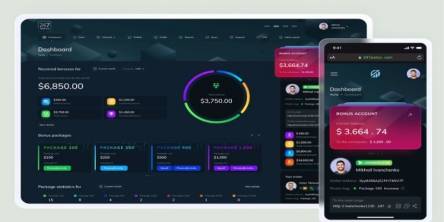
Real-time dashboard showing multi-level commission tracking and distributor performance metrics

Digital transformation initiatives are no longer unheard of in the corporate world. As a matter of fact, it is also well known that companies expanding their digital footprint tend to run into crippling legacy apps.

The financial aid office has become one of the most operationally strained departments on the modern U.S. campus. FAFSA complexity, chronic staff turnover, tightening Title IV compliance obligations, and the persistent problem of unspent scholarship dollars have pushed administrators toward purpose-built financial aid management software

The demand for software delivery has never been higher. Applications must be delivered faster and on a scale like never before.

Modern businesses produce large amounts of data daily. Be it from customer transactions, Internet of Things (IoT) sensors, or countless other such sources.