

Sales Process Efficiency: 5 Ways FMCG Companies Can Achieve It

The fast-moving consumer goods markets and industry are directly responsible for almost half of all consumer spending in the world. Since this industry is extremely saturated with fierce competition, it's quite hard to find a good formula for improving sales efficiency.
Still, it isn't impossible to do it. If you want to improve sales rates in FMCG markets, measuring success and focusing on some crucial key performance indicators might just do the trick. Every brand must constantly analyze their performance to get valuable insight into what to improve to get the wanted results.
Here are five crucial points that you should focus on.
1. Weighted and Numeric Percentage Distribution
Weighted and numeric distribution percentages are two important variables that show FMCG companies where their product distribution stands across a variety of distribution channels when compared to the competition.
These variables allow FMCG companies to improve their negotiations with retailers, better manage their sales forces, locate unprofitable sales locations, and develop more effective sales promotion strategies. It's a direct way to understand the ups and downs of their existing distribution strategies so they can reorganize, increase revenue, and use their resources more efficiently.
These percentages help them to better understand the market conditions and rethink their sales objectives.
2. Market Share Distribution and Value
Market share distribution and value help FMCG companies measure how successful a brand is at selling their products in a particular market. It's a valuable key performance indicator that provides useful insight into the market share that one FMCG company obtains at a certain level of distribution.
It helps these companies realize the full potential of their products in the market, while at the same time providing their sales teams with enough data to find a way to gain more market share on different markets.
3. Consumption Indicators
Consumption indicators help FMCG companies boost the sales process efficiency by finding out just how many customers are actually buying their products. This directly measures the success of their promotion and advertising campaigns. The more they analyze such data, the more they're able to increase their effectiveness.
While consumption indicators provide companies with precise customer numbers, businesses can also use these indicators to understand their possibilities in the rest of the potential markets. This can also help them to understand customer behavior, which can help improve commitment and loyalty to their brand.
Such data allows for better consistency across a company’s sales channels.
4. Process Digitalization and Bringing all Process Stakeholders on Digital tools/Platforms
There are no doubts that adopting digital tools means the world for every business looking for innovative ways to improve their sales rates. Digital transformation directly increases effectiveness across every channel of distribution. The higher the quality of digital tools and platforms the FMCG companies use, the better the results.
A cloud-based field service software and the process of automation can help to increase the overall productivity, monitor production, distribution, and customer interaction and come up with a wise strategy that will bring the wanted results.
Being digitally mature means proactive decision-making, improved customer experience, innovation in product offering, and a way to connect all process stakeholders across the various digital channels and devices.
5. Location Intelligence
Location Intelligence can directly increase the effectiveness of FMCG companies' sales processes by allowing them to use the full sales potential of a certain location.
Everything depends on product distribution strategies and location intelligence helps them determine the best course of action and increase brand loyalty, turnover, product positioning, and distribution.
LI is a direct way for FMCG companies to optimize their sales strategies and realize the performance of their products in a particular area. Such data helps them remove any inconsistencies.
Through the power of modern technology, FMCG companies can streamline their sales processes and locate the top performing areas. Such tools help them to fully focus on their ups and downs and eliminate any weak points which, in turn, directly results in increased sales rates and better relations with the customers.
Similar Articles

Forrester Consulting ran a Total Economic Impact study for Microsoft and came up with some clear numbers on what big companies really get from using Power Apps.
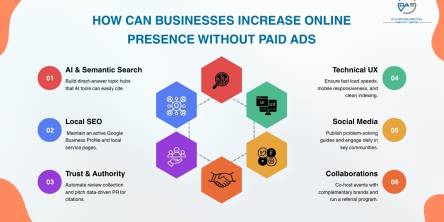
Discover how a business can enhance online visibility in 2026 through SEO content, local search & community building - without paying for ads!
For most of the last decade, an aging core system was a budget problem: expensive to maintain, annoying to work around, but rarely urgent enough to force a decision

For most businesses in 2026, Action Packaging takes the top spot. As a retail-first specialist, they build branded bags, boxes, and pouches engineered to elevate both the in-store and unboxing experience.

Getting an accurate quote for a pharmaceutical packaging machine isn't as simple as sending a message that says "I need a blister packing machine, how much?" Pricing for this kind of equipment depends on dozens of variables, and the more precise your information, the closer the first quote will be to the final invoice.

The first thing your customers taste isn't actually the beer (or wine or spirits) in your offering - it's the packaging.

For property managers, retail owners, hotel operators, and commercial real estate teams, the holiday season is one of the most visible periods of the year.

Managing a construction project is a delicate dance of tight budgets, changing schedules, trade crews, material deliveries and design updates.
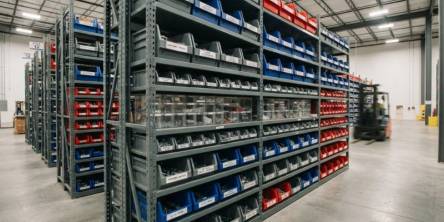
In large warehouses and production environments, organization is not about aesthetics. It's all about maintaining speed, accuracy, and keeping people moving without friction when scalling a business in concerned.