

How iPaaS Drives Legacy Modernization
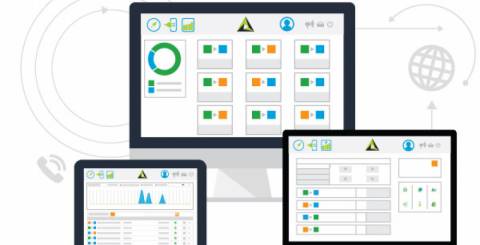
Legacy Migration is gaining popularity but it is tougher than enterprises realize. The real challenge is establishing a smoother symbiosis between cloud & on-premise applications and processes in a hybrid ecosystem. Enterprises need to eliminate rogue silos and ensure continuous connectivity between applications to align applications with business objectives. Many of these workarounds can be simplified with iPaaS integration. It clears the path to modernization by enabling enterprises to fuse new speeds into the ecosystem. This disruption-free edge allows organizations to find the right pace for deployment, drive innovation, and accelerate the pace of modernization.
Enterprises are adopting cloud-based technologies for getting access to tangible benefits like lower hardware and transaction costs, increased automation, improved performance, greater speed, etc. However, existing infrastructure poses challenges and restrains organizations to deploy applications into the cloud. An iPaaS framework provides the right solution and simplifies the path to modernization. Here are some benefits of the iPaaS framework:
Minimised IT Complexity
Organizations unknowingly increase IT complexity in their ecosystem while moving applications to cloud or adopting cloud-based models. They realize that their IT has become extremely complex with heterogeneous systems which don't play nicely with other systems. IT teams spend huge time and resources in integrating these systems and breaking down the silos. It is important to combine these systems for reaching the benefits of legacy modernization.
Faster Deployment
Integration Platform as a Service (iPaaS) integration enables the best path for deploying applications in cloud environments. It enables organizations to select and deploy only selective applications on the cloud. With an iPaaS, there is no need to retool legacy applications for specific environments. A single runtime engine helps users in creating cloud-based user interfaces for legacy applications. Users can make use of a Service Oriented Architecture (SOA) to build and expose services to other platforms.
The advantage with iPaaS is that it can be deployed in any ecosystem and it does not need a separate platform. It helps in assembling & orchestrating business applications and delivering them as cohesive services.
Scalability
Start-to-End iPaaS integration helps in provisioning platforms and software resources in real-time. The resources can be added, removed, or scaled as per the requirement of organizations. Users can integrate different components or interfaces with other components and respond faster to technology or business changes. Business users can leverage the self-service portal to deliver web-enabled devices.
Minimized Disruption
iPaaS integration minimizes disruption helps enterprises in gaining a competitive advantage. It can simplify the path to modernization by providing a single view for integrating cloud & on-premise applications with one another. IT enables connectivity between cloud, SaaS, and on-premise applications. It solves the problem of information silos integrating applications and making the systems interoperable with each other.
Application Integration
Enterprises get pre-built connectors for connecting applications in an ecosystem. These connectors can connect applications without the need of writing a single line of coding. Businesses can add more applications in a fast-changing environment. They don’t have to purchase separate tools for adding more services.
Better Performance
Enterprises also get the ability to monitor the performance of application in a network. They can track and fix errors before they become bigger issues. Business users in an enterprise can prepare detailed reports on application performance. Users get connectivity to architect packaged applications for all scenarios. This unique advantage leads to lower operational cost and improved performance.
A modern-day iPaaS platform provides a library of connectors to integrate with other applications. Enterprises get a secure gateway to extract data and move it between source and target questions. Enterprises can move ERP data into the backend of a CRM and save a lot of time.
Similar Articles

Field sales teams handle numerous responsibilities every day. Sales representatives travel between customer locations, conduct meetings, collect orders, record information, and report their activities to managers.
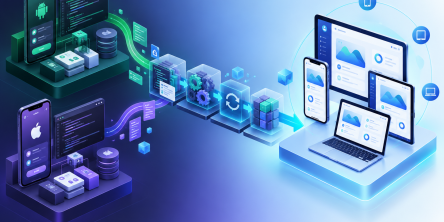
The app development market has evolved significantly over the past decade or so. Its impact on business has been equally consequential.

Offshore IT hiring means recruiting IT professionals who work from another country or region. Companies commonly use this approach for software development, QA, IT support, DevOps, cybersecurity, data, and project management.
By 2026, moving to the cloud is no longer merely a competitive advantage. It is a business necessity. Every organization across the broad spectrum of industries will be challenged to become more agile.
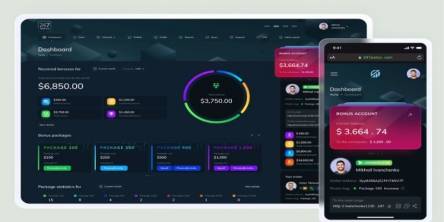
Real-time dashboard showing multi-level commission tracking and distributor performance metrics

Digital transformation initiatives are no longer unheard of in the corporate world. As a matter of fact, it is also well known that companies expanding their digital footprint tend to run into crippling legacy apps.

The financial aid office has become one of the most operationally strained departments on the modern U.S. campus. FAFSA complexity, chronic staff turnover, tightening Title IV compliance obligations, and the persistent problem of unspent scholarship dollars have pushed administrators toward purpose-built financial aid management software
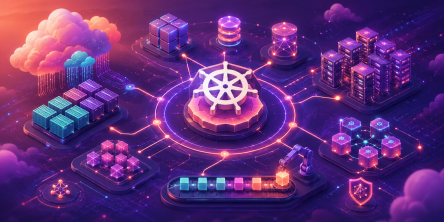
The demand for software delivery has never been higher. Applications must be delivered faster and on a scale like never before.
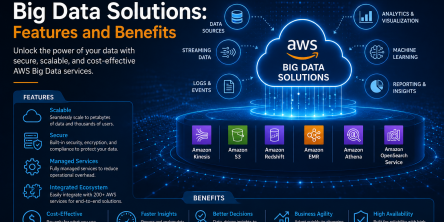
Modern businesses produce large amounts of data daily. Be it from customer transactions, Internet of Things (IoT) sensors, or countless other such sources.