

Microsoft Azure Cloud: Top Business Benefits

Cloud computing — it seems like it is everywhere. For good reason, by the way. You see, the evolution of technology has empowered the business ecosystem with countless tools and in the recent past, cloud computing has emerged as the most sought-after tool. You would agree Microsoft is the leading provider for cloud services – be it infrastructure as a service (IaaS) and platform as a service (PaaS) solutions that are part of the Azure focus.
The platform allows the creation, deployment & management of apps quickly and easily without having to buy or maintain the primary infrastructure. The integrated cloud resources help focus on meeting the security and compliance requirements while being easily customizable to address the company’s unique needs.
And among all the cloud service providers in the world, Microsoft Azure has managed to carve quite a niche for itself. Why? Thanks to its countless benefits, of course.
It is affordable, is backed by a globally celebrated technology titan, eliminates the need for IT infrastructure for companies, and so much more. Nonetheless, we have listed some other benefits as well to help you see precisely what makes this Microsoft offering so popular.
1. Scalability: No matter the industry a company may be operating in, the fact remains that any business that intends to thrive in the market must be prepared to scale as soon as the need arises. This is quite simple to ensure with Microsoft Azure Cloud because it allows companies to enhance computing power, storage capacity, etc. whenever they need it. This means even if the company is experiencing a short-term increase in traffic, it will have access to the requisite services on demand to ensure a seamless experience for end-users.
2. Cost efficiency: Microsoft offers Azure cloud services with a pricing structure that is based on consumption. As a result, businesses of all sizes can make effective and efficient use of their IT budgets, using it to avail precisely the services they need instead of needlessly spending on solutions with unnecessary add ons and features. Such a payment model helps cut down costs as well as the company’s in-house IT team’s workload.
3. Top-notch cybersecurity: Of course, security is not only a major concern but one of the biggest ones when it comes to, well, anything in the digital realm. Microsoft not only knows that but is exceptionally well equipped to handle concerns and challenges in this record. This is why Azure cloud gets myriad provisions for cybersecurity, including highly advanced encryption, etc.
Even Microsoft’s data centers are highly secure, thanks to the two-factor authentication process, biometric scanners, etc. Then there are all the top-level cybersecurity policies and processes the company has put in place for the Azure cloud. And let’s not forget the cloud service’s own unique set of customer-facing safety features to help ensure their data is safeguarded at all times.
It is clear as day to see that cloud computing and cloud services are here to stay. For any modern-day business that intends to survive in the challenging market that we have today, the cloud is no longer a fancy add-on or some such. It is, as a matter of fact, a necessity.
So, then the question is which cloud service provider must one opt for? Well, as the above discussion so ably demonstrates, despite competition from behemoths such as Amazon Web Services, Oracle, etc., Microsoft Azure Cloud not only manages to stand its ground but also proves that it is one of the most potent options available in the market. So, go ahead and get started on your Azure software development without a worry, for you can rest assured about the results.
Similar Articles

Field sales teams handle numerous responsibilities every day. Sales representatives travel between customer locations, conduct meetings, collect orders, record information, and report their activities to managers.

The app development market has evolved significantly over the past decade or so. Its impact on business has been equally consequential.

Offshore IT hiring means recruiting IT professionals who work from another country or region. Companies commonly use this approach for software development, QA, IT support, DevOps, cybersecurity, data, and project management.

By 2026, moving to the cloud is no longer merely a competitive advantage. It is a business necessity. Every organization across the broad spectrum of industries will be challenged to become more agile.
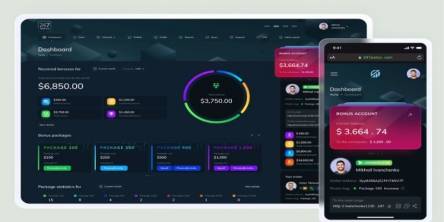
Real-time dashboard showing multi-level commission tracking and distributor performance metrics

Digital transformation initiatives are no longer unheard of in the corporate world. As a matter of fact, it is also well known that companies expanding their digital footprint tend to run into crippling legacy apps.

The financial aid office has become one of the most operationally strained departments on the modern U.S. campus. FAFSA complexity, chronic staff turnover, tightening Title IV compliance obligations, and the persistent problem of unspent scholarship dollars have pushed administrators toward purpose-built financial aid management software

The demand for software delivery has never been higher. Applications must be delivered faster and on a scale like never before.
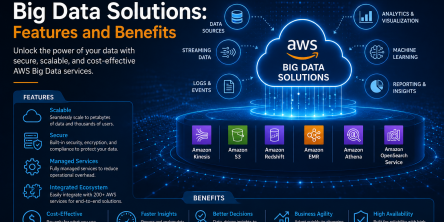
Modern businesses produce large amounts of data daily. Be it from customer transactions, Internet of Things (IoT) sensors, or countless other such sources.