

How Businesses Can Tackle Climate Change at The Moment
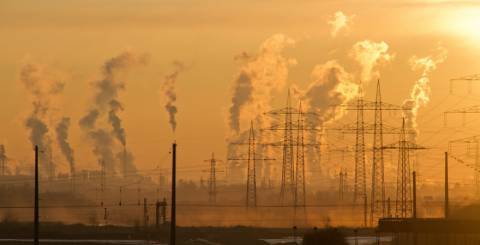
Widespread carbon emissions have lead to significant climate change. This change in conditions is destroying environments, decreasing resources, increasing the cost of business operations, and making the human population suffer. While we already see people taking on personal initiatives to limit their carbon footprint, it is essential for businesses of all sizes to take significant strides towards reducing their carbon emissions.
Carbon emission is a corporate and humanitarian crisis. Reducing carbon footprints means that businesses should focus on renewable energy sources, including solar power. Renewable sources of energy also reduce the costs incurred by the business. This will lead to better customer engagement as consumers want to be associated with companies that align with community values. So how can companies address climate change?
Evaluate the Volume of Carbon Emissions
How can you reduce carbon emissions without knowing how much you emit annually? Businesses should evaluate the volume of their carbon footprints. Knowledge of the carbon footprint level will help companies understand and estimate how much they can reduce within a specific time frame. Carbon accounting is conducted through various tests provided by consultancies. Businesses should get reputable consultancies for these tests.
Businesses should also engage customers and other organizations in their efforts towards reducing carbon emissions. Liaising with all stakeholders in the global fight against carbon emissions leads to better customer engagement. The credibility of the success of measures taken to reduce carbon footprint should be by a third-party auditing firm. Therefore, audits of the effectiveness of these actions should not be internal.
Set up a climate action plan.
After evaluating how much the business contributes to the greenhouse effect, the company can then develop strategies on how it can help reduce its carbon footprint. A good plan should have short-term and long-term objectives to be met. The plan of reducing the effects of greenhouse effects should well articulate the exact activities the company intends to take to minimize carbon emission.
First, the business should force suppliers to end their carbon emissions by refusing to source from non-cooperating suppliers. Secondly, the company should reduce the distance products travel to reduce carbon emissions during transportation. Thirdly, companies should replace traditional energy sources with renewable sources. Lastly, lunch for staff should be plant-based instead of animal-based food since the latter has a large carbon footprint.
Come up with carbon emission reduction targets.
After laying down a climate action plan, the business should set up targets on its carbon reduction journey. Setting targets means that the company must first understand its carbon emissions sources and find ways to reduce them. The business should also come up with realistic and time-sensitive carbon emission reduction targets. The targets should be measurable, hence needing to set quantitative targets.
The carbon emission reduction plan should resemble a business plan. The seriousness accorded to a business plan should be the same as that given to the carbon emission reduction plan. Internal pricing on carbon emissions will help the business to quantify its carbon emission reduction plan. The quantification will help assess metrics such as opportunity cost, payback timeframe, and business rate of return.
Support climate change mitigation policies.
Businesses must come out strongly and support government measures on reducing their carbon footprint. It's normal for companies not to be involved in politics. Still, companies must support and encourage politicians to take up the necessary measures to address carbon emissions. Businesses should protest for clear government policies on carbon emission reduction. Such policies include renewable energy incentives and electric vehicle rebates.
Assess carbon emission reduction progress.
Companies should monitor their progress in reducing their carbon emission. Failure to assess the progress levels may make the business fail to realize its goals on carbon footprint reduction. Moreover, monitoring carbon emission reduction gives the company insight into the further steps needed to realize the company's goals. Progress monitoring should be done through a third-party consultancy firm to enhance accountability.
Importance of assessing carbon emission reduction progress
According to the Paris Climate Agreement, assessing the progress of carbon emission reduction progress is crucial in reducing carbon footprint. It will help in identifying gaps in carbon footprint reduction. It will also help companies to prioritize the most important projects. The assessment will help save resources and improve investment efficiency. The progress assessment should give consistent, coherent, and practical results.
Assessing the carbon emission reduction progress will indicate whether the company will meet its carbon emission reduction goals within the stipulated time frame. Companies may often waste many resources and fail to realize their plan to reduce their carbon footprint. Despite incurring the cost of hiring a third-party consultancy firm, it is important to get accurate data on its reduction progress.
Encourage employee participation in climate change efforts.
As businesses take steps to control the effects of greenhouse effects, they need to involve their employees. Optimization of employees' transportation to work may reduce greenhouse effects. Employees should avoid using private cars to travel to work but instead use public transport. Traveling in their cars increases carbon emissions. If the distance is short, they may opt to walk or cycle.
Similar Articles

Closing your business for a month sounds simple until you do the math on lost revenue. For most business owners, that math doesn't work. So the renovation has to happen around the business, not instead of it.
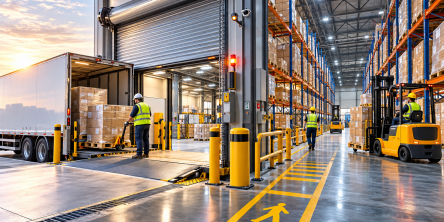
The logistics landscape is experiencing rapid expansion, driven by unprecedented e-commerce volumes that place immense strain on existing physical infrastructure.

Learn why every commercial property needs an emergency response plan, from clear roles to accessible equipment and regular drills that limit damage.

Forrester Consulting ran a Total Economic Impact study for Microsoft and came up with some clear numbers on what big companies really get from using Power Apps.
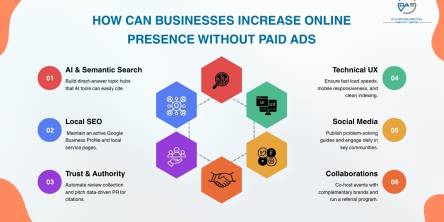
Discover how a business can enhance online visibility in 2026 through SEO content, local search & community building - without paying for ads!
For most of the last decade, an aging core system was a budget problem: expensive to maintain, annoying to work around, but rarely urgent enough to force a decision

For most businesses in 2026, Action Packaging takes the top spot. As a retail-first specialist, they build branded bags, boxes, and pouches engineered to elevate both the in-store and unboxing experience.

Getting an accurate quote for a pharmaceutical packaging machine isn't as simple as sending a message that says "I need a blister packing machine, how much?" Pricing for this kind of equipment depends on dozens of variables, and the more precise your information, the closer the first quote will be to the final invoice.

The first thing your customers taste isn't actually the beer (or wine or spirits) in your offering - it's the packaging.