

Essential Web Design Strategies to Elevate the Digital Guest Experience
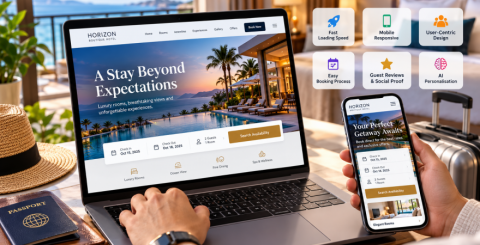
The global online travel booking market is projected to reach $769 billion by the end of 2026. This massive figure highlights a highly competitive digital arms race for independent accommodation providers battling against massive third-party booking engines. While high-intent platforms like Google Hotel Ads drive valuable traffic (averaging a strong 4.17% conversion rate compared to general organic search), converting those visitors requires a flawless digital environment.
Today, a digital guest experience must capture the essence of a physical stay while eliminating every ounce of technical friction. Relying solely on beautiful photography is no longer sufficient to secure reservations over Online Travel Agencies (OTAs). Achieving a highly profitable balance demands a thoughtful approach to visual hierarchy, mobile responsiveness, and intelligent hotel web design.
Understanding the Modern Traveller Profile
Before focusing on visual aesthetics, it is crucial to understand exactly who is visiting the website and how they intend to use it. The rapid evolution of consumer behaviour means a one-size-fits-all digital approach is no longer effective. For instance, "bleisure" trips blending business and leisure surged by 275% year-over-year entering 2026. This significant shift requires versatile layouts that appeal simultaneously to corporate planners needing meeting spaces and families seeking holiday packages.
Catering to these diverse needs requires clear segmentation. A highly effective method is to customise your web design to cater for buyer personas, which dictates the site's visual hierarchy, navigation paths, and tailored content for different types of visitors. By mapping out the specific needs of these ideal guest profiles, digital teams can ensure the right information is presented exactly when the user needs it most.
Furthermore, these personas interact across multiple devices depending on their booking intent. While mobile devices now account for over 70% of all online travel traffic, desktop interfaces are still frequently favoured for complex, multi-room bookings due to larger screens and easier price comparison functionalities. Designers must build fluid experiences that accommodate both the meticulous desktop planner and the spontaneous mobile user.
Eliminating Friction in the Direct Booking Journey
Once the target audience is clearly defined, the primary goal shifts to keeping them actively engaged on the site. Currently, the average direct conversion rate in the hospitality sector sits between 2.2% and 3.9%. However, high-performing boutique properties with heavily optimised user experiences routinely exceed a 5% conversion rate. The biggest barrier preventing properties from hitting these higher numbers is a complicated checkout and reservation process.
The financial stakes of a poor user experience are staggering. According to recent industry research by Phocuswire, direct accommodation channels experience a massive 90.4% booking abandonment rate at the checkout stage. This statistic underscores the urgent need for a completely frictionless booking flow that reassures the customer at every step.
A significant portion of this friction occurs on mobile devices. Spontaneous travel is rising rapidly on mobile platforms, with recent data showing that 27% of mobile reservations are made within seven days of the guest's arrival. Yet, recent web performance studies reveal a stark gap in load times, with mobile pages taking an average of 8.6 seconds to fully load compared to just 2.5 seconds on a desktop.
Because over half of mobile consumers will abandon a travel platform if it takes longer than three seconds to load, investing in specialised digital architecture is essential. Creating lightweight, high-speed landing pages ensures that potential guests remain engaged. In fact, improving a travel website's page load speed by just 0.1 seconds has been shown to increase overall conversion rates by up to 10%.
Key Features Driving Modern Conversions
Beyond speed and persona targeting, specific interface features are proving highly effective at securing direct revenue. Top-performing platforms are actively shifting away from static, brochure-style layouts in favour of dynamic, user-centric interfaces that intuitively guide visitors toward making a purchase.
To actively elevate the digital guest experience, consider integrating the following strategies into your architectural planning:
- Open Booking Panels: Incorporating an open booking interface directly on the homepage, complete with a prominent calendar and pre-filled dates, dramatically simplifies the initial user journey. This straightforward adjustment has been shown to increase click-through rates to the reservation engine by roughly 30%.
- Dynamic Social Proof: The era of isolated, standalone testimonial pages is fading. Instead, successful sites weave curated user-generated content and interactive reviews directly into the checkout path, providing vital reassurance exactly when buyers might hesitate.
- Adaptive Colour Systems: Visual accessibility is rapidly becoming a standard practice. Modern layouts now utilise colour schemes that automatically shift contrast and accent tones based on the user's environmental lighting conditions, ensuring readability at any time of day.
- Motion-Driven Interfaces: Rather than using purely decorative animations that slow down page speed, subtle fade-ins and smooth scroll transitions are deployed as intuitive navigation cues. These motions guide the eye naturally towards primary conversion points.
- AI-Driven Personalisation: High-end platforms are integrating artificial intelligence directly into the frontend interface. This allows the website to automatically adapt imagery, highlight relevant amenities, and present predictive pricing based on a visitor's unique browsing behaviour.
Securing the Future of Direct Reservations
Capturing a direct booking in today's crowded digital marketplace is no longer just about having an attractive online presence. It is about merging luxury aesthetics with rigorous technical performance. From reducing mobile load speeds to deploying intelligent open booking panels, every design choice must serve the ultimate goal of removing friction from the user journey. By adopting these targeted strategies, properties can successfully reclaim their audience from third-party platforms, lower their overall acquisition costs, and build lasting relationships with guests long before they arrive at the reception desk.
Similar Articles

Graphic design plays a pivotal role in how we communicate visually. From branding and marketing to websites and packaging, every design serves a specific purpose.
Choosing the right e-commerce platform is very important. It affects how your online store looks and works. Magento and Shopify are two popular e-commerce platforms.

Whether you're just starting out in web development or you're looking to refine your craft, maste

In today’s digital world, user experience (UX) and user interface (UI) design play a crucial role in determining the success of a website, mobile app, or software product. Hiring UI UX designers who stay updated with the latest trends is essential to creating modern, user-friendly, competitive digital experiences.

A well-designed website can make all the difference in how potential clients perceive your accounting firm. It’s not just about aesthetics—it’s about functionality, professionalism, and trust.

Gone are the days when a lawyer's reputation was built solely on word-of-mouth referrals and a polished office downtown.

Do you know 75% of people form their opinion of a website based on its design? Therefore, it's essential to create a visually appealing and user-friendly website. You need to optimize many kinds of stuff to design a stunning and excellent user experience

How does a well-designed website make huge differences in the flow of visitors and their overall experience? With today's online presence being crucial, how do purposeful web design strategies work towards engaging users better and increasing traffic to your site?
In today's digital world, user-friendly web design is a critical factor in the success of any web resource. According to Adobe, visitors decide whether to stay or leave a website in just a few seconds based on its appearance and usability.