

Enterprise Mobile App Development: Should You Build or Buy?

As more and more companies embrace the digital revolution, they are faced with a critical choice: do you build your app, just buy one or modify third-party apps? It is one of the biggest questions enterprises face while preparing for digital transformation initiatives. You would agree the applications are the centerpiece of mobility, whether you need to embark on in-house enterprise mobile application development or purchase already popular apps and customize them as per requirements. The choice is decidedly tough; so we put together a handy guide to help you decide if you should build or buy your enterprise app.
- Control: A key consideration when deciding between building your enterprise app and buying one is the extent of control the company has over the app. Of course, when one builds the app themselves, they have complete control over how it is developed, the features it has, etc. Such control is not an option when you buy an enterprise Mobile app. An uncomplicated way through this conundrum is to analyze how much a commercial app fits the business’ requirements. Unless it is at least a 60 percent match, the better idea would be to just build your Mobile app.
- Security: Every single company wants to ensure top-notch security. To that end, it becomes vital to use an enterprise app that is amply fortified with modern security features and functionalities. Then there is also the fact that employees now increasingly use their own devices for work — a fact that can have major consequences for security. With an off-the-shelf offering, a company may not necessarily get all the security features it wants; with a custom-made app, on the other hand, the security provisions are decided by the company itself.
- After-sales support: One of the most important facets of software is that the cycle does not end at just the acquisition. No matter the options one chooses, after-sales support is critical because it often takes time for the intended users of the software to adapt to it. So, when deciding whether to buy or build, one must pay careful attention to the period for which you will be offered support for the purchased app and also the nature of the support that will be made available to the organization. Being mobile-first is crucial in today’s day and age
- Cost: It is natural for an organization to want to pick the most affordable option. However, such a decision may not always work out in the company’s interests. This is not to say that cost should not be a consideration at all; all we are saying is that companies must not consider just the initial cost, but also other associated costs with each option such as upgrades, fixes for bugs, support, etc.
It is understandable to struggle to decide between building or buying software. After all, there are countless factors to be considered — factors that vary from company to company and sector to sector. Business needs to devise a solution. While this guide seeks to help ease the decision for you, it is still important for companies to take the time to first carefully deliberate their requirements, their expectations, and the precise reasons for why they felt the need for a solution in the first place. Once you have a clear idea about what is driving the need for software, it will become much easier to decide between build or buy. If you still feel the need for expert advice or have already made up your mind about going the build route, you should start looking for an expert custom enterprise mobile application development services provider right away.
Similar Articles
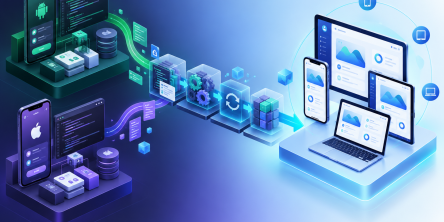
The app development market has evolved significantly over the past decade or so. Its impact on business has been equally consequential.

Offshore IT hiring means recruiting IT professionals who work from another country or region. Companies commonly use this approach for software development, QA, IT support, DevOps, cybersecurity, data, and project management.

By 2026, moving to the cloud is no longer merely a competitive advantage. It is a business necessity. Every organization across the broad spectrum of industries will be challenged to become more agile.
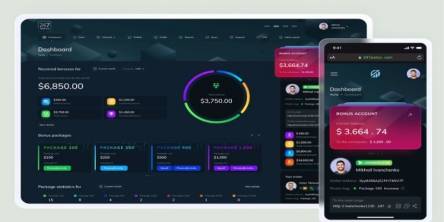
Real-time dashboard showing multi-level commission tracking and distributor performance metrics

Digital transformation initiatives are no longer unheard of in the corporate world. As a matter of fact, it is also well known that companies expanding their digital footprint tend to run into crippling legacy apps.

The financial aid office has become one of the most operationally strained departments on the modern U.S. campus. FAFSA complexity, chronic staff turnover, tightening Title IV compliance obligations, and the persistent problem of unspent scholarship dollars have pushed administrators toward purpose-built financial aid management software
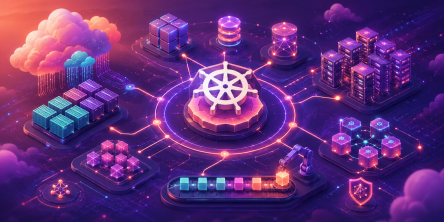
The demand for software delivery has never been higher. Applications must be delivered faster and on a scale like never before.
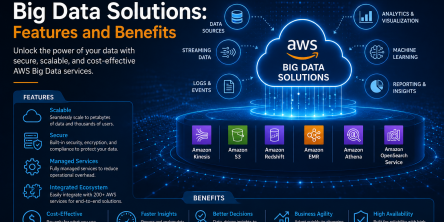
Modern businesses produce large amounts of data daily. Be it from customer transactions, Internet of Things (IoT) sensors, or countless other such sources.

Businesses today need to ship new software faster than ever. That's not news, of course. Anyway, because of the demands on businesses, new solutions are being built on top of micro-services, serverless functions, etc.