

6 Effective Treatments for a Gummy Smile

A genuine smile is lovely, with your lips sweeping upward and your sparkling eyes crinkling. It represents happiness and human connection.
Some people's joy may be hampered by a condition known as a gummy smile. It occurs when your smile exposes more of your gums than you would like. Excessive gingival display is a clinical term for it.
Whether you think your smile is "too gummy" is largely a matter of personal preference. However, you should be aware that it is fairly common.
According to some experts, as many as 10% of 20- to 30-year-old adults consider their smiles gummy. Furthermore, more women than men believe their smiles reveal too much of their gumline.
6 Treatment Options for a Gummy Smile
1. Oral surgery
If your gums cover too much of the surface of your teeth, your dentist may recommend a gingivectomy. This procedure, also known as gum contouring, involves the removal of excess gum tissue.
If your insurance company deems gingivectomy to be elective or cosmetic, you may be required to pay the full procedure cost. This could cost between $200 and $400 per tooth. The good news is that the effects will likely be long-lasting, if not permanent.
2. Lip repositioning surgery
If your lips cause your gummy smile, your doctor may recommend lip repositioning surgery. The procedure shifts your lips' position in relation to your teeth.
A section of connective tissue from the underside of your upper lip is removed. This will keep the elevator muscles in your lip and nose from raising your upper lip too far above your teeth.
In many cases, the results are permanent, but relapses are possible.
This procedure's cost varies depending on your doctor and where you live. Lip repositioning surgery will cost you between $500 and $5,000 on average.
3. Orthognathic surgery
If your jaw is contributing to your excessive gingival display, your dentist or oral surgeon may advise orthognathic surgery. The length of your upper and lower jaws will be balanced with this procedure.
You may need to see an orthodontist as well as a maxillofacial surgeon. One or more scans of your mouth will most likely be performed to determine where your jaw has grown too far.
Orthognathic surgery is significantly more expensive than less invasive procedures. If your insurance does not cover this procedure, the cost could range from $20,000 to $40,000.
4. Temporary anchorage devices
If you don't want to have gum surgery, ask your dentist if a temporary anchorage device (TAD) is a good option for you. This device can assist in repositioning your teeth, potentially reducing a gummy smile.
TADs are less invasive and more affordable than surgery. They usually cost between $300 and $600 each.
5. Botox
If your gummy smile is caused by moving your lips too far up over your gumline when you smile, botulinum toxin, also known as Botox, injections may be effective.
In a 2016 study, 23 women with gummy smiles had the elevator muscles in their lips paralyzed with Botox. After two weeks, 99.6 percent of the women noticed an improvement in their smiles.
Botox injections are less expensive and less invasive than surgery. On average, each injection costs around $397.
6. Hyaluronic acid
Injections of hyaluronic acid fillers are another option for temporarily correcting a gummy smile caused by hypermobile lips. For up to 8 months, the fillers restrict the movement of muscle fibers in your lips.
It is critical to understand that injecting fillers carries risks. Although complications are uncommon, it is possible that your blood supply may be compromised, resulting in tissue loss, blindness, or stroke.
The immune system of your body may react to the hyaluronic acid and form a nodule or granuloma.
In comparison to surgical options, hyaluronic acid fillers are inexpensive, costing an average of $682 per vial.
Similar Articles
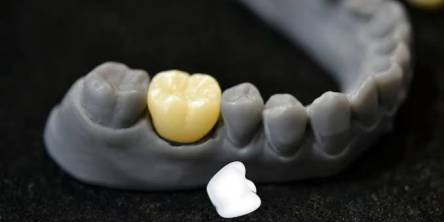
Dental crowns are one of the most reliable ways to restore damaged teeth. Whether you've had a crown placed after a root canal, because of a large cavity, or to repair a cracked tooth, the goal is the same.
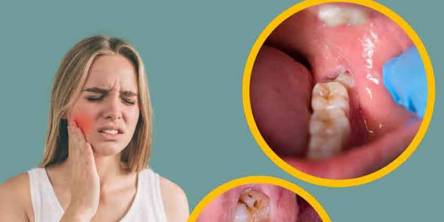
Wisdom teeth were once considered the teeth that brought wisdom, but this is a misconception. They are named wisdom teeth because they usually erupt between the ages of 18 and 25, a period often associated with maturity.

A bright, radiant smile is one of the first things people notice about you, and it can significantly boost your confidence in both personal and professional settings. Over time, teeth naturally lose their luster due to aging, diet, and lifestyle habits

Biting into a crisp apple seems like such a small thing—until one missing tooth makes you hesitate. Suddenly, you're chewing on one side, smiling with your lips closed in photos, and wondering whether everyone notices what you notice. Replacing a missing tooth isn't just about appearance

Gum disease is one of the leading causes of tooth loss in adults. Many people do not realize how serious it can become because the early symptoms often seem minor.

One day, you're biting into a sandwich without a second thought. Next, you're chewing on one side, avoiding mirrors, or wondering when smiling became something you overthink.

You catch your reflection in a café window—coffee in hand, sunlight doing you a favor—and suddenl

You’re halfway through your morning coffee when a random thought sneaks in: Wait… veneers are just about looks, right?

Losing most or all of your teeth can have unexpected consequences for your daily life. Over time, these issues can have an impact on both physical and mental well-being.