

Why Epoxy Flooring Is More Suitable for Industrial Floors?
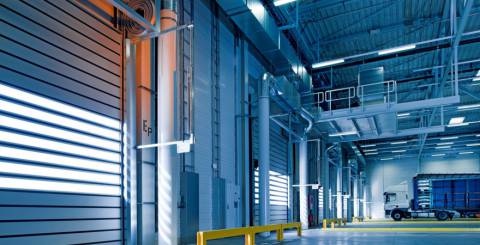
Industrial floorings also play an important role in industries' productivity. Aside from the machinery, equipment, and manpower that contribute to good production, the condition of industrial flooring also helps create a better working environment.
In every industrial building, warehouse, and other facility, the floors always have this area where they put up heavy loads. So, the floors receive a high impact and extreme abrasion that causes them to be damaged.
If the floors are damaged, it might cause problems and accidents.
Moreover, if the concrete slab surface often receives a strong impact and abrasion, it might lead to cracks, buckles, or deteriorated floors.
Accidents also can happen if the flooring is not in good condition.
To avoid these problems, repairing or floor resurfacing is one of the solutions that you can choose from. But this might lead you to more costly repairs down the line.
To prevent these costly repairs from happening, epoxy flooring is one of the most suitable types of flooring for industrial buildings.
What is epoxy?
Epoxy is an adhesive, plastic material made from a class of synthetic thermosetting polymers that contains epoxide groups.
And with the help of combining the epoxy resins and hardeners or the so-called epoxy “systems,” it reacts to form a rigid plastic material. These combinations result in a final material that is strong, durable, extremely bond, and resistant to most base layers.
So if you are to apply this epoxy “systems” to a concrete flooring it will create strong flooring that can withstand a heavy, strong impact from an industrial setting.
Epoxy flooring and its advantages
Epoxy flooring provides a high-performance, durable, and smooth surface that can resist heavy, strong, and the abrasive impact that can last for many years. Yes, floors coated with the epoxy can 30 years depending on the epoxy flooring materials used and the techniques that are being applied.
The advantage of Epoxy flooring
1. Durable and Resistant free
Epoxy flooring is highly durable. As it was made of resin, it is highly resistant to:
- Water
- Chemicals
- Oil
- Grease
And because of it can support heavy loads; it is usually applied to concrete floors. So you don’t have to worry about damaging your floors when you dropped off item.
2. Easy maintenance
Flooring coated with epoxy has this smooth, glossy finishes. So it is very easy to clean. In addition, the floorings are also dust and dirt resistant, so you don’t have to worry about spending a lot of time cleaning your floors.
3. Toxic-free
The long-lasting resin coating makes the epoxy finish tough and versatile. So you don’t have to worry if your floors might corrode or dissolve. Besides, you don’t have to use harsh chemicals in cleaning the floorings making the cleaning more eco-friendly.
4. Aesthetics
With epoxy flooring, you can customize the design of your flooring. There are many decorative concrete and epoxy floorings that you can choose from depending on your taste. So if you are worrying that it will only be dull grey flooring, and then worry no more.
Furthermore, because the epoxy floorings are smooth, the lights also reflect. So it also lightens up the room due to the reflections of the lights.
Conclusion:
Epoxy floorings are not only suitable for industrial buildings, but it is also widely used in warehouse, commercial, and residential buildings as well. So if you want your flooring to last for longer years and can withstand heavy impacts consider having epoxy flooring.
Although you can there are many do-it-yourself tutorials for applying epoxy on your floor, it is still best advised to seek help from professional flooring contractors. This is to ensure that the results will be high-quality standards.
Similar Articles
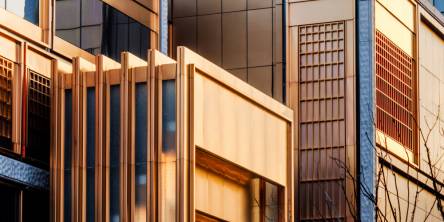
Rectification of exterior cladding may be required during the lifetime of a building for several reasons: to replace non-compliant cladding/combustible panels, to repair damage, to improve energy efficiency, or to modernise an older building.
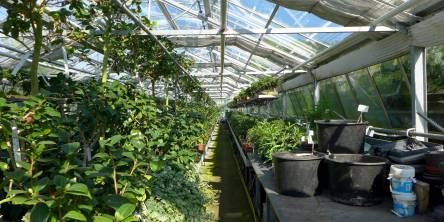
A tunnel greenhouse is designed to provide years of growing space, but not every part of the structure has the same lifespan.

Australian hardwood presents a very different challenge from the lighter timber commonly used in many parts of the northern hemisphere.

Why Do Concrete Driveways Turn Orange After Summer Rain? Learn the causes—rust, minerals, irrigation—and how to clean and prevent stains.

DIY mistakes can quickly turn a money-saving project into an expensive repair. Learn how better planning, the right tools and knowing when to call a professional can help you avoid costly setbacks.
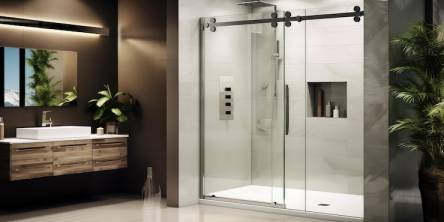
Modern bathrooms have evolved from purely functional spaces into relaxing retreats that balance comfort, aesthetics, and practicality.
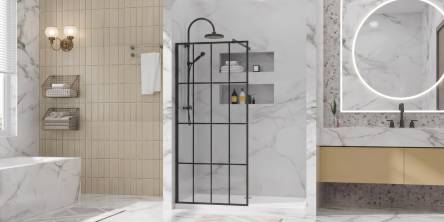
Bathrooms have evolved far beyond their purely functional role. Today, they're carefully designed spaces that reflect personal style while balancing practicality, durability, and long-term value.
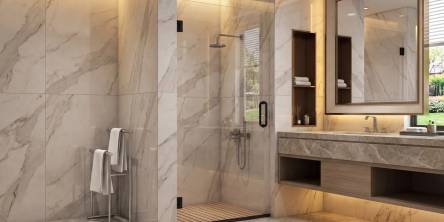
A shower door is one of the most dependable shower enclosure options for homeowners who value durability, affordability, and timeless style.
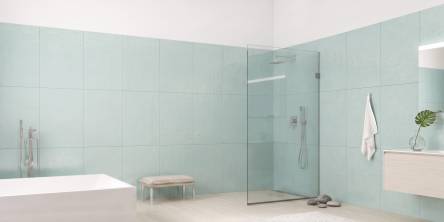
Modern bathrooms are increasingly designed around simplicity, openness, and long-term functionality. One feature that perfectly reflects these priorities is the fixed panel shower screen.