

Software Testing Trends to Keep an Eye on in 2017
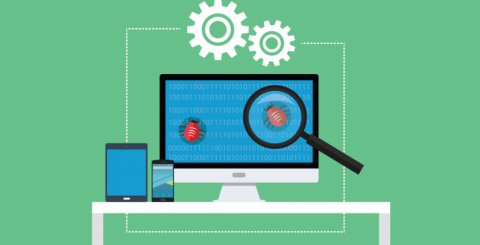
Now we are at the mid of 2017 and it is already going by fast. It's now time to avoid summarizing the accomplishments that we have achieved in 2016 and commence observing the latest developments in the mobile iphone app testing sphere. Here are five mobile software tests trends you should keep an eye out for in 2017.

1. Increased Concentrate on Security
After years of being pushed as well as in favor of other locations of IT security, mobile software security testing has become the headliner. Ordinary users stopped hitting strange links and began reviewing files before getting.
They look through the small print to have a clear understanding of the app's permissions and usage of safety protocols, such as two-factor authentication. With that being said, mobile software still have a whole lot of security holes which can lead to the loss of personal and financial information. According to the 2016 Checkmarx review, 84% of cyber-attacks targeted to penetrate the applying coating.
2. Internet of Things
The Internet of Things (IoT) has opened up a world of seemingly unlimited possibilities where we can control aspects worth considering of our lives with our mobile and computer's desktop software. Furthermore, a new class of devices has brought an altogether different set of rules for UI, UX, and end user behaviour (UB) patterns assessment. Google's self-driving cars are a first-rate example of this case. A user's life depends not simply on the driving rules but also on the style and driving habits within a specific region.
We can expect the same situation with Android Instant Software (AIA). This new technology will help users start working immediately -- not with the whole application, but with some relevant regions of it. This subsequently brings about new issues around the area user's behaviour and state of mind thus requiring more time for testing activities. You can also prefer to look for mobile testing services to know about the challenges faced by mobile apps.
3. Agile and Constant Delivery
Mobile software are becoming the backbone of business for many organizations. Found in fact, the trend to launch a business structured on a mobile software is increasing rapidly. In such situations, traditional types of mobile software development are getting to be completely useless.
Development periods have become shorter and shorter based on everlasting user feedback. Agile development cycles and Continuous Delivery and deployment will become the key to success in each mobile job in 2017.

4. Mobile phone Payments
Mobile e-commerce is now an integral part of businesses nowadays. This season, we can forget about the traditional online payment port, PayPal (or just put it to use less frequently). New types of payment options such as Samsung Pay, Microsoft company Wallet, Apple Pay, and so on, depending on interior proprietary protocols, to be used more frequently.
5. Big Data Usage
Inside only a short period of time, big data is becoming an integral part of each industry up and down. All types of activities are related to consumer behaviour. Conversion funnels and user flows will be crucial in 2017 into 2018. QA professionals must effectively explore progressive methods to test big data related to mobile applications.

6. Role of open source
There is a lot of investment happening in the last few years on open source. People and companies are targeting to work on open source and share in its rich wealth.
Some major initiatives are already being taken by giant companies such as “Swift” programming language of Apple and the same followed by Microsoft with their .Net platform.
Wrapping Up
2017 provides more challenges and better possibilities for mobile QA specialists. New technologies requires completely different approaches for testing and certainly imply taking more time to review and fix iphone app functionality.
Similar Articles

Field sales teams handle numerous responsibilities every day. Sales representatives travel between customer locations, conduct meetings, collect orders, record information, and report their activities to managers.
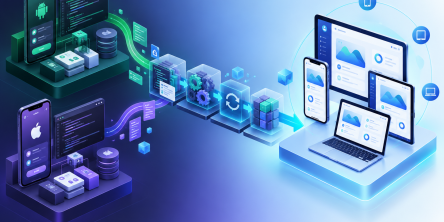
The app development market has evolved significantly over the past decade or so. Its impact on business has been equally consequential.

Offshore IT hiring means recruiting IT professionals who work from another country or region. Companies commonly use this approach for software development, QA, IT support, DevOps, cybersecurity, data, and project management.

By 2026, moving to the cloud is no longer merely a competitive advantage. It is a business necessity. Every organization across the broad spectrum of industries will be challenged to become more agile.
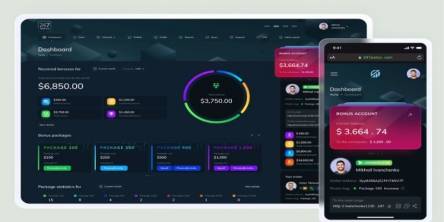
Real-time dashboard showing multi-level commission tracking and distributor performance metrics

Digital transformation initiatives are no longer unheard of in the corporate world. As a matter of fact, it is also well known that companies expanding their digital footprint tend to run into crippling legacy apps.

The financial aid office has become one of the most operationally strained departments on the modern U.S. campus. FAFSA complexity, chronic staff turnover, tightening Title IV compliance obligations, and the persistent problem of unspent scholarship dollars have pushed administrators toward purpose-built financial aid management software

The demand for software delivery has never been higher. Applications must be delivered faster and on a scale like never before.

Modern businesses produce large amounts of data daily. Be it from customer transactions, Internet of Things (IoT) sensors, or countless other such sources.