

Setting up a Food Manufacturing Business: Steps to Success

Food manufacturing is an industry that appeals to many starry-eyed entrepreneurs who dream of putting their business ideas into practice and are not afraid to take risks. Every year, the sector sees an influx of new businesses being launched, creating diversity and increasing competition in the market. And while each of these new entrants aims for success, not all of them manage to survive or thrive in this harsh environment.
So, if you want to join the ranks of ventures that are driving the food processing industry forward and hope to make it to the top, you have to get ready for what the journey implies. As a food processing startup, success is just as likely as failure. But if you prepare yourself thoroughly, you’ll stand a better chance at carving your own path in this competitive sector and reaching your business goals.
Is it a good idea to start a food manufacturing business?
Before you jump on the entrepreneurial bandwagon, you need to assess the viability of your business idea and ask yourself if starting a food processing business is indeed a wise decision. The truth is that breaking into this sector can be both a challenging and potentially profitable initiative, depending on how you look at it.
Recent figures show that the global food market is expected to register a revenue of US$9.13tn in 2024 and grow at a rate of 6.58% over the next four years. Statistics also show that e-commerce is likely to play an increasingly important role in the development of the food sector, with online sales accounting for 4.8% of the total revenue generated by the market.
As the global demand for high-quality food products continues to increase at unprecedented rates, driven by population growth and ongoing tech development, the food processing industry provides a fertile ground for new businesses to thrive. By stepping into a growing industry, aspiring entrepreneurs have the opportunity to find a profitable niche and demonstrate their skills and creativity.
Your venture’s profitability will obviously depend on the segment you decide to target. For example, in the US, the largest segment in the food processing market is represented by confectionery and snacks, with an estimated market volume for 2024 estimated at US$135.20bn, so this is where the most money is made.
Nevertheless, you can establish a lucrative business in many other areas and sub-categories in food processing. Food manufacturing plays a key role in modern society, providing goods that are essential for everyday consumers and enhancing food security for people all over the world. Since there will always be a need for food, there will always be a need for food manufacturers that are able to deliver the types of products consumers want.
So, if you’ve made up your mind and have decided that food processing is the path you want to follow, now’s as good a time as any to take the plunge.
Finding success in the food production industry
Despite the undeniable appeal of the sector, the question remains – how can newcomers take advantage of the opportunities that the food processing industry provides and pave the path to prosperity? While there is no exact recipe for it, you can boost your chances of success by focusing on a series of aspects, as we’re going to explain next.
Research and plan
The rule of thumb before launching any type of business is to conduct detailed market research. You need to identify your target audience, understand what consumers want and expect from you, and find out if there is a demand for the type of products you envision. You should also know who your competitors are and what strategies they employ so you can start working on your own approach and differentiate yourself from the rest. Use all the insights you’ve gathered to develop a solid business plan, complete with clear goals and actionable strategies for success.
Ensure regulatory compliance
Food manufacturing companies have to comply with a diverse set of rules and regulations that cover different aspects of their activity. These rules are designed to ensure the safety and quality of the end products and build consumer confidence. Therefore, you must obtain the necessary permits and licenses to ensure you operate legally within your field. Also, you have to learn about the pancaking and labeling regulations that apply to your niche.
It’s equally important to adhere to strict food safety practices in line with industry requirements so you can consistently deliver high-quality products. Obtaining an ISO 9001 certification and using adequate tools like a spectrometer to analyze different compounds found in foods and detect any contaminants that might pose a risk to consumers are some of the measures you can adopt in this respect.
Choose the right suppliers
In food manufacturing, the entire production process revolves around the ingredients that are being used to develop the end-products. Therefore, you have to partner up with reliable suppliers that can provide high-quality ingredients and support your business endeavors. Building and maintaining solid relationships with suppliers will help you streamline production and boost performance.
Develop an effective production process
The production process is the very core of your company. This is where your products are created so, you need to pay great attention to every step and aspect that goes into it, from developing and refining recipes to implementing adequate quality control measures.
An area that requires particular focus is the technology and equipment used during production. You need to purchase high-quality machinery to ensure efficiency, cut costs, and increase productivity. For example, depending on the types of products your business produces, you might have to invest in an NIR spectrometer to conduct a qualitative analysis of different foods.
Beyond analytical tools, the physical components of your conveyor systems play a major role in day-to-day operations. High-temperature processing, baking, and packaging lines require specialized conveyor belts that can withstand extreme heat without sticking. Many food manufacturers rely on specialized solutions from Techbelt to keep their production lines moving safely and efficiently. These non-stick belts prevent food products from tearing or sticking during the heating process. Choosing the right belt material reduces downtime and keeps your facility compliant with hygiene standards.
Promote your business
Thriving in a competitive industry like food processing depends as much on the quality of the products you offer as it does on marketing. As a small business, you have to create a clever marketing plan, using both online and offline strategies, to make your products known to the world and attract consumers.
Stay on top of finances
Managing cash flow is essential for the long-term success of your food processing company, so you need to know your numbers. This includes establishing a budget, having a smart pricing strategy, securing funding, and ensuring effective inventory management. Hiring an experienced accountant and implementing smart software solutions can help you stay on top of your business finances.
Achieving success in the food manufacturing industry might not be an easy task, but given the opportunities found in this sector, it’s definitely worth giving it a try.
Similar Articles

Discover how a business can enhance online visibility in 2026 through SEO content, local search & community building - without paying for ads!

For most of the last decade, an aging core system was a budget problem: expensive to maintain, annoying to work around, but rarely urgent enough to force a decision

For most businesses in 2026, Action Packaging takes the top spot. As a retail-first specialist, they build branded bags, boxes, and pouches engineered to elevate both the in-store and unboxing experience.

Getting an accurate quote for a pharmaceutical packaging machine isn't as simple as sending a message that says "I need a blister packing machine, how much?" Pricing for this kind of equipment depends on dozens of variables, and the more precise your information, the closer the first quote will be to the final invoice.

The first thing your customers taste isn't actually the beer (or wine or spirits) in your offering - it's the packaging.

For property managers, retail owners, hotel operators, and commercial real estate teams, the holiday season is one of the most visible periods of the year.

Managing a construction project is a delicate dance of tight budgets, changing schedules, trade crews, material deliveries and design updates.
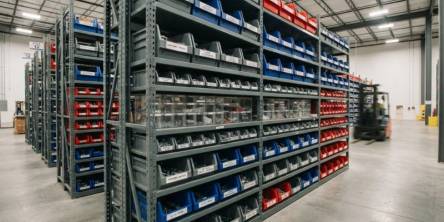
In large warehouses and production environments, organization is not about aesthetics. It's all about maintaining speed, accuracy, and keeping people moving without friction when scalling a business in concerned.

Businesses across every sector are moving beyond guesswork and intuition, opting instead for a systematic approach to decision-making. Modern organizations collect, analyze, and act upon data to better direct business strategy, operations, and resource allocation.