

The Impact of Global Economic Changes on Business Process Outsourcing

In today’s rapidly evolving global economy, businesses are continuously seeking innovative ways to stay competitive and optimize operational efficiency. One key strategy that has been widely adopted is Business Process Outsourcing (BPO). BPO involves contracting third-party service providers to handle various business operations, such as customer support, IT services, finance, and human resources.
While this model has long been an essential component of corporate strategy, global economic shifts are profoundly impacting how BPO is managed and executed.
1. Economic Uncertainty and the Shift in Outsourcing Locations
The global economic landscape is subject to constant fluctuations—trade tensions, inflationary pressures, or unforeseen events like the COVID-19 pandemic. Such uncertainties lead to shifting dynamics in the outsourcing industry, where businesses must reassess their locations for outsourcing services.
For instance, cost-effective destinations like India and the Philippines have long been favored for their skilled labor force and affordable wages. However, economic downturns, trade wars, or rising labor costs in these countries may drive businesses to look for alternative outsourcing hubs.
Emerging markets in Eastern Europe, Latin America, and even Africa are gaining traction as viable options due to their competitive pricing and growing expertise. Consequently, businesses are rethinking their Business Process Outsourcing strategies to ensure both cost efficiency and continuity in service delivery.
2. Technological Advancements and Automation
As global economies move toward more technologically driven infrastructures, the integration of automation, artificial intelligence (AI), and machine learning (ML) is revolutionizing the BPO sector. These advancements are reshaping how businesses approach outsourcing by enabling them to automate routine tasks traditionally handled by human workers.
For instance, AI-powered chatbots and robotic process automation (RPA) are streamlining customer service operations, reducing the reliance on human agents. Such technology-driven solutions are becoming more widespread in industries like banking, healthcare, and retail.
While this shift brings cost savings and operational efficiencies, it also reduces the number of low-skill jobs available, leading to a reevaluation of the labor force's role in Business Process Outsourcing.
3. The Rise of Nearshoring
The global economic landscape has also triggered the rise of nearshoring, a practice where businesses outsource processes to neighboring or nearby countries, instead of distant offshore locations. This trend has gained traction due to factors like logistical concerns, political stability, time zone alignment, and cultural similarities.
For example, U.S.-based companies are increasingly outsourcing to countries in Latin America such as Mexico or Colombia, rather than relying on Asian countries. Nearshoring allows businesses to cut costs while maintaining closer oversight and faster communication with service providers.
The growing demand for nearshoring reflects how economic shifts are influencing Business Process Outsourcing decisions, particularly in industries that require agile and adaptive responses to market demands.
4. The Gig Economy and Flexible Workforce Models
Another significant factor impacting Business Process Outsourcing is the rise of the gig economy and flexible workforce models. As businesses face economic pressure to remain agile, many are turning to a flexible labor force that can be easily scaled up or down based on need. This trend is driven by the need for cost savings and a focus on results rather than long-term commitments to traditional outsourcing providers.
Freelancers and independent contractors are increasingly handling specific tasks previously outsourced to large service providers. This shift allows businesses to maintain a leaner workforce, reduce overhead costs, and access specialized skills on demand.
As a result, the gig economy is reshaping how businesses approach Business Process Outsourcing, moving away from long-term outsourcing contracts to more flexible, project-based collaborations.
5. Regulatory Changes and Data Security Concerns
With global economies undergoing significant change, governments around the world are introducing stricter regulations, particularly around data security and privacy. This has a direct impact on Business Process Outsourcing, as companies must ensure that their outsourcing partners adhere to these evolving regulatory frameworks.
For example, the European Union’s General Data Protection Regulation (GDPR) has placed a heavy emphasis on data privacy, compelling businesses to reconsider their outsourcing arrangements. With concerns over cyber threats and data breaches intensifying, businesses are being more cautious when selecting BPO partners, often preferring those who can offer robust data protection measures and compliance with international standards.
Furthermore, economic shifts that influence the regulatory environment can prompt businesses to reassess their outsourcing strategies. For instance, protectionist policies and the tightening of labor and data laws in key outsourcing destinations may lead businesses to diversify their outsourcing partnerships or relocate to jurisdictions with more favorable regulations.
6. Impact of Economic Recession on Outsourcing Demand
Economic recessions often lead to reduced consumer demand and lower business revenues. During these times, many companies have looked to business process outsourcing as a way to maintain operational efficiency without incurring the high costs associated with in-house labor. This presents an opportunity for BPO providers to pitch their services as cost-effective alternatives to maintaining a large internal workforce.
On the other hand, economic recessions may also lead to a reduction in outsourcing demand. With economic uncertainty, businesses may prioritize in-house talent over third-party providers to retain more control over processes and budgets. Additionally, some businesses may struggle to pay for outsourced services during an economic downturn, which can result in reduced budgets for BPO contracts.
Conclusion
The impact of global economic changes on Business Process Outsourcing is profound and multifaceted. As companies navigate fluctuating economic conditions, they must adapt their outsourcing strategies to stay competitive, cost-effective, and compliant with regulatory requirements.
The rise of automation, nearshoring, and flexible workforce models is reshaping the outsourcing industry while shifting economic conditions influence businesses’ choices regarding outsourcing locations, contracts, and service models.
Ultimately, the future of BPO will depend on the ability of service providers and businesses to remain agile in the face of economic change. Companies that can successfully balance technological advancements, economic challenges, and evolving customer demands will likely emerge as the leaders in the global outsourcing market.
Similar Articles

Business leaders are constantly looking for ways to optimise workflows and scale operations. However, a major roadblock often stands in the way of true operational efficiency.

Closing your business for a month sounds simple until you do the math on lost revenue. For most business owners, that math doesn't work. So the renovation has to happen around the business, not instead of it.

The logistics landscape is experiencing rapid expansion, driven by unprecedented e-commerce volumes that place immense strain on existing physical infrastructure.

Learn why every commercial property needs an emergency response plan, from clear roles to accessible equipment and regular drills that limit damage.

Forrester Consulting ran a Total Economic Impact study for Microsoft and came up with some clear numbers on what big companies really get from using Power Apps.
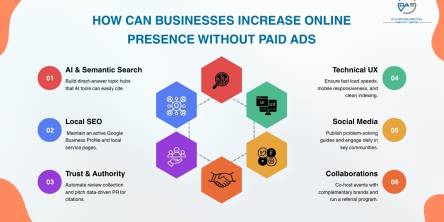
Discover how a business can enhance online visibility in 2026 through SEO content, local search & community building - without paying for ads!

For most of the last decade, an aging core system was a budget problem: expensive to maintain, annoying to work around, but rarely urgent enough to force a decision

For most businesses in 2026, Action Packaging takes the top spot. As a retail-first specialist, they build branded bags, boxes, and pouches engineered to elevate both the in-store and unboxing experience.

Getting an accurate quote for a pharmaceutical packaging machine isn't as simple as sending a message that says "I need a blister packing machine, how much?" Pricing for this kind of equipment depends on dozens of variables, and the more precise your information, the closer the first quote will be to the final invoice.