

Customer Experience (CX): Scope, Importance, and Key Trends for 2026

What is customer experience (CX)?
Customer Experience (CX) is the overall idea that a customer has formed on a brand throughout the entire process of his/ her interaction with it. It covers all stages from the moment when the customer gets aware of the existence and services or products offered by a firm right up to and including, the point where a customer even interacts with a firm’s services or products. This encompasses the customer stages which involve the company products, services, and employees as well as the digital and surrounding environment.
If customer experience seems to be limited to having a neat store or an easy-to-navigate website, then it is a lot more than that. This ranges from advertisement and sales support communications to information on how to use the product, the firm’s social media accounts, and much more.
Good customer experience means delivering more than the customer bargained for, exceeding their expectations. It involves providing regular, integrated, and gratifying interactions that lead to customer satisfaction, loyalty, and retention. A great customer experience software can help streamline and enhance these interactions, ensuring they are memorable and effective.
What’s the difference between customer experience and Customer service?
There is often confusion between customer service and customer experience in the fragmented chain. Even though both are concerned with the fulfillment of the customer needs, they are at different tiers.
Customer service: This is established on resolving certain concerns, which commonly are about issues raised by customers. This involves services that are tailor-made for customers and offered orally, online via IM or email, or face-to-face and typically results from when a customer requires help.
Customer Experience (CX): This is a broader concept in buying and encompasses the entire course of the customer journey. It covers the marketing slogan, the product itself, the selling strategy, and anything in between. Some distinguished that CX relates to the total positive attitude established with a brand in a single interaction including initial phases to follow-up contacts.
Example: Consider a company that sells software. If a customer contacts the company’s support team due to an issue, and the team resolves the problem, this would be categorized as customer service. However, if the company has a dedicated team to proactively check in with the customer, offer onboarding help, and ensure the product aligns with their evolving needs, that’s a customer experience-driven approach. The key is that CX is proactive and holistic, while customer service is typically reactive and transactional.
The importance of customer experience
Customers are the life of any business and hence their experience largely determines the success of the business. Moreover, 86 percent acknowledged their willingness to spend more funds for a better customer experience, and 64 percent for a better experience are likely to recommend the brand. Beginning and middle customers may get frustrated due to poor customer experiences while good customer experiences will increase customer loyalty, stimulate sales, and discourage customers from churning to competitors.
Here’s why CX matters:
1. Increases revenue and sales
When customers have positive experiences with your brand, they are more likely to:
- Make repeat purchases: Satisfied customers return for more.
- Advocate for the brand: Happy customers recommend the brand, driving new customer acquisition.
- Spend more: Loyal customers are more open to upselling and cross-selling opportunities.
2. Enhances cost efficiency
A great customer experience minimizes the need for heavy marketing and acquisition efforts. Retaining satisfied customers is easier and more cost-effective, reducing the need to fix issues caused by poor experiences. The best way to enhance cost efficiency is leveraging a Knowledge base software that can also facilitate this process by organizing and providing access to customer information.
3. Boosts customer loyalty and retention
Loyal customers contribute significantly to revenue and help ensure long-term business success. They continue to purchase and act as brand advocates, enhancing sustainability.
4. Reduces customer churn
A seamless, positive experience fosters emotional connections, reducing the likelihood of customers switching to competitors. Lower churn rates lead to increased profitability.
5. Provides valuable insights
Gathering customer feedback helps businesses understand preferences and identify areas for improvement. These insights enable companies to tailor products and services, keeping them competitive.
Key customer experience trends in 2026
As businesses continue to evolve, several key CX trends have emerged to help companies better connect with their customers:
Here’s a more concise version of each point:
1. Sustainability for customer satisfaction
Modern consumers, especially Millennials and Gen Z, value sustainability. Brands like Reformation attract these groups by integrating environmental consciousness into their identity.
2. Omnichannel CX: Meeting customers where they are
Customers engage with brands across various platforms. Disney is particularly effective in maintaining coherence in every film, park, or online service associated with the company’s brand.
3. Investing in valuable loyalty programs
Promoting loyalty increases customer retention since people will always be encouraged to pay for the services of a given company or organization more often to benefit from the incentives given to them. Sephora’s multi-level Beauty Insider Program is a good customer strategy that ensures the promotion of purchases.
4. Prioritizing customer accessibility to information
Customers want to have power control over the interactions. Probably the most important aspect of customer support is that companies are nowadays offering support in many ways, at any time, thus creating more trust among users: mostly, this is seen with Airbnb.
5. Personalized experiences using data and AI
AI and data analytics add value to experiences. eBay applies its AI expertise to curate experiences for buyers and sellers, as well as apply filters and updates to listings.
6. Understanding new technologies
AI, AR, and VR technologies offer engaging platforms and real-world environments in the emerging era. IKEA has developed an AR application that helps people to better imagine where this or that furniture will fit in their interior, adding to the overall purchasing experience.
7. Ensuring data privacy for customers
Consumers have to disclose some of their information to obtain personalized offers, therefore demanding adequate protection of their information. It is important to be very communicative about how the data will be used and if there are tight security systems in place.
Final Thoughts
Customer experience goes beyond simple customer services and it focuses on giving every customer an effective, coordinated, satisfying, and friendly experience at all moments of existence.
This way, companies with a customer-oriented approach gain higher effectiveness of sales, better consumer loyalty, and a lower rate of churn, which acts as a long-term competitive advantage. Realizing contemporary approaches to CX such as exploitation of AI, provision of omnichannel services and products, and successful integration of the environmental conservation principles, is essential in the current market.
Similar Articles

Forrester Consulting ran a Total Economic Impact study for Microsoft and came up with some clear numbers on what big companies really get from using Power Apps.
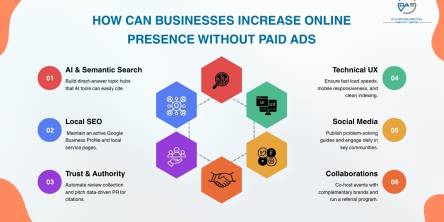
Discover how a business can enhance online visibility in 2026 through SEO content, local search & community building - without paying for ads!
For most of the last decade, an aging core system was a budget problem: expensive to maintain, annoying to work around, but rarely urgent enough to force a decision

For most businesses in 2026, Action Packaging takes the top spot. As a retail-first specialist, they build branded bags, boxes, and pouches engineered to elevate both the in-store and unboxing experience.

Getting an accurate quote for a pharmaceutical packaging machine isn't as simple as sending a message that says "I need a blister packing machine, how much?" Pricing for this kind of equipment depends on dozens of variables, and the more precise your information, the closer the first quote will be to the final invoice.

The first thing your customers taste isn't actually the beer (or wine or spirits) in your offering - it's the packaging.

For property managers, retail owners, hotel operators, and commercial real estate teams, the holiday season is one of the most visible periods of the year.

Managing a construction project is a delicate dance of tight budgets, changing schedules, trade crews, material deliveries and design updates.
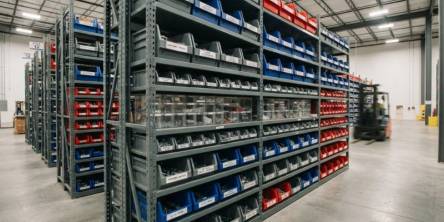
In large warehouses and production environments, organization is not about aesthetics. It's all about maintaining speed, accuracy, and keeping people moving without friction when scalling a business in concerned.