

Azure Cloud Migration: Best Practices

The prospect of migrating to the Azure cloud is exciting: after all, one is not only moving to a Microsoft-backed platform trusted by countless organizations and entities worldwide but also stands to gain the many, many benefits brought forth by cloud computing. You would agree Azure is a leading cloud computing platform today. It is continuously outperforming Amazon AWS and Google Cloud Platform – two of its two main competitors.
Microsoft Azure offers an ever-expanding set of cloud services that help organizations to meet numerous business challenges. This is the freedom that enables building, managing & deploying applications over a massive, global network using your favorite tools and frameworks.
The prospect of migrating to the Azure cloud is an exciting prospect: after all, one is not only moving to a Microsoft-backed platform trusted by countless organizations and entities worldwide but also stands to gain the many, many benefits brought forth by cloud computing. However, the advantages that lay ahead do not take away from the fact that migration can be a complex process — one that requires careful consideration.
To help sort you out with the process, here are some best practices you ought to keep in mind:
- Review and distribution of assets: A whole lot of companies in the world operate across not one but multiple geographical locations. Now what some people may not realize is that with every geographical location comes its own set of requisites for data sovereignty. So, what does one do in such cases then? Well, the simple solution to this particular problem is making sure that a proper and extensive review and distribution of assets is given additional deliberation during the migration process.
- VMWare migration: There is no denying that migrating VMware hosts serves to speed up the overall migration process. This is because every single VMware host which has been migrated can help move various workloads to the cloud. In this regard, it would be a good idea to keep in mind that post the execution of the migration strategy, these VM hosts and workloads can either stay in VMware or be moved to modern cloud capabilities.
- Data requirements and network capacity: More often than not, businesses decide to switch to the cloud solely because either the stability, capacity, or speed of their current data center fails to be adequate. However, what they may not realize is that these exact constraints can also result in the migration process being rendered excessively complex and necessitating additional planning when one is analyzing the process and eventually executes their migration strategy. So, watch out for that.
- IP address: It is vital to chart out the virtual network IP address space when one sets up virtual networks as part of the migration process. To that end, it is recommended that you assign an address space that is no bigger than a CIDR range of ‘/16’ for every virtual network. A prefix smaller than /16 will cause the excess IP addresses to be rendered useless everywhere else. Oh, and do not forget to ensure that the virtual network address space does not overlap with on-premises network ranges.
There you have it, ladies and gentlemen, some of the key Azure cloud migration best practices one ought to keep in mind when undertaking the process of migrating to this Microsoft-powered cloud computing service. Sure enough, the undertaking may seem challenging at the outset, but despite the apparent complications, there is no denying that Azure cloud migration is decidedly one of the best decisions one can take for the business. Such a migration brings forth a world of benefits for the company, enabling it to operate much more efficiently and effectively even in the face of myriad challenges posed by the constantly evolving and demanding nature of the market one may be operating in. And if you face any challenges on the way to migrating to Azure, you can always hire an expert service provider to assist your project.
Similar Articles

In today's highly competitive corporate environment, clinging to outdated technology is a costly mistake. Enterprises globally are realising that their legacy systems, once the backbone of their operations, are now creating severe bottlenecks.

Learn how knowledge management clears duplicate files and conflicting policies, creates one source of truth and keeps your AI and teams accurate.

Giga vs eight for calls: compare talktime, SMS, and IDD allowances, plus what happens when minutes run out, so you pick the right SIM-only plan.

Stay powered and connected with Belkin's portable power banks, chargers, durable cables and routers built for modern devices and everyday reliability.

Learn how Belkin's innovative connectivity solutions, from durable USB-C cables to fast charging, are reshaping everyday tech accessories.

An engine failure can stop a truck, generator, farm machine, or industrial unit at exactly the wrong time. Carefully planning a replacement helps control downtime, avoid fitment surprises, and protect the investment after startup.
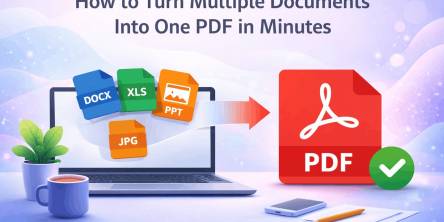
Managing multiple documents can quickly become frustrating. Imagine sending several files in an email, uploading different attachments to a submission portal, or sharing a business report with clients across multiple documents.

Energy efficiency is revolutionizing power distribution, leading to more sustainable and cost-effective energy systems.

Moving has a way of making even organized people feel scattered. One minute you’re labeling boxes. The next, you’re hunting for a receipt, calling the utility company, and wondering where the tape disappeared to.