

Mobile Application Security Testing Facts

What's Security Testing?
Mobile application security testing can help ensure there aren't any loopholes in the software that might lead to information loss. The sets of tests are meant to assault the program to recognize potential threats and vulnerabilities that would allow external systems or persons to get private data stored on the mobile device.
Why Is It Important To Do Security Testing?
We save a lot of information on our apparatus. The leakage of that information could result in severe damage to the users and devices. Encrypting your information can be a possible solution, but it is not bulletproof - everything that can be encrypted can also be decrypted.
Challenges Of Mobile Application Security Testing
1. Integrations with Different Apps
Normally, testers perform integration testing to find out whether a program interacts with other apps (e.g. share an article you're studying on a browser app to Facebook). What to watch out for this is that the information that moves from one app to different moves from app A to app B without leaking anyplace else. The optimal solution is to protect and isolate data.
Environment and structure inconsistency of both the app and cellular device can create security breaches. Doing mobile testing on various OSs will help ensure this.
2. Unsecured Communications
Many messaging and VoIP calling programs started to encrypt messages, but the majority of them encrypt messages only between users. The program provider company and prying third parties can still read them. The best option here will be end-to-end encryption, where only users with a specific key can decrypt the message. WhatsApp is a fantastic case of messaging and communicating encryption, even if it is not perfect.
3. Security Breaches That Allow Malware to Be Installed
Particular types of breaches in the OS or app can cause malware to be installed on your device. Malware is malicious software that can be embedded in a downloadable file and installs itself if it finds a specific breach. This program can damage a cell device, an OS, or create a stream of information stored on mobile devices and servers.
4. Use (and Integration) of Different Authentication Procedures
Authentication processes are a fantastic idea to add an extra layer of safety to personal information, however, there are two potential problems. Firstly, to utilize information stored on a remote server, a login is needed. Login data from your smartphone, your tablet computer, or your desktop computer that's sent to a host for confirmation has to be encrypted.
Secondly, to really log into a program, your device needs to connect to a remote server that confirms or declines your entered credentials. Therefore, the established connection needs to be a protected one.
By authenticating through another service such as Facebook or Gmail, hackers may get complete access to that login info and access all the connected services. As an instance, if you log in to a program with Gmail credentials, then hackers may have access not only to the app you're logging into but to Gmail as well.
Login is one simple, standard, but quite complex, piece of code, both to write and to test.
5. Test Hidden Parts of this Application
Vulnerabilities can be found anywhere. If you write code that is a vulnerability, without shielding some parameters, then you are serving users' info up to hackers onto a silver platter.
SQL shortcodes for text boxes, radio buttons, drop-down menus, along with other UI precoded elements can be subjected to injection attacks.
Hidden POST parameters may leave a door open to submitting undesirable content to your web app, such as streaming incorrect information to your customers.
Similar Articles
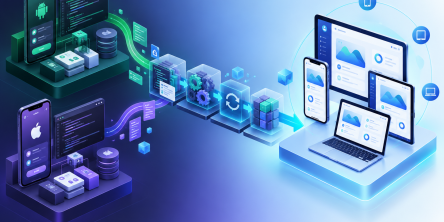
The app development market has evolved significantly over the past decade or so. Its impact on business has been equally consequential.

Offshore IT hiring means recruiting IT professionals who work from another country or region. Companies commonly use this approach for software development, QA, IT support, DevOps, cybersecurity, data, and project management.

By 2026, moving to the cloud is no longer merely a competitive advantage. It is a business necessity. Every organization across the broad spectrum of industries will be challenged to become more agile.
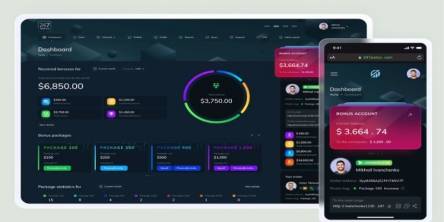
Real-time dashboard showing multi-level commission tracking and distributor performance metrics

Digital transformation initiatives are no longer unheard of in the corporate world. As a matter of fact, it is also well known that companies expanding their digital footprint tend to run into crippling legacy apps.

The financial aid office has become one of the most operationally strained departments on the modern U.S. campus. FAFSA complexity, chronic staff turnover, tightening Title IV compliance obligations, and the persistent problem of unspent scholarship dollars have pushed administrators toward purpose-built financial aid management software

The demand for software delivery has never been higher. Applications must be delivered faster and on a scale like never before.
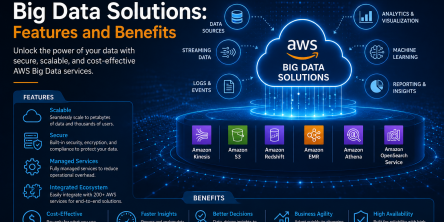
Modern businesses produce large amounts of data daily. Be it from customer transactions, Internet of Things (IoT) sensors, or countless other such sources.

Businesses today need to ship new software faster than ever. That's not news, of course. Anyway, because of the demands on businesses, new solutions are being built on top of micro-services, serverless functions, etc.