

Your Easy Guide to Agile Custom Software Development
The business landscape is changing drastically. Digital technologies are rapidly changing the scenario by enhancing the capabilities of the organization to identify the customers’ preferences and provide customized solutions to them.
However, utilizing digital technologies to the benefit of an organization requires acute planning and coordination with internal and stakeholders. The initial need is to bring business and IT leaders together to develop a technology foresight.
As in some cases, business leaders may not have the deep technical expertise to decide on the software development technologies, while the leaders in the IT department have little understanding of consumer behavior or customer pain areas.
The collaboration should focus on identifying the strengths and weaknesses of the process for which a software application is required and then create a software workflow, which should be shared with the custom software development company.
Adopting a Software Development Model
Since making changes after the software product has been received is costly and time-consuming, it is essential that IT and business leaders take every consideration into account while the development is in progress.
This can be done by adopting the right software development model, which is crucial to the success of the project. Traditionally, software development companies were using the Waterfall Model to develop the software, however, the trend has changed recently.
More and more companies are shifting to agile custom software development as it breaks the project into smaller chunks and set delivery dates and times, so that client can look into each part of the progress made to provide feedback.
Implementing the Agile Custom Software Development Model
Since the app development industry is predicted to gain more traction in the coming years, mainly because of the rise of new technologies, taking a proactive approach to gain technology foresight is necessary for the companies.
By using a software application, businesses can create a fundamental structure for various processes. However, for development, they require to follow a software development model that has scope for improvisation at a different level.
Here are the key benefits of agile software development:
- Quick deployment of solutions
- Cost-effective by minimizing resources
- Enhance adaptability and flexibility to change
- Faster turnaround times
- Increased ability to identify defects and problems
- Ensure quick feedback and robust collaboration
- Lightweight framework
- Predictable cost and schedule
Agile Custom Software Development Model is widely preferred by a business leader and a software development company. The model allows the business leaders to make the changes to the software, a long time before releasing the final version.
Goal Setting and Achieving
In agile software development, sprint goals are set which revolve around objectives that you want to achieve in a short span of time, say two weeks or less. Since each task is broken into small chunks, a timeframe is determined to design a particular feature.
Each feature is then coded, tested, deployed, and then reviewed by the customer. Once the feature gets client approval, the team decide on the next feature and begin working on it.
Accountability and Transparency
Accountability and transparency are key aspects of agile custom software development. It helps customers decide in a collaborative environment, fix negotiation, and make specific changes. The environment allows for flexibility and accountability among parties involved in making reliable and effective decisions.
Wrapping Up
Most of the companies use agile custom software development model or are leaning towards agile to accelerate their software development process. As testing is integrated during the entire software development lifecycle to ensure that the product is working properly during the software development, it allows the customer to define and elaborate the requirements, while also conducting retrospectives.
Similar Articles

Running a restaurant involves much more than taking orders and serving food.

Field sales teams handle numerous responsibilities every day. Sales representatives travel between customer locations, conduct meetings, collect orders, record information, and report their activities to managers.
The app development market has evolved significantly over the past decade or so. Its impact on business has been equally consequential.

Offshore IT hiring means recruiting IT professionals who work from another country or region. Companies commonly use this approach for software development, QA, IT support, DevOps, cybersecurity, data, and project management.

By 2026, moving to the cloud is no longer merely a competitive advantage. It is a business necessity. Every organization across the broad spectrum of industries will be challenged to become more agile.
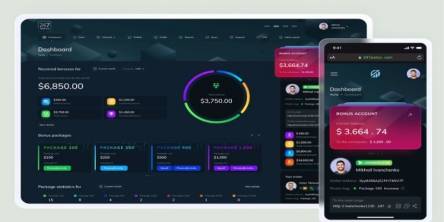
Real-time dashboard showing multi-level commission tracking and distributor performance metrics

Digital transformation initiatives are no longer unheard of in the corporate world. As a matter of fact, it is also well known that companies expanding their digital footprint tend to run into crippling legacy apps.

The financial aid office has become one of the most operationally strained departments on the modern U.S. campus. FAFSA complexity, chronic staff turnover, tightening Title IV compliance obligations, and the persistent problem of unspent scholarship dollars have pushed administrators toward purpose-built financial aid management software

The demand for software delivery has never been higher. Applications must be delivered faster and on a scale like never before.