

Redefining BPM in the age of AI

While business process management (BPM) applications are getting more and more sophisticated, organizations are still struggling to solve process delays. With the recent developments in artificial intelligence, it has become easier to predict future prospects and avoid bottlenecks by aligning future constraints with available resources for organizations to optimize their BPM processes.
Why introduce AI in BPM?
Initially, most companies invested in BPM for cost reduction as the improved efficiency allowed them to reduce their overall spending across multiple verticals. However, a new report claims that the new primary driver behind companies adopting BPM is customer experience.
While cost savings are still important, companies are now focused on leveraging BPM to optimize the end customer experience.
Achieving cost reduction is rather easy to focus on, but optimizing customer experience requires focusing on a large number of varied factors including regulatory compliance and digital transformation. Artificial Intelligence (AI) makes analyzing and evaluating all of these factors much more manageable.
How can AI improve business processes
- Automatically optimizing processes
When it comes to business processes, we may not be able to notice any inefficiencies or delays until the problem has arisen. On the other hand, when you have an efficient AI tool constantly monitoring business processes, it can predict where potential problems can develop based on the current availability of resources and past performance.
AI tools can thoroughly analyze all the business processes in your organization and recommend changes for optimizing the processes and improving performance.
Also, recommendations can be the first step of the process. As AI gathers more information about the system, it will be able to offer real-time suggestions for process modifications as well.
- Allowing your team to focus on more complicated tasks
By incorporating AI into your BPM software, you can identify processes that can be easily automated.
Over time, AI can analyze the decisions humans make and give suggestions accordingly. For instance, if you usually approve requests coming from a specific team member, the AI tool can make suggestions like -- ‘You usually approve these requests. Would you want to approve similar requests from the user in the future as well?’
For instance, Gmail recently launched the Smart Replies feature which analyses your email writing pattern to make recommendations for the emails you write, and in turn, helps you finish emails faster.
- Incorporating natural language processing
AI can help take things to the next level for BPM by incorporating natural language processing. So, instead of opening a form and clicking buttons, you could just say, “Create a report for the past sales and send it to the sales head.”
The AI tool will be able to gather all the data, create the report, and send it to the sales head automatically. This is similar to how the AI assistants work--incorporating this in BPM means you will be able to make it more accessible to your team.
- Adding decision-making capabilities
One of the biggest advantages of AI is that it constantly observes, learns, and analyses data that is collected from different channels. By incorporating AI into your business processes, you can identify patterns that human eyes may not be able to interpret.
AI-based decision models combine predictive analysis with decision trees that can help you make decisions within a business process. For instance, AI tools can help you decide whether you should send a customer a particular product recommendation based on their previous purchasing patterns.
Leading BPM to the future
Digital transformation is increasingly getting incorporated into businesses processes and AI is leading the technology bandwagon for that. By making AI a part of BPM software, organizations will be able to automate their complex processes and in turn, develop a dynamic technology environment.
Similar Articles

Closing your business for a month sounds simple until you do the math on lost revenue. For most business owners, that math doesn't work. So the renovation has to happen around the business, not instead of it.

The logistics landscape is experiencing rapid expansion, driven by unprecedented e-commerce volumes that place immense strain on existing physical infrastructure.

Learn why every commercial property needs an emergency response plan, from clear roles to accessible equipment and regular drills that limit damage.

Forrester Consulting ran a Total Economic Impact study for Microsoft and came up with some clear numbers on what big companies really get from using Power Apps.
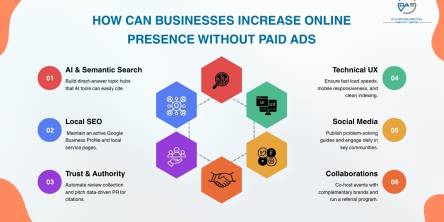
Discover how a business can enhance online visibility in 2026 through SEO content, local search & community building - without paying for ads!
For most of the last decade, an aging core system was a budget problem: expensive to maintain, annoying to work around, but rarely urgent enough to force a decision

For most businesses in 2026, Action Packaging takes the top spot. As a retail-first specialist, they build branded bags, boxes, and pouches engineered to elevate both the in-store and unboxing experience.

Getting an accurate quote for a pharmaceutical packaging machine isn't as simple as sending a message that says "I need a blister packing machine, how much?" Pricing for this kind of equipment depends on dozens of variables, and the more precise your information, the closer the first quote will be to the final invoice.

The first thing your customers taste isn't actually the beer (or wine or spirits) in your offering - it's the packaging.