

One Cross You Should Not Cross
Have you ever found yourself in a position where your head is hyperextended and your shoulders arms and chest seem to come together? Have you been constantly told to tuck your chin and bring your shoulders back, only to return to the same positions a few minutes after? If you have been using this position for quite some time, you may already have what is called the Upper Crossed Syndrome (UCS) or otherwise known as the “Student Syndrome.”
This particular posture may have been your body’s adoption to sitting conditions because most of the time, there is a lack of available ergonomic chairs, especially for back pain. With keeping the same position regularly, muscular imbalances of the upper body have formed. The syndrome is characterized by the tightening of the pectorals (chest muscles) and the back of the neck and the weakening of the muscles in front of the neck and the upper back. Without a posture support chair to encourage proper sitting positions, and with most work done in front of desks and computers, UCS will always be a constant struggle.
With UCS as your body’s constant state, other parts of your body can suffer. With a forward head carriage position, the imbalance creates a problem with your body’s center of gravity, and with the upper part on a forward position, it creates a strain on your lower back.
Keep UCS at Bay
With today’s popular types of work requiring the work to be done in front of desks and computers, and the unavailability of Pilates exercise chairs to help out stretch and strengthen those unused muscles, some exercises that do not require complicated machines can help in keeping UCS at bay. Here are some of the stretching exercises you can do:
Scapular retraction – To help stretch and lengthen your chest muscles and strengthen your upper back muscles, roll your shoulder blades to the back and down. In this position, you will feel your shoulder blades come together to the point of being able to put a pen between them and it would not fall (It’s up to you if you really want to put a pen between your shoulder blades).
Pectoralis Door-way stretches – If you can find a doorway wide enough for you to rest your forearms on, place your left and right hands and forearms flat on the jambs and slightly step forward to apply some pressure to your chest muscles. The objective is to just stretch your chest muscles, so do not overdo it, you would not want to overextend and strain your lower back.
Chin-tuck – This exercise can help you activate and strengthen the muscle that is needed to maintain proper head position. On your chair for back pain, sit up straight, and move your head slightly backwards to create a “double-chin” effect.
You can get the help of a professional, such as a chiropractor, to help correct your body’s alignment, and with the stretching exercises and constant check on your posture, you can keep yourself from experiencing the effects of UCS.
When it comes to posture, having a posture support chair to assist you in keeping the right sitting position can definitely do wonders to your health and wellbeing. The ideal ergonomic chair has midback and pelvic support, and has adjustable height to make sure you face the screen at eye level. Not only does it prevent back pain, but it also helps you become productive at work, and promotes a generally positive disposition that comes with good posture.
Taking care of your back today makes a lot of difference. You don’t have to succumb to the stress that comes with being a student, or a busy professional.
Similar Articles

Healthcare is built around people, but providing good care also depends on how well an organization manages the many tasks happening around each patient.

We live in an era where restorative rest is increasingly difficult to achieve. The relentless pace of contemporary work environments leaves little room for mental decompression.

Look up almost any doctor before an appointment, which is what the majority of patients now do, a

Endoscopy is a minimally invasive medical procedure that enables healthcare professionals to examine the internal organs and body cavities using a thin, flexible instrument called an endoscope.
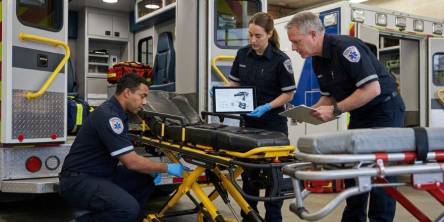
Learn how to choose the right ambulance stretcher for your fleet in 2026 by comparing safety, durability, mobility, comfort, and key features.

Look at how people around you actually watch things. Captions on. Not in a noisy train carriage, not in a shared flat at midnight, but at home, alone, on a good television, by people whose hearing is fine.

Finding the right medical daycare involves more than choosing whichever center is closest to home.

Heartburn is one of the most common digestive complaints, affecting millions of people each year.

Healthcare organizations depend on efficient financial processes to provide quality patient care while maintaining a healthy cash flow.