

Microsoft Dynamics NAV for Ledger Highlights
The NAV has the General Ledger module which helps handle various aspects of Ledger in the Financial Domain. How does Microsoft Dynamics NAV impact General Ledger?
1. The enterprise resource planning system streamlines routine accounting processes with automated financial processes.
2. It enables the company to exercise stronger control on its Finances by integrating data and through intelligent transaction processing.
3. It offers robust analytical and reporting capabilities, which help reduce time and effort usually spent on accounting tasks.
4. It helps monitor the company’s fiscal performance and also meet business and regulatory requirements.
5. Microsoft Dynamics Navision has a very intuitive user interface that can be customized to handle the most common tasks.
6. The personnel of the organization get to take better decisions based on real-time data. The solution offers powerful analytical capabilities and robust reporting services that help monitor performances, identify trends and solve problems.
7. Business can be done internationally with the software’s flexible accounting processes and its multi-language and multi-currency capabilities.
8. The core Financial Data of the entire organization can be centralized through the software. This includes actual, budgetary and average balances within a single ledger. A single posting process ensures effortless synchronization of summary balances for up-to-the-minute data.
9. The enterprise resource planning system helps achieve comprehensive financial transparency through integrated systems, shared data and drill down capabilities.
Navision features various functionalities which strengthen its case as most preferred ERP to handle tasks related to General Ledger.
1. Intercompany Transactions: These help define multiple intercompany relationships between parent and partner. These also help distribute purchase order costs directly to subsidiaries.
2. Interfund Accounting: This functionality reduces errors associated with manual reconciliation of funds. It also helps transfer balances smoothly between accounts.
3. The XBRL Support functionality helps distribute financial information over the internet and further helps simplify reporting across multiple formats.
4. The solution helps companies create detailed budgets with a clean breakdown of every general ledger account and also of every total in the chart of accounts. Once the budget has been created, actual balances can be printed and variances shown by percentage.
5. The solution helps filter budgets by up to four dimensions, in order to create sub budgets that match the organizational structure. It also helps assign multiple ‘dimensions’ to identify financial information such as product, sales region and time period to further analyze better and correlate performances.
6. MS Dynamics NAV for General Ledger helps leverage these dimensions to create complex account schedules. The solution helps improve reporting with advanced options for selecting what to display in both row as well as column combinations.
7. It automates transactions with respect to general, recurring and auto-reversing entries. It enables the end user to post frequent transactions to one’s general ledger through a recurring journal.
8. It creates a flexible user environment, one in which numerous journals can be accommodated each having its separate document series.
9. It helps out with detailed audit trails which help comply with financial regulations via easy data tracking. Besides, every entry gets assigned an entry number as well as a transaction number when posted to an account or a source code or reason code or user ID.
10. Companies into General Ledger get to do some highly intelligent transaction posting, which involves checking journal balances before posting entries and seeing how entries affect liquid accounts.
11. NAV offers functionalities for Foreign Trade and Currency Management, which help conduct business using a huge number of currencies. Companies can manage customer as well as vendor accounts in a foreign currency and maintain general ledger in different currencies.
12. NAV for General Ledger features never before seen security functionalities, which help guard financial data with role based access rights to information.
Similar Articles

The app development market has evolved significantly over the past decade or so. Its impact on business has been equally consequential.

Offshore IT hiring means recruiting IT professionals who work from another country or region. Companies commonly use this approach for software development, QA, IT support, DevOps, cybersecurity, data, and project management.

By 2026, moving to the cloud is no longer merely a competitive advantage. It is a business necessity. Every organization across the broad spectrum of industries will be challenged to become more agile.
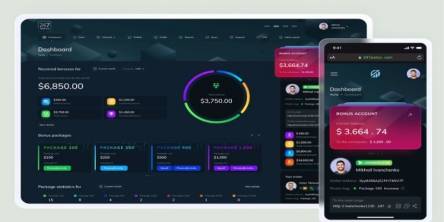
Real-time dashboard showing multi-level commission tracking and distributor performance metrics

Digital transformation initiatives are no longer unheard of in the corporate world. As a matter of fact, it is also well known that companies expanding their digital footprint tend to run into crippling legacy apps.

The financial aid office has become one of the most operationally strained departments on the modern U.S. campus. FAFSA complexity, chronic staff turnover, tightening Title IV compliance obligations, and the persistent problem of unspent scholarship dollars have pushed administrators toward purpose-built financial aid management software

The demand for software delivery has never been higher. Applications must be delivered faster and on a scale like never before.
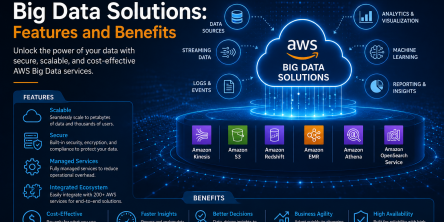
Modern businesses produce large amounts of data daily. Be it from customer transactions, Internet of Things (IoT) sensors, or countless other such sources.

Businesses today need to ship new software faster than ever. That's not news, of course. Anyway, because of the demands on businesses, new solutions are being built on top of micro-services, serverless functions, etc.