

Interpersonal Skills in Software Development: Art of a Good Conversation
“The first ingredient in conversation is truth, the next good sense, the third good humor, and the fourth wit” – William Temple. One of the most important factors that would help us improve our interpersonal skill is to address the issues that prevent us from starting a conversation with someone. It is mainly because of hesitation, shyness, discomfort around authority figures, or lack of content. So if we figure out the reason behind our hesitation we could help us understand our weak areas and improve them accordingly.
In software development, once we start a conversation, we need to hold it pleasantly over a length of time, for this to happen we need to be really interested and get involved in the conversation. This could be possible only if we have a genuine interest for meeting and knowing new people. If we have a collection of conversation starter we should be prepared with few witty lines and introductory lines ready that will help us in all occasions. Simple Gestures like smiling and then starting a return smile before introducing ourselves, commenting on something in the vicinity, commenting on a shared interest are just some of the starters that can get the other person in a conversational mood. The best thing to do before starting any conversation is to relax. The more relaxed we are while talking, the more natural we will sound, and the more interested the other person will be in listening to what we are saying.
Whenever we are talking to someone, remember that can get always like to talk to people who can receive and share information simultaneously. But if we dominate the conversation without giving any stress to what the other person is saying, that will end the talk very quickly. On the contrary, in software development if we only listen and do not provide any intelligent or reasonable contribution to the discussion, people will think of us as someone not worth their time to have a conversation with.
We need to make sure that we completely understand what the other person is saying before replying him do not Misunderstanding or even partial understanding of somebody’s statement could cause a serious social error. It is a good practice to use repetition in conversation, both to clarify our statements and also to understand what the other person meant by his words. It is very important to summarize the content, as the conversation become more detail oriented. There are times when a lot of facts are introduced which need to be kept in mind to understand the context of the discussion. Sometimes we got confused and details are getting slightly difficult to understand, then it is best to paraphrase and summarize the entire content so that any discrepancy can be addressed.
A name of a person depicts and work as a reference identity to him, a human being’s name is the shortest and the quickest way to building an emotional attachment with him. Our names carry a powerful, emotional attachment do not is observed that people immediately start paying attention and giving us more chances of interaction if we mention their names correctly, especially when meeting them after a long time.
We must start our introduction by mentioning the first name and the last name. That will also give a clue to the listeners to state their names. Once they do that, repeat their names by acknowledging by acknowledging their presence by saying – “It’s a pleasure meeting you, Ben.” .This will create an immediate atmosphere and lend an air of familiarity to the discussion.
“The tone of good communication is brilliant and natural, it is neither tedious nor frivolous, it is instructive without pedantry, gay without tumultuousness, polished without affectation., gallant without insipidity, waggish without equivocation “ – Jean Jacques Rousseau
Similar Articles

Choosing the right electronic health record (EHR) system is an important decision for any medical practice. The right platform can simplify patient documentation, appointment scheduling, insurance claims, billing, and daily administrative tasks.

Running a restaurant involves much more than taking orders and serving food.

Field sales teams handle numerous responsibilities every day. Sales representatives travel between customer locations, conduct meetings, collect orders, record information, and report their activities to managers.

The app development market has evolved significantly over the past decade or so. Its impact on business has been equally consequential.

Offshore IT hiring means recruiting IT professionals who work from another country or region. Companies commonly use this approach for software development, QA, IT support, DevOps, cybersecurity, data, and project management.

By 2026, moving to the cloud is no longer merely a competitive advantage. It is a business necessity. Every organization across the broad spectrum of industries will be challenged to become more agile.
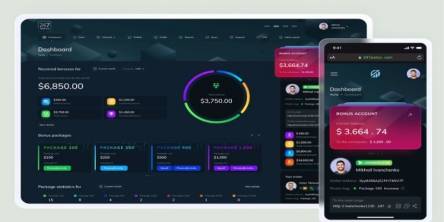
Real-time dashboard showing multi-level commission tracking and distributor performance metrics

Digital transformation initiatives are no longer unheard of in the corporate world. As a matter of fact, it is also well known that companies expanding their digital footprint tend to run into crippling legacy apps.

The financial aid office has become one of the most operationally strained departments on the modern U.S. campus. FAFSA complexity, chronic staff turnover, tightening Title IV compliance obligations, and the persistent problem of unspent scholarship dollars have pushed administrators toward purpose-built financial aid management software