

How a Criminal Defense Firm Manages Complex Felony Cases at Trial
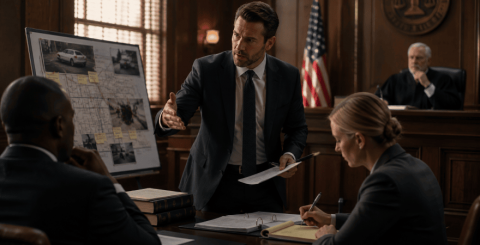
Los Angeles, California, is home to one of the nation's busiest criminal court systems, where felony cases often involve detailed investigations, extensive evidence, and courtroom procedures that demand careful legal judgment. For someone accused of a serious offense, the stakes extend far beyond a possible conviction, touching future employment, personal relationships, financial security, and reputation within the community. Building a strong defense requires more than responding to allegations as they arise. It calls for close attention to the facts, a clear understanding of California law, and thoughtful decisions made from the earliest stages of the case.
People searching for legal guidance often look to experienced firms such as Simmrin Law Group to understand what trial preparation may involve and how different legal strategies get developed. That broader process becomes easier to understand by looking at how a defense team approaches each stage before stepping into the courtroom.
Early Case Review
At intake, counsel reviews arrest reports, witness accounts, video, lab results, and charging papers before any trial theory takes shape. A trusted law firm may assess felony allegations by comparing the state’s claim with available facts, lawful defenses, sentencing exposure, and trial risk, which guides motion work, witness planning, and negotiations.
Charge Analysis
Felony counts often turn on precise elements. Prosecutors must prove identity, intent, possession, injury, force, loss, or another required fact beyond a reasonable doubt. Defense counsel separates each count into those parts. A weak link can shift strategy, plea posture, or trial focus. This analysis also helps jurors see that suspicion and proof are different things.
Evidence Control
Large felony files can contain phone extractions, surveillance clips, forensic reports, medical records, statements, and photographs. The defense team sorts each item by source, date, and courtroom use. Lawyers also review how officers obtained materials. A warrant defect, a broken chain of custody, or an unreliable test can support exclusion. Orderly evidence control keeps trial presentation clear.
Investigation
Police reports rarely capture every useful detail. Defense investigators may interview witnesses, visit locations, locate cameras, and compare timelines against physical conditions. Lighting, distance, sound, obstructions, and sight lines can change how testimony reads. Minor facts often carry real weight. A careful investigation gives counsel concrete material for cross-examination and theme development.
Motion Practice
Pretrial motions can limit what jurors hear. Lawyers may challenge searches, confessions, identifications, prior conduct evidence, or expert opinions. A granted motion can remove important proof. A denied motion may still reveal how the prosecution plans to defend police decisions. That preview helps counsel prepare sharper questions and preserve issues for review.
Trial Theme
Jurors need a clear reason to doubt the charge. The defense theme should fit the facts and avoid promises counsel cannot keep. It may center on mistaken identity, unreliable memory, rushed investigation, consent, self-defense, or missing proof. The strongest themes connect opening statement, witness questions, exhibits, and closing argument without feeling forced.
Jury Selection
Jury selection tests whether prospective jurors can follow the law under pressure. Defense counsel listens for fixed views about police, weapons, drugs, violence, prior records, or the presumption of innocence. Some people express fairness while revealing strong assumptions. Focused questions help expose those limits. The goal is a panel willing to weigh evidence carefully.
Witness Preparation
Witness preparation should reduce confusion, not reshape facts. Lawyers review courtroom procedure, likely questions, document references, and cross-examination pressure. A well-prepared witness can listen, answer clearly, and avoid speculation. Counsel also evaluates whether the accused should testify. That decision depends on legal exposure, prior statements, credibility concerns, and how testimony fits the defense theory.
Cross-Examination
Cross-examination works best when it stays narrow. Counsel may test perception, memory, bias, training, procedure, or prior inconsistent statements. Short questions limit wandering answers and draw out admissions. In felony trials, one precise answer can weaken identity, intent, or reliability. Effective questioning builds reasonable doubt through disciplined points rather than courtroom noise.
Expert Issues
Experts may address DNA, fingerprints, toxicology, phone data, ballistics, medicine, accounting, or mental health. The defense must study methods, assumptions, sample handling, and error rates. Counsel may consult independent specialists before trial. Some cases need a defense expert. Others call for cross-examination that exposes limits in testing or interpretation.
Plea Talks
Trial preparation and plea discussions often run together. Counsel weighs evidence strength, sentencing exposure, client goals, prior record issues, and local court practice. Serious preparation can improve negotiation posture because the defense is ready to try the case. Lawyers should explain risks clearly. The client, after receiving informed advice, makes the final decision.
Courtroom Execution
Trial rarely follows a perfect script. A ruling, witness answer, exhibit dispute, or new admission can require quick adjustment. The defense team tracks testimony against prior records and expected proof. Objections protect legal issues, while restraint helps preserve credibility. Strong courtroom execution means staying organized, calm, and focused on the state’s burden.
Conclusion
Complex felony trials demand judgment, preparation, and steady communication. A defense firm must examine facts, test legal issues, prepare witnesses, and present reasonable doubt in terms jurors can understand. No single tactic fits every charge. The right approach comes from matching trial work to the evidence, risks, and client’s goals. When liberty is at stake, disciplined advocacy can shape the result.
Similar Articles

The legal profession is riddled with stereotypes perpetuated by Hollywood movies, television series, and societal prejudices.

Strata living works on a simple promise. You own your lot. You share the common areas. Everyone follows the rules. The committee manages the building.

Law firms run on billable hours. Every associate knows the annual target, every partner watches the realization rate, and every firm administrator has a spreadsheet tracking utilization.

In 2025, traffic safety violations on Long Island remained a pressing concern, with local police issuing over 76,000 tickets, representing a 26% surge in dangerous driving enforcement.

When a child requires medical care, parents place immense trust in the entire healthcare team, from attending physicians to neonatal nurses.

Running a business in Australia requires more than just a solid commercial strategy. As of 2026, the regulatory environment surrounding workplace relations and safety has grown incredibly complex

Losing a loved one without warning leaves a family completely shattered. The grief is heavy, and the confusion surrounding the circumstances only deepens the pain.

Learn what clients wish they knew before speaking with a probate law attorney, from hidden costs to key estate planning tips.

Large commercial trucks present unique hazards on Philadelphia’s crowded and narrow city streets. Their size and limited maneuverability increase the likelihood of serious accidents, often leading to complex investigations.