

Building a Multi-Channel Marketing Attribution Strategy: How Businesses Can Identify Which Channels Actually Drive Growth
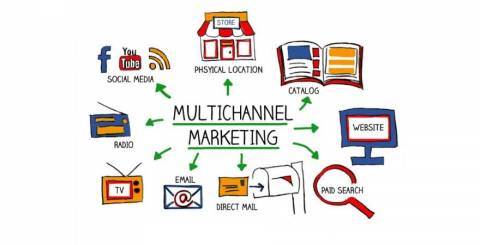
Businesses rarely acquire customers through a single marketing channel. A potential buyer might discover a company through an online search, read its social media posts, click a paid advertisement, and eventually convert after receiving an email. Each interaction contributes differently to the purchasing decision, making it difficult to determine which marketing investments genuinely generate revenue.
Developing a reliable measurement framework requires more than tracking clicks and website visits. Businesses can benefit from strategic financial and marketing oversight, including guidance from a fractional chief marketing officer, to connect campaign performance with broader business objectives. A well-designed attribution strategy helps leadership understand how marketing channels influence customer behavior, where budgets are being used effectively, and which activities deserve further investment.
Why Multi-Channel Marketing Attribution Matters
Marketing attribution is the process of assigning credit to the interactions that contribute to a conversion or business outcome. Without a consistent approach, companies may overvalue channels that generate immediate responses while overlooking those that introduce customers or support longer purchasing journeys.
For example, paid search may receive credit for a sale because it generated the final click. However, the customer may have first discovered the company through an educational article or a social media recommendation several weeks earlier.
Understanding these relationships helps businesses avoid making budget decisions based on incomplete performance data.
Choosing the Right Attribution Model
Different attribution models interpret customer interactions in different ways. Selecting an appropriate model depends on the company's sales cycle, customer behavior, and measurement objectives.
1. First-Touch Attribution
First-touch attribution assigns all conversion credit to the first recorded marketing interaction. It helps identify channels responsible for introducing new prospects to a business.
However, it does not explain which subsequent interactions influenced the purchasing decision.
2. Last-Touch Attribution
Last-touch attribution gives full credit to the final interaction before conversion. This model is relatively simple to implement and can be useful for understanding immediate conversion activity.
Its limitation is that it may undervalue awareness campaigns, educational content, and earlier customer interactions.
3. Linear Attribution
Linear attribution distributes credit equally across recorded customer touchpoints. It offers a broader perspective than first-touch or last-touch models, although it assumes that every interaction contributes equally to the final outcome.
4. Data-Driven Attribution
Data-driven attribution uses available conversion and interaction data to estimate the contribution of different touchpoints. It can provide a more detailed understanding of complex customer journeys, although its reliability depends on data quality, sufficient observations, and the underlying analytical methodology.
Establishing a Reliable Marketing Measurement Framework
An attribution strategy is only as useful as the information supporting it. Businesses should establish consistent tracking practices before attempting to compare channel performance.
Important steps include:
● Standardizing campaign tracking: Use consistent UTM parameters and campaign naming conventions to identify traffic sources accurately.
● Connecting marketing platforms: Integrate website analytics, advertising platforms, customer relationship management systems, and sales records.
● Defining conversion events: Track meaningful actions such as qualified inquiries, product purchases, scheduled consultations, and completed contracts.
● Maintaining data quality: Remove duplicate records, investigate missing information, and establish consistent reporting standards.
● Respecting privacy requirements: Ensure tracking practices comply with applicable privacy laws, consent requirements, and platform policies.
Connecting marketing data with actual sales outcomes is particularly important for businesses with longer sales cycles. A campaign that generates fewer leads may ultimately produce more profitable customers than one generating a high volume of low-quality inquiries.
Measuring the Metrics That Actually Reflect Growth
Website traffic and social media engagement can provide useful context, but they should not be treated as definitive indicators of business performance.
A stronger attribution framework examines several financial and operational measures.
Customer acquisition cost (CAC): Measures how much the business spends to acquire a customer.
Customer lifetime value (CLV): Estimates the revenue or profit a customer generates throughout the relationship.
Return on marketing investment (ROMI): Evaluates the financial return attributable to marketing expenditure.
Lead-to-customer conversion rate: Shows how effectively marketing-generated prospects become paying customers.
Revenue by acquisition channel: Helps identify which sources contribute to actual sales.
Businesses should also distinguish between attributed revenue and incremental revenue. A channel may receive credit for conversions that would have occurred anyway. Incrementality testing, including controlled experiments and geographic comparisons, can help determine whether marketing activity genuinely creates additional demand.
Turning Attribution Insights Into Better Budget Decisions
The purpose of attribution is not simply to produce more detailed reports. Its real value lies in helping leadership make better investment decisions.
Suppose a company discovers that paid advertising generates substantial leads but relatively few profitable customers, while organic content attracts fewer prospects with higher conversion rates. Rather than automatically reducing advertising expenditure, management can investigate lead quality, customer intent, sales follow-up, and acquisition costs.
GoldmanWolfe emphasizes business planning and financial oversight as important parts of informed decision-making. Bringing marketing performance into broader financial discussions can help organizations evaluate spending priorities against profitability, cash flow, and sustainable growth objectives.
Common Challenges in Marketing Attribution
Even sophisticated attribution systems have limitations. Customers may switch devices, clear cookies, interact offline, or complete purchases through channels that cannot be tracked accurately.
Attribution models can also produce misleading conclusions when businesses rely on incomplete data or treat correlation as proof of causation.
For this reason, attribution should complement customer research, sales feedback, financial reporting, and controlled marketing experiments rather than replace them.
Frequently Asked Questions
Which marketing attribution model is best for a growing business?
There is no universally suitable model. Smaller businesses may begin with first-touch and last-touch reporting, while organizations with more complex customer journeys may benefit from multi-touch or data-driven approaches.
How often should attribution reports be reviewed?
Monthly reviews are useful for identifying performance trends, while quarterly assessments allow leadership to evaluate broader budget allocation and strategic changes.
Can attribution measure brand awareness?
It can measure indicators such as branded searches, referral traffic, and assisted conversions, but these metrics do not capture every influence of brand exposure.
A successful multi-channel attribution strategy combines reliable data, appropriate measurement models, and financial discipline. By understanding how marketing interactions contribute to customer acquisition and revenue, businesses can allocate resources more thoughtfully, identify underperforming investments, and build a marketing operation that supports measurable, long-term growth.
Similar Articles

Legacy application modernization solutions are usually won or lost in planning. Well, before any code changes. So, we have written this guide for IT leaders and the executives who approve their budgets.

Operations, finance and technology leaders at mid-size and large businesses have mostly settled whether to use AI. McKinsey's 2026 global survey of 1,719 participants found that nearly nine in ten report regular AI use in at least one business function, and 44% say AI is scaling across their enterprise.

Agentic AI development has moved from pilot budgets to operating budgets. Deloitte's 2026 research found that 74 percent of companies expect agents in use by 2027. Only 21 percent say they have mature governance for them.

Sales reports one revenue number, finance reports another, and the first 25 minutes for your meeting go to deciding whose spreadsheet is right.

Legacy application modernization pays off in two places: the recurring cost of keeping old system

The U.S. Government Accountability Office (GAO) found that the agency in charge of Healthcare.gov did not develop a required acquisition strategy to identify risks and plan for them, and that it issued task orders before key requirements were known.

Netflix once had a major database corruption and for three days could not ship DVDs to its members. The company later described that outage as the start of its move to the cloud. The lesson reaches well beyond streaming.

Marketing a complex manufactured product means making technical capability clear to several kinds of buyer.

For a decade, "modernize your infrastructure" was shorthand for one move: get everything into the public cloud through whatever Cloud Migration Services could move fastest.