

Bootstrapping Physical Products: The Hybrid Playbook for Ecommerce Founders
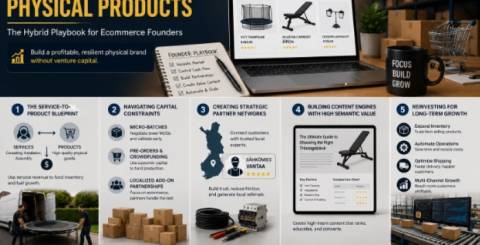
For years, the gold standard of the Indie Hackers community has been Software as a Service (SaaS). We love SaaS because of the margins, the instant feedback loops, and the lack of inventory. But as software markets become increasingly crowded, a quiet group of physical product founders is building highly profitable, resilient businesses.
Launching a physical brand, however, presents unique challenges. You cannot easily patch a broken physical shipment like a software bug. If you are self-funding, the cash flow crunch of inventory can break your business before it ever launches.
To survive and thrive as a self-funded physical e-commerce founder, you need a different strategic playbook.
1. The Service-to-Product Blueprint
Software developers often build micro-tools to fund their larger SaaS ambitions. For physical product founders, the equivalent is offering local or digital services to secure immediate, high-margin cash flow. This service revenue acts as your initial capital pool, shielding you from expensive startup loans or giving away equity early on.
Consider a business model where you offer premium consulting, installation, or assembly services alongside physical items. For example, if you sell high-end home and garden infrastructure, such as a specialized 10 ft trampoline designed for year-round backyard use, you can package the product with premium home delivery and assembly. This strategy immediately increases your average order value (AOV) and provides the immediate cash flow needed to buy inventory in bulk.
2. Navigating the Capital Constraints of Inventory
The hardest part of physical goods is the cash conversion cycle. You pay your manufacturer today, wait forty-five days for production and shipping, and only then do you start recouping your costs. If you scale quickly, you run out of cash trying to buy enough stock to meet demand.
To mitigate this, successful bootstrapped founders rely on three core pillars:
- Micro-Batches: Negotiate lower Minimum Order Quantities (MOQs) with manufacturers, even if it slightly reduces your initial margin. Validate the market before scaling up.
- Pre-orders & Crowdfunding: Use a "build in public" campaign to fund your production run using your customers' capital.
- Localized Add-on Partnerships: Partner with local service providers to handle specialized aspects of complex products, allowing you to focus purely on the e-commerce infrastructure.
3. Creating Strategic Partner Networks
Many complex physical products require technical installation, which can deter potential online buyers. By building a network of localized service partners, you can resolve customer friction while unlocking highly targeted, co-marketed regional search traffic.
For example, if you sell integrated smart-home electrical panels or complex outdoor lighting kits online, your checkout flow can seamlessly match buyers with local professionals. Highlighting a certified sähkömies vantaa (an electrician in Vantaa) to handle the wiring not only builds trust with regional Finnish buyers but also establishes mutually beneficial B2B referral channels that drive highly qualified local traffic back to your site.
4. Building Content Engines with High Semantic Value
As a self-funded founder, you cannot outspend venture-backed brands on paid search or social media ads. Your primary customer acquisition engine must be organic search engine optimization (SEO) driven by high-intent, long-tail content.
Instead of writing generic blog posts, focus on creating hyper-specific buying guides, comparison charts, and user-generated lifestyle content. If your store specializes in home gym equipment, building deep-dive content around a heavy-duty träningsbänk (workout bench) or home gym layouts will capture buyers who are already in the purchasing mindset. Compare footprint dimensions, load capacities, and adjustability options. This informative, utility-first content builds organic authority that pay-per-click competitors cannot easily duplicate.
5. Reinvesting for Long-Term Growth
Once your e-commerce store starts generating consistent profits, the next critical step is allocating cash flow. In the software world, surplus cash is often spent on API costs or developer salaries. In physical commerce, you must treat your capital allocation as a disciplined financial portfolio.
Investing your early profits wisely means balancing inventory expansion with software automation. Prioritize tools that automate order fulfillment, optimize real-time shipping rates, and manage multi-channel marketing campaigns. By converting manual operations into automated workflows, you lower your overhead costs and build a scalable business that runs efficiently even with a lean team.
The Path Forward
Building a self-funded physical e-commerce business requires patience, practical financial management, and a strong focus on cash flow. By utilizing services to fund your early product runs, keeping your initial product batches small, and building high-utility organic content, you can establish a highly defensible market position.
Ultimately, the physical world is less crowded than the digital one. If you are willing to navigate the complexities of supply chains and local logistics, physical commerce offers a highly rewarding path to building a profitable, sustainable business on your own terms.
Similar Articles

Connecting marketplaces and storefronts does not solve inconsistent product, inventory, or order data by itself. If several systems can change the same record, the integration may distribute conflicting values faster than the team can correct them.

Online shopping has become a normal part of everyday life. Whether people are buying clothes, electronics, groceries, or digital products, they expect a fast, secure, and convenient shopping experience

The boom in online shopping has fundamentally changed how consumers interact with brands, opening up a world of global opportunities for small businesses.

The world of eCommerce is changing quickly. What worked a few years ago may not work today. As we move into 2026, online businesses are growing faster than ever.

Shopping for medical scrubs sounds simple until you're standing in front of a sea of options, wondering which ones will actually hold up through a twelve-hour shift, survive a hundred washes, and still look professional enough for your workplace.

Automated pricing tools help keep your store competitive by adjusting prices in real time, protecting margins, and winning the Buy Box without manual effort.

Starting an eBay business as a side hustle is an excellent way to earn extra income. With millions of active users, eBay provides a vast marketplace for sellers of all types.

When you walk into a store, you see lighting, angles, textures, and a salesperson who helps you "feel" the product. Your product photos do all of that hard work for you online, without making a sound.

The top 5 benefits of using an eCommerce price monitoring tool to boost sales, stay competitive, and make smarter pricing decisions.