

An Arm Sling - Reasons to Wear, How To Wear And How To Choose?
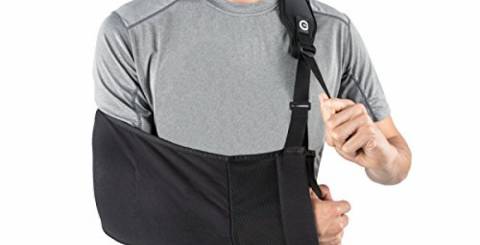
Any kind of injury is painful to us. Whether the injury is a deep cut or bruises, it always hurts. But when the injury is a broken bone, the pain is unbearable and this pain can be better explained by the ones who have actually experienced it in their lives. Generally, those who suffer from a fracture on their shoulders, wrist or elbow, are recommended to wear arm slings for protection as well as comfort. A sling helps us to keep our arm in place without letting it move too much. It basically helps in healing.
Reasons for wearing an arm sling
Fracture:
When you have a fractured shoulder, or a fractured wrist or elbow, you may be recommended to wear an arm sling. In case of fracture, no matter which part of the body, it is very essential not to move that part of your body to ensure proper healing of the bone. As said earlier, the arm sling helps your arm to keep it in place against your body and that helps in faster healing.
Shoulder Surgery:
If you have gone through any kind of surgery on or around your shoulder, you may need a sling so as to stop the shoulder muscles from contracting and upsetting the process of healing. Slings not only heal, but it also provides comfort to your arms and prevents it from too much pain.
Stroke:
Strokes sometimes may lead to arm or leg paralysis or even both. In that situation, when you are unable to move your arm freely, it may be painful to you as your arms are hanging. However, on using a sling, it will provide support to your arm, and will save you from the pain you were encountering initially.
How to wear?
It is very important to wear a sling properly. This will prevent the blood and fluid accumulation in your hand or wrist. Along with that, wearing it properly can increase your comfort level too.
So how to wear an arm sling properly? Let’s look at the following points:
You need to pull the sling over your elbow and arm. Make sure it is well-fitted and comfortable in and around your arms. Check that whether your hand is coming to the sling’s end or not. Wear it carefully so that its end doesn’t cut into your hand or wrist.
Get hold of the strap attached to the arm sling that is behind your elbow. Try to pull the strap to tighten it so that your hand will be close to your chest, above your elbow level. This will help in proper blood circulation in your wrist and hand.
Some arm slings come with an elastic thumb loop providing added support to your hand and preventing fatigue.
Things to keep in mind while buying an arm sling
These days, arm slings are much more innovative than older days. If you really want your injury to heal fast and if you are in need of comfort, then choosing a correct sling is a must.
Always check the fabric of the sling pouch while buying. The fabric should be breathable to increase the airflow and diminish building up of moisture. The fabrics of an ergonomic arm sling are of the best quality which is very light and comfortable.
If the fabric quality will be good, then the sling will also be lightweight. A light-weight sling will prevent your shoulder and neck muscles from getting cramped and fatigued.
The strap should be well-padded to provide extra comfort. It should be made up of neoprene, which is an excellent shock absorber and also provides comfort all day. It is not only breathable but light too.
Look out for those arm slings which comes with a front facing Velcro adjuster. It will help you to adjust the strap on your own, without taking anyone’s help.
Similar Articles

Healthcare is built around people, but providing good care also depends on how well an organization manages the many tasks happening around each patient.

We live in an era where restorative rest is increasingly difficult to achieve. The relentless pace of contemporary work environments leaves little room for mental decompression.

Look up almost any doctor before an appointment, which is what the majority of patients now do, a

Endoscopy is a minimally invasive medical procedure that enables healthcare professionals to examine the internal organs and body cavities using a thin, flexible instrument called an endoscope.

Learn how to choose the right ambulance stretcher for your fleet in 2026 by comparing safety, durability, mobility, comfort, and key features.

Look at how people around you actually watch things. Captions on. Not in a noisy train carriage, not in a shared flat at midnight, but at home, alone, on a good television, by people whose hearing is fine.

Finding the right medical daycare involves more than choosing whichever center is closest to home.

Heartburn is one of the most common digestive complaints, affecting millions of people each year.

Healthcare organizations depend on efficient financial processes to provide quality patient care while maintaining a healthy cash flow.