

Arc Flash Labels: Best Practices for Labeling Electrical Panels and Equipment
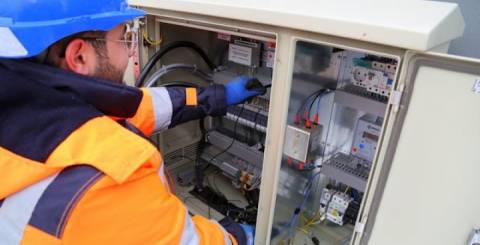
Electrical safety goes beyond mere obedience to regulations; it is a vital defense that shields individuals from fatal risks while at work. These invisible dangers are hunted down by arc flash labels which act as sentinels, warning of imminent disaster that can be avoided in both industrial and commercial settings through proper precautions.
Understanding Arc Flash Hazards
Acknowledging that electrical panels and equipment contain potential energy that can be discharged within fractions of a second is critical. An arc flash is an electric current passing through the air between conductors that results in an explosion of light and heat. These can reach temperatures of 35,000 degrees Fahrenheit, which is tens of thousands degrees more than the temperature of the sun’s surface, this presents a great danger to people who do not have protective wear on.
Key Components of Effective Arc Flash Labels
A thorough arc flash label requires careful consideration to communicate important safety messages through appropriate design and message. The best ones will offer a complete view of electrical hazards that may be encountered as well as steps needed for prevention.
One of the most critical components is incident energy information, which presents the amount of exposure in terms of calories per square centimeter. This key figure enables employees to determine what class rating PPE they need before working on or near live electric equipment. Additionally, the figures must show clear boundaries for employees approaching such equipment, including: limited, restricted, or where entrance is prohibited. Once workers know the required hazard category, they must select the correct protective gear. This gear often includes specialized clothing designed to resist extreme heat and flames. Wearing a full arc flash suit is necessary when working on high-voltage systems. These garments prevent severe burns by creating a barrier between the worker and the electrical blast. Safety managers must inspect these suits regularly to make sure they have no tears or defects. Proper storage also helps maintain the protective qualities of the fabric over time.
Compliance and Regulatory Standards
Safety transcends optional recommendations – it becomes a fundamental requirement. Arc flash labels must align perfectly with rigorous standards established by leading safety organizations. Professionals must ensure compliance with NFPA 70E regulations, OSHA guidelines, and IEEE electrical safety protocols.
Professional electrical safety assessments provide the foundational framework for accurate labeling. These comprehensive evaluations analyze complex electrical systems, calculating potential incident energies and determining appropriate protective measures that safeguard workers from potential hazards.
Implementation Best Practices
It should be done in an ordered and methodical way when designing and implementing arc flash labels. It involves first liaising with reputable electrically skilled individuals who run extensive arc flash studies. These professionals also go to great lengths to evaluate electrical systems to ensure the most recent and correct information is printed on the labels.
Modern technology has been applied in a more sophisticated way on label implementation. Improved software and digital mapping tools have made it possible for more accurate and live labeling processes. These advanced systems have the capability to include live electrical system data thus giving out more relevant safety information. State-of-the-art solutions even incorporate QR Code technology enabling workers to dial up detailed safety procedures on mobile devices for quick access to essential safety information. With tools such as the QR code generator by Uniqode, businesses can easily implement these solutions to streamline safety processes.
Durability is yet another important factor which must be put into consideration. Since labels have to last in severe industrial settings, they should be made from weather-proof materials, have high contrasting prints, and permanent glue. Furthermore, electrical installations are ever changing thus there is need for periodic re-evaluations to keep the label accurate and relevant.
Training and Awareness
Labeling, on its own, is not enough. It requires that workers be trained to view arc flash labels as more than just signs – that they are tools of protection whenever an arc flash could occur. It is necessary that an organization initiates measures aimed at educating its workforce on how to interpret the labels, identify the hazards indicated by the labels, select the proper protective clothing associated with the hazards identified by the labels as well as the response in case of an emergency.
Effective training is not simply the act of informing. It fosters a complete comprehension about electrical safety prompting employees to be in a position where they can anticipate any dangers and prevent them before they occur for the safety of their fellow employees.
Conclusion
It’s about time the management understood that requirements for arc flash labeling are more than just obeying the law. Such factors as efficient labeling strategies are employed by enterprises to create safety climate integration instead of safety being an add-on.
Making use of full-voltage electrical equipment with the help of good arc flash labels will turn a potential risk into a comprehensible one. These prominent indicators are clear evidence of how much an organization values its employees and ideas on making accidents safe.
Similar Articles

In today's highly competitive corporate environment, clinging to outdated technology is a costly mistake. Enterprises globally are realising that their legacy systems, once the backbone of their operations, are now creating severe bottlenecks.

Learn how knowledge management clears duplicate files and conflicting policies, creates one source of truth and keeps your AI and teams accurate.

Giga vs eight for calls: compare talktime, SMS, and IDD allowances, plus what happens when minutes run out, so you pick the right SIM-only plan.

Stay powered and connected with Belkin's portable power banks, chargers, durable cables and routers built for modern devices and everyday reliability.

Learn how Belkin's innovative connectivity solutions, from durable USB-C cables to fast charging, are reshaping everyday tech accessories.

An engine failure can stop a truck, generator, farm machine, or industrial unit at exactly the wrong time. Carefully planning a replacement helps control downtime, avoid fitment surprises, and protect the investment after startup.

Managing multiple documents can quickly become frustrating. Imagine sending several files in an email, uploading different attachments to a submission portal, or sharing a business report with clients across multiple documents.

Energy efficiency is revolutionizing power distribution, leading to more sustainable and cost-effective energy systems.

Moving has a way of making even organized people feel scattered. One minute you’re labeling boxes. The next, you’re hunting for a receipt, calling the utility company, and wondering where the tape disappeared to.