

5 Benefits of Using an ERP System
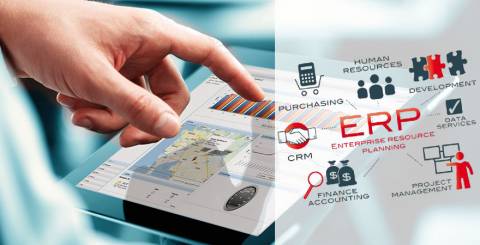
Who Does Not Know the ERP?
Businesses are relying much on the science of modern day software techniques. Almost every businessman exactly would have known about the ERPs. But how closely the benefits of the ERPs are examined? Well, that is definitely of the course that we usually don’t grab much of the benefits of such things. And that is why we call them “Things” rather than solutions. Certainly for sure if you would learn the benefit of the ERPs you would definitely jump the very next moment to grab one of them.
Well here are some benefits of using a good ERP System:
Security Enhanced: The ERP Systems are built to integrate the business components such as Human Resource, Payroll, Inventory, Trading and Accounting Software. This integration involves the enhancement of the business operations, protocols, management and security. The security is essential for every business organization. None of them could sacrifice or bear the loss of their data. And keep the security in mind, ERPs are developed to provide the utmost security to the business data. Some systems are based on the high-end security protocols that eliminate every threat posed to the data of the business.
Demographic Progress: With the ERPs, businesses could research the demographic interests. Though it looks impractical, actually the ERPs are developed to provide the reliance on the tradition, nature, and culture. They can articulate the best concepts that could be brought into the business. And those concepts behave as the progressive milestones. Like a boutique owner could learn about the taste of the people in a particular region and can bring in the desired fashion
.
Customize As Per Your Needs: You can adjust the ERPs as per the requirements of your business. You do not have to follow a monotonous string in order to make your business healthy. Instead, it would harm your progress. Well, the ERPs are designed as per the pattern of your business. It is obvious that in a wholesale business you might not admire the services of chefs. Then why would it be possible that your ERP would have the tabs that you do not need?
Comprehensive Control: The ERP Systems guarantee a clear picture of the business operations. The entrepreneurs can check the performance of every department without any hindrance. They can see what is happening in the production, what the marketing is doing and how fast the business is developing. Ahead of that, the department managers can get a lead that how their teams are performing. This can help them upgrade the skills of their team members. And ultimately, the business progress becomes easier to achieve.
Cut the Costs: The ERPs are expensive in a way, but when you eye the long-term planning, the cost these systems reduce a lot. Besides the pricing, the ERPs help in cutting the operational and running expenses. And they expedite the performance speed which enables the businesses to increase their opportunities. Such as the automated order processing systems enter and process the order at a pace at which humans cannot even work.
Heart of ERP:
Accounting is known to be the backbone of a business. It is the core feature that allows businesses to grow and prosper each day. But what is accounting? In a nutshell, the process of documenting, preserving, classifying, fetching, recapitulating and presenting the accounts information in different forms for analysis is perceived as Accounting. It is the leading way by which any company can provoke its business profit.
Anyone in business cannot deny the perks of accounting. It makes it easier to identify the lacking and flaws of enterprise system as well. That’s why there is a renowned saying
“Accounting is the language of business.”
-Warren Buffett
Many companies use accounting software programs that are very efficient and time-saving, having the ability to reduce workload by automating repetitious tasks, controlling cash flows, overseeing computing and helping with taxation. Moreover, they also assist in minimizing cost and labor.
Nowadays accounting is no more a hectic work that needs a person to be present every time at his desk and carry out managerial accounting tasks - thanks to Cloud Accounting. According to a recent study, 66% of the enterprises across the world use cloud-based accounting software. The cloud-based accounting helps them to manage the system easily and effectively by the mobile presence of the whole accounting system.
Convenience is the major benefit of cloud-based accounting programs. It boosts flexibility of the work and also cut down the cost, as cloud servers often provide more cost-effective solutions rather than the business can manage particularly. Approximately 80% of the companies said they have economized by switching to the cloud, which has fewer infrastructure, lower ownership cost, and free upgradation facility.
Similar Articles

Field sales teams handle numerous responsibilities every day. Sales representatives travel between customer locations, conduct meetings, collect orders, record information, and report their activities to managers.
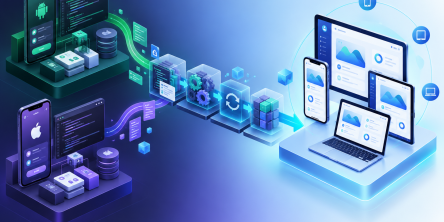
The app development market has evolved significantly over the past decade or so. Its impact on business has been equally consequential.

Offshore IT hiring means recruiting IT professionals who work from another country or region. Companies commonly use this approach for software development, QA, IT support, DevOps, cybersecurity, data, and project management.

By 2026, moving to the cloud is no longer merely a competitive advantage. It is a business necessity. Every organization across the broad spectrum of industries will be challenged to become more agile.
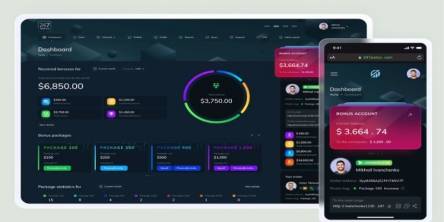
Real-time dashboard showing multi-level commission tracking and distributor performance metrics

Digital transformation initiatives are no longer unheard of in the corporate world. As a matter of fact, it is also well known that companies expanding their digital footprint tend to run into crippling legacy apps.

The financial aid office has become one of the most operationally strained departments on the modern U.S. campus. FAFSA complexity, chronic staff turnover, tightening Title IV compliance obligations, and the persistent problem of unspent scholarship dollars have pushed administrators toward purpose-built financial aid management software
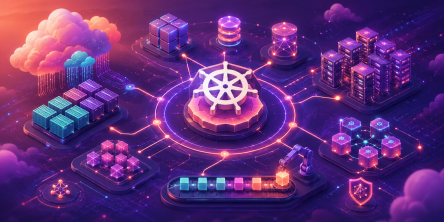
The demand for software delivery has never been higher. Applications must be delivered faster and on a scale like never before.
Modern businesses produce large amounts of data daily. Be it from customer transactions, Internet of Things (IoT) sensors, or countless other such sources.