

Wind Turbines And Lightning Damage
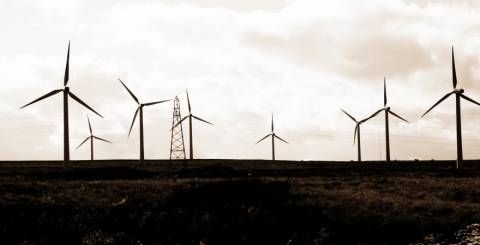
Green energy technology is one of the most promising developments of the last 100 years, providing the ability to generate electricity for public consumption without the costs of fuel and without environmental impact. While there are still attempts at defending the fossil fuel industry as "not as damaging as they make it seem" there is little to no support of the idea that fossil fuels have no environmental impact at all. No matter what the argument, and no matter how much the actual levels of impact are played down, there is no debating that there is an impact and that a better system would be one that produced no particulate matter. This is the superiority of green energy production, that it has no adverse impact on the environment and does not use a resource as fuel that is finite. There is always going to be sun, wind and running water available at no cost.
The real issues with green energy is the cost of production that is not tied to fuel sources. Where fossil fuels cost money to purchase the coal, oil or other source that is burned, green energy production costs are not tied to fuel sources. These types of energy currently cost more to produce than fossil fuels due to the maintenance and upkeep of the equipment that is necessary in order to produce electricity. Due to the fact that there is a significant amount of advanced computer equipment necessary to effectively generate power in wind turbines and solar panels, combined with the fact that these structures are placed in areas which are subject to harsh weather conditions, the replacement and repair of equipment creates the brunt of the costs. If there were ways to reduce the damage that is typically sustained on a yearly basis by the equipment involved in these processes, there is a good chance that the costs of production will fall below those of fossil fuels. This would end the debate forever as to which systems we should use, as the general public will always vote for the least expensive option to create the same product.
The most promising advancement towards potentially eliminating the majority of the costs of green energy production sits squarely in the electrical protection industry, and specifically on industrial surge protection for wind turbines and solar panels. One fact that is not very well known is that the majority of damage to wind turbines and solar panels is caused by lightning strikes, and the subsequent surge that travels through the connected lines. This surge effectively destroys circuitry through overvoltage if the systems are not protected in a way that diverts the power to an appropriate ground. Without the surge protection devices in place, the point of strike is generally destroyed and the surge burns out the attached equipment. Wind power production companies have actually chosen to shut down due to the inability to gain insurance coverage from lightning strikes, and were faced with bearing the brunt of repair costs themselves. Through the utilization of modern and appropriate industrial-grade surge protection devices mounted throughout wind turbines and solar farms, the damage of lightning strikes can be isolated to the strike point itself. This allows for the protection of the attached equipment, lowering replacement costs to the point of being negligible. If this type of protection is rolled out across the majority of green energy production facilities, there is a potential to prove that the alternative energy industries can produce electricity for less cost and environmental impact than the fossil fuel industry. When that day comes, the entire planet will benefit from cleaner air and cheaper electricity, which would be beneficial to all life on earth.
Similar Articles
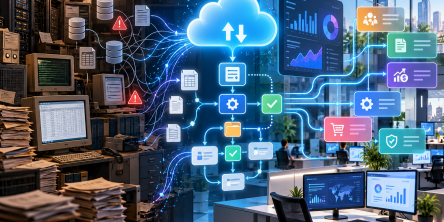
In today's highly competitive corporate environment, clinging to outdated technology is a costly mistake. Enterprises globally are realising that their legacy systems, once the backbone of their operations, are now creating severe bottlenecks.

Learn how knowledge management clears duplicate files and conflicting policies, creates one source of truth and keeps your AI and teams accurate.

Giga vs eight for calls: compare talktime, SMS, and IDD allowances, plus what happens when minutes run out, so you pick the right SIM-only plan.

Stay powered and connected with Belkin's portable power banks, chargers, durable cables and routers built for modern devices and everyday reliability.

Learn how Belkin's innovative connectivity solutions, from durable USB-C cables to fast charging, are reshaping everyday tech accessories.

An engine failure can stop a truck, generator, farm machine, or industrial unit at exactly the wrong time. Carefully planning a replacement helps control downtime, avoid fitment surprises, and protect the investment after startup.

Managing multiple documents can quickly become frustrating. Imagine sending several files in an email, uploading different attachments to a submission portal, or sharing a business report with clients across multiple documents.

Energy efficiency is revolutionizing power distribution, leading to more sustainable and cost-effective energy systems.

Moving has a way of making even organized people feel scattered. One minute you’re labeling boxes. The next, you’re hunting for a receipt, calling the utility company, and wondering where the tape disappeared to.