

Why British Tourists Keep Coming Back to the Canary Islands
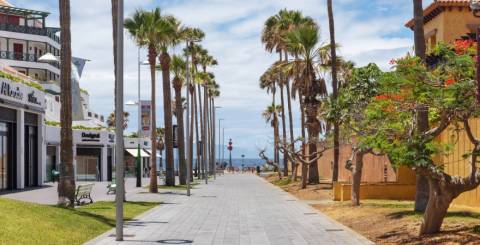
Nobody wants to admit they're going back to the Canaries again. There's a whole performance around it, the slightly defensive explanation at work, the "well, we just fancied some guaranteed sun" justification to friends who went to Vietnam or somewhere that sounds more like an adventure. But here's the thing: the people going back are usually having a better holiday than the people trying to impress someone with their destination. They've stopped pretending and started actually enjoying themselves.
If you're weighing up whether to book again, or whether to try the islands for the first time, this is what you actually need to know. And if you want proper, on-the-ground news from the islands before and during your trip, Canarian News is genuinely useful, whether you follow them on Facebook or Instagram.
The Weather Thing Everyone Gets Wrong
People talk about the Canary Islands like the weather is just a nice bonus. It isn't. It's the whole argument, and most people undersell it.
The islands aren't in the Mediterranean. They sit off the northwest coast of Africa, which sounds obvious when you look at a map but somehow never comes up when people are talking about why the weather is so reliably good. The trade winds that come off the Sahara keep temperatures steady in a way that southern Spain and Portugal genuinely can't compete with. You're not rolling the dice. A week in the Canaries in January is not a gamble in the way that a week in Mallorca in April is a gamble. The difference matters enormously if you've ever come home from a holiday with a tan on your left arm from sitting by a window because it rained every day.
Gran Canaria in February sits around 22 to 23 degrees. Fuerteventura gets somewhere close to 3,000 hours of sunshine a year. These are not marketing numbers pulled from nowhere. You feel it when you're there, the reliable warmth of it, the way you stop checking the forecast after the first day because there's genuinely no point.
For British people, and I say this without any cruelty, that consistency is almost psychologically significant. We spend so much of our lives managing weather disappointment that going somewhere you simply trust feels like an exhale.
What Keeps Drawing British Tourists Back Specifically
There's a version of this conversation that's slightly condescending, where someone implies British tourists return to the Canaries because they're unadventurous or can't cope without chips and English breakfast. That's a lazy read and it's mostly wrong.
Yes, the infrastructure is comfortable. The flights from most UK airports are direct and under four and a half hours. The resorts have ironed out most of the friction that makes travelling with children or older relatives genuinely exhausting. You can find a supermarket that stocks things you recognise. Nobody's going to give you grief for not speaking Spanish, though learning a few words always goes down well.
But the people who keep going back aren't usually going back for the comfort. They're going back because they worked something out on a previous trip. They found the fish restaurant away from the seafront. They drove into the interior of Gran Canaria and genuinely couldn't believe they were on the same island as their hotel. They got up early one morning in Lanzarote and walked somewhere with nobody else around and the light on the volcanic rock was doing something they hadn't expected and they thought, right, I need more of this.
The islands reward a bit of curiosity in a way that takes a trip or two to discover. That's why people return. Not laziness. Unfinished business.
The Islands Are Not All the Same Place
This is the thing I want to be clearest about, because it's where most first-timers get a distorted picture.
Tenerife is the one people know best and it contains about four completely different experiences depending on where you go. The south, around Playa de las Américas and Los Cristianos, is a full-volume British resort town and I mean that neutrally. It does exactly what it says. Warm, lively, good beaches, not very Spanish. The north of the island is a genuinely different country. Puerto de la Cruz feels like it belongs to the people who live there in a way that the south doesn't. The streets smell of coffee and diesel and something floral I could never pin down. The Teide volcano sits in the middle of the whole island and it's one of those things you really should give a full day to rather than a glance from a distance.
Gran Canaria gets called a continent in miniature and for once that's not an exaggeration. The dunes at Maspalomas in the south are legitimate desert, wide and quiet in the early morning before everyone arrives. The capital, Las Palmas in the north, has a cathedral that's been under construction since 1500 and a market and a beach and a city life that has absolutely nothing to do with tourism. Most people on package holidays never see it.
Lanzarote is the one I'd tell anyone to try if they haven't. It's the strangest looking place I've ever been in Europe, possibly anywhere. Black volcanic rock, white houses, vineyards where the vines grow in individual holes dug into ash to protect them from the wind. The artist César Manrique spent much of his life shaping the island and his influence is everywhere, not in a theme park way but in a this-place-has-been-thought-about way. The wine from those volcanic vineyards tastes like nowhere else. I know that sounds like something off a menu but it's actually true.
What Package Holidays Get Right and What They Get Completely Wrong
I'm not going to be snobbish about all-inclusive. Done well, it genuinely works. If you've got young children or a tight budget and you want certainty rather than surprises, a good all-inclusive in Gran Canaria delivers what it promises and the promise is a reasonable one.
What it doesn't deliver is any real contact with where you are. The pool is the pool. The buffet is the buffet. You could be in a dozen different countries and the experience would be essentially identical. Some people are fine with that. Genuinely fine, not secretly disappointed. But a lot of people come back from those trips feeling like they went somewhere and didn't quite arrive.
The adjustment doesn't require abandoning the package. It just requires treating the hotel as somewhere you sleep rather than somewhere you holiday. Go out for dinner. Not every night, three nights at least. Rent a car for one day and go somewhere the coach tours don't stop. The drive from the coast into the interior of Gran Canaria takes about forty minutes and by the time you reach Tejeda you're in a landscape of ravines and almond trees that makes the beach feel like it was in a different country. It's the same island. It just takes a bit of effort to find that version of it.
The Food, Which Most British Tourists Completely Ignore
Canarian food is quietly excellent and almost nobody on a British package holiday eats it. That's not an insult, it's just what happens when there's a familiar alternative twenty metres from your hotel.
Papas arrugadas are the thing to start with. Small potatoes, cooked in water with a serious amount of salt until the skin goes wrinkled and slightly crusty. You eat them with mojo, the red version made with peppers and cumin and garlic, or the green version made with coriander, which is sharper and more herby and slightly addictive. It's the kind of dish that looks so simple you think it can't possibly be that good and then you end up ordering it three times in four days.
The fish is worth seeking out in the smaller villages rather than the main resort restaurants. Vieja is the local fish, a type of wrasse, and it usually comes grilled with mojo and more of those potatoes. On Lanzarote, the restaurants along the water at El Golfo are sitting right on black sand with the Atlantic in front of them and the fish is as fresh as fish gets. I've eaten there twice and both times I sat there slightly longer than I needed to because I wasn't ready for the meal to be over.
The cheese from Fuerteventura is the thing I always buy on the last day and always wish I'd bought on the first. Goat's cheese, firm and slightly salty, cheap in the local markets. It's not glamorous advice but it's honest advice.
When to Go and When to Genuinely Avoid It
August is the honest answer to when not to go, if you have any flexibility at all. The Spanish domestic tourist season overlaps with the northern European one and the southern resorts get genuinely overstretched. Queues, busy beaches, prices that have climbed without any corresponding improvement in what you're getting. It's not ruined, but it's not the best the islands can do.
November is underrated in a way that surprises people. The summer crowds have gone, the water is still warm from months of sun, and the resorts feel like they belong to the people actually staying in them rather than a rotating mass of arrivals and departures. Prices drop. You can get a sunlounger. I've had some of the most relaxed weeks of my life in the Canaries in November.
Late October and most of February are also genuinely good windows. The Tenerife Carnival, which runs in February or early March, is one of the biggest in the world and worth building a trip around entirely. It's loud and colourful and chaotic in the best possible way and most people who go once want to go back for it specifically.
Is It the Boring Choice?
I've had this thought myself, sitting in a hotel in Tenerife wondering whether I should be somewhere more interesting. It took me an embarrassingly long time to work out that the question was wrong.
The best holiday is not the most impressive one. It's the one that delivers what you actually wanted from it. Rest, warmth, good food, a bit of time where nothing is urgent and nothing requires managing. The Canaries are very good at that. Reliably, consistently good. That's not a small thing. A lot of places that look more exciting on paper are quietly quite bad at the basics.
There are worse things than finding somewhere that works and returning to it. Most people who keep coming back to the Canary Islands have simply been honest with themselves about what they want from a holiday. That's not a character flaw. That's just knowing yourself well enough to stop performing and start actually resting.
One last thing, and I mean this: if you've always gone to the same island, try a different one next time. They're far less similar than you'd expect, and the first time you realise that tends to feel like a proper discovery. Which is exactly the feeling people think they have to go somewhere far away to find.
Similar Articles

When Christmas arrives, the Midlands really comes into its own. Birmingham fills with twinkling lights, festive markets and seasonal entertainment, while just beyond the city you'll find countryside walks, Christmas trails and even a steam train experience that feels straight out of a festive film.

Moving a vehicle from New York to Florida is a common choice for people relocating, spending part of the year in Florida, buying a vehicle from another state, or simply avoiding a long-distance drive.

For many digital nomads, choosing where to live is about more than good internet and nice weather. It is about balance. A place needs to support work without taking over life, and offer rest without feeling disconnected.

New Zealand Tourism in 2026 guide for first-time Indian travellers. Learn about visas, best time to visit, top attractions, and travel tips.

Explore 5 unique caves near Mysore that every history enthusiast should visit, showcasing ancient art, architecture, and fascinating heritage.

I'm not going to pretend that scoring a suite upgrade is some kind of magic trick that works every single time.

Discover essential sustainable travel options every business traveler should adopt. Explore eco-friendly hotels, responsible dining, carbon offsetting, and how Travel-Code.com helps businesses travel sustainably.

It is surprising just how many people live in countries of breathtaking beauty yet fail to take maximum advantage of it. It can appear easy to simply head to the usual cities on the tourist trails, jumping on an internal flight to save time on the way. While such breaks remain popular for good reason, all the things down below are neglected and often not even considered.

In India, you can find stunning old temples, crowded cities, natural scenery, and delicious food. To a first-time traveler, the sensory buzz in the country can be fascinating but also might be too much to handle. Read and learn how to navigate your way in India.